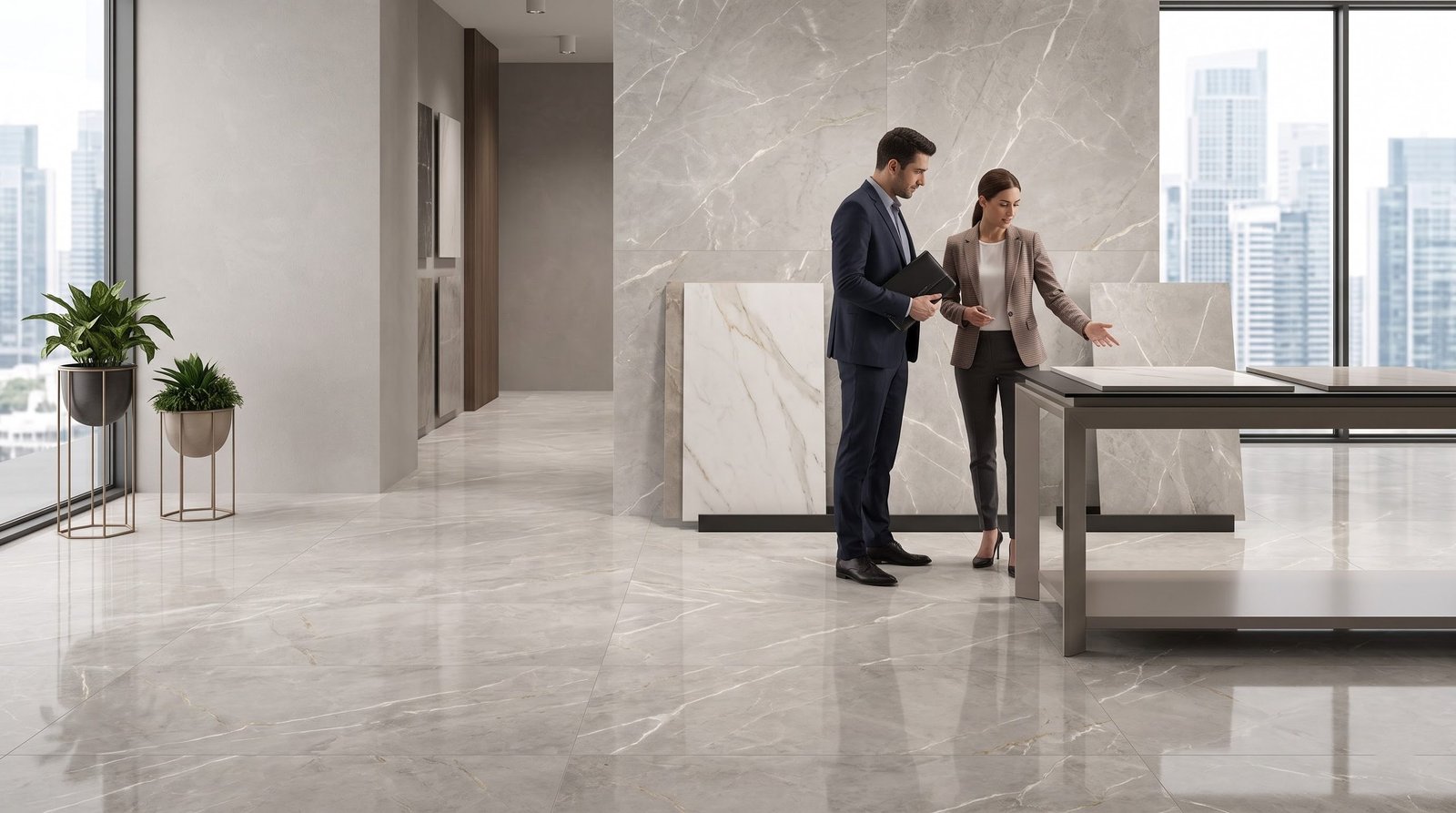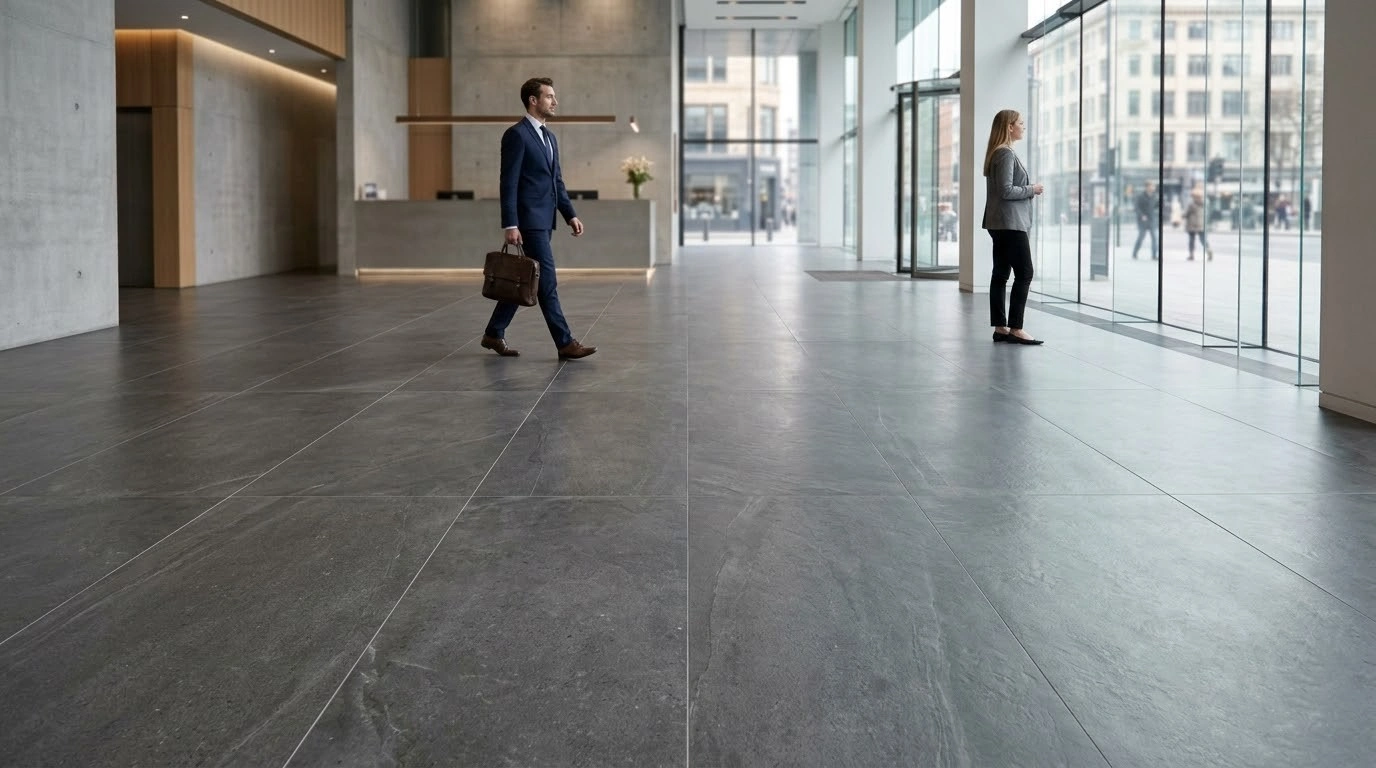


Why Large-Format Tiles are Popular in Commercial Developments

Popular in Commercial Development

Key Takeaways

  • Large-format tiles suit the scale of many contemporary commercial environments.
  • Fewer visible joints can create stronger visual continuity.
  • Larger surfaces can showcase marble, stone, concrete, and other design effects.
  • Large formats can be used across hotels, offices, retail spaces, and mixed-use developments.
  • They can work across both floors and walls when appropriately specified.
  • Installation conditions and project requirements should be evaluated before selection.
  • Large formats are not universally better, the right choice depends on the application.

The popularity of large-format tiles is not based on appearance alone. Their appeal comes from a combination of visual continuity, design flexibility, application versatility, and suitability for contemporary commercial interiors. However, project teams should still consider installation conditions, maintenance requirements, and application-specific needs before selecting a tile format.

What are Large-Format Tiles?

Large-format tiles are tiles produced in dimensions significantly larger than many conventional tile formats. The exact definition can vary by manufacturer and market, so there is no single size that universally defines a large-format tile.

Their larger surface area makes them particularly effective across expansive floors and walls. Instead of creating a highly segmented appearance, they can produce broader visual surfaces with fewer visible joints.

Large-format tiles are commonly considered for:

  • Commercial floors tiles
  • Feature walls tiles
  • Hotel interiors
  • Office spaces
  • Retail environments
  • Large residential and mixed-use developments

They are available in different materials, finishes, colours, and surface designs, allowing architects and designers to select options that complement different architectural styles.

Why are Large-Format Tiles Becoming Popular in Commercial Design?

Modern commercial architecture increasingly favours open layouts, minimal visual clutter, and surfaces that contribute to a cohesive interior concept. Large-format tiles align naturally with these design preferences.

Commercial spaces often contain expansive surfaces where smaller formats can create a more segmented visual effect. Larger formats can help establish a broader surface composition and allow designers to create a more streamlined appearance.

Their popularity is also supported by the flexibility they provide across different design concepts. Depending on the selected surface, large formats can contribute to interiors inspired by:

  • Natural stone
  • Marble
  • Concrete
  • Neutral textures
  • Contemporary architectural finishes

This makes them suitable for projects ranging from corporate interiors to premium hospitality and retail environments.

Fewer Grout Lines Create Greater Visual Continuity

One of the most noticeable advantages of large-format tiles is the potential for fewer visible grout lines. Because each tile covers a larger area, the overall surface can appear more continuous when the layout and installation are properly planned.

This effect can be particularly useful in large commercial interiors where designers want the flooring or wall treatment to support a clean architectural composition.

Why Visual Continuity Matters in Commercial Interiors

Visual continuity can help connect different areas of a development and create a consistent design language. This is especially relevant in spaces such as:

  • Hotel lobbies
  • Corporate reception areas
  • Retail environments
  • Restaurants
  • Large hospitality interiors

A surface with fewer visible joints can allow the tile’s colour, texture, or pattern to become more prominent. However, the final result depends on tile selection, layout, substrate conditions, and installation quality.

Where are Large-Format Tiles Used in Commercial Developments?

The versatility of large-format tiles allows them to be considered across several commercial environments.

Hotels and Hospitality

Hospitality projects frequently use large-format surfaces in visually important areas such as:

  • Lobbies
  • Reception areas
  • Restaurants
  • Guest spaces
  • Feature walls

Large surfaces can complement premium interior concepts and help create a cohesive appearance across high-visibility areas.

Offices and Corporate Spaces

Modern offices often include open-plan layouts, reception zones, meeting rooms, and shared spaces. Large-format floor tiles and wall tiles can support a clean, contemporary design across these environments.

They can be used to create coordinated surfaces while complementing furniture, lighting, and other architectural elements.

Retail and Showrooms

Retail environments rely heavily on visual presentation. Large-format tiles can provide a neutral or sophisticated backdrop that allows products and displays to remain the focus.

They can be used for:

  • Flooring
  • Feature walls
  • Display areas
  • Entrance zones
  • Premium showroom interiors

Mixed-Use and Other Developments

Large-format tiles can also be considered for common areas, commercial entrances, shared spaces, and other environments where broad surfaces contribute to the overall architectural experience.

Design Flexibility Across Floors and Walls

Large-format tiles are not limited to flooring. Their larger dimensions can also be used on walls to create coordinated interior surfaces.

For example, a project may use complementary large-format tiles across:

  • Floors
  • Feature walls
  • Reception areas
  • Vertical surfaces
  • Large open interiors

This approach can help create a consistent architectural language while allowing designers to vary finishes between different zones.

Large-format porcelain tiles are particularly relevant for projects seeking sophisticated surface designs, including stone and marble-inspired appearances. The appropriate material and finish should always be selected according to the intended application.

Large-Format Tiles and Commercial Maintenance

Maintenance is an important consideration for any commercial surface. Large-format tiles can reduce the number of visible grout joints across a given area, which may influence the overall appearance and cleaning considerations.

However, large-format tiles should not automatically be considered easier to maintain in every situation. Maintenance depends on several factors, including:

  • Tile surface
  • Application
  • Installation quality
  • Grout selection
  • Traffic levels
  • Cleaning practices

For high-use commercial environments, project teams should evaluate the complete surface system rather than considering tile size in isolation.

Selecting a suitable surface for the intended environment can help maintain the appearance and functionality of a commercial space over time.

What Should Commercial Projects Consider Before Choosing Large Formats?

Large-format tiles offer several design advantages, but they also require appropriate project planning. Before finalising a specification, commercial teams should evaluate:

  • Project scale and layout
  • Intended application
  • Installation conditions
  • Substrate preparation
  • Handling requirements
  • Installer expertise
  • Design objectives
  • Project schedule

Larger formats can require careful handling, planning, and installation. The project team should therefore confirm that the site conditions and installation resources are appropriate for the selected format.

This is particularly important for large commercial developments where installation decisions can affect multiple areas of the project.

Large-Format Tiles vs Conventional Tile Formats

Neither large-format nor conventional formats are universally better. The choice of tile size depends on the project’s design, application, and technical requirements.

FactorLarge-Format TilesConventional Formats
Visual continuityGenerally higherMore visible joints
Design effectExpansive and contemporaryMore modular
Suitable spacesLarge floors and wallsFlexible across many spaces
Grout visibilityGenerally lowerGenerally higher
Design patternsLarger patterns can be showcasedMore pattern repetition
Installation planningRequires careful planningGenerally more flexible

The comparison should be viewed as a planning guide rather than a ranking. Conventional formats can remain highly suitable for smaller spaces, detailed layouts, and applications where greater format flexibility is required.

How Creanza Supports Large-Format Commercial Design

Creanza offers a broad portfolio of ceramic, vitrified, and porcelain tile solutions for different architectural applications. Its INFINIA+ collection includes large formats of 800x1600mm and 1200x1800mm, designed for expansive and sophisticated spaces.

These formats can support commercial concepts where designers want broad surfaces and a contemporary visual character. They can be considered for hospitality interiors, premium commercial spaces, and other large areas where surface scale contributes to the overall design. As a tiles exporter from India, Creanza also supports international project requirements with a diverse range of surface solutions.

Creanza’s wider product portfolio allows architects, developers, international buyers, and project teams to explore different tile categories, finishes, and design approaches according to their project requirements.

Conclusion

Large-format tiles have become popular in commercial developments because they combine contemporary aesthetics with broad application possibilities. Their ability to create visual continuity, showcase large-scale surface patterns, and complement modern architectural styles makes them suitable for hotels, offices, retail spaces, hospitality projects, and other commercial environments. However, successful selection still requires attention to application, maintenance, installation conditions, and overall project objectives.

Creanza offers large-format solutions through collections such as INFINIA+, including 800x1600mm and 1200x1800mm formats, alongside a wider portfolio of ceramic, vitrified, and porcelain tiles. This range gives architects, developers, designers, and international buyers flexibility when exploring surface solutions for expansive commercial spaces and contemporary architectural concepts.

Frequently Asked Questions

Why are large-format tiles popular in commercial developments?

Large-format tiles are popular because they can create broad, contemporary surfaces with fewer visible grout lines. They also provide a larger canvas for marble, stone, concrete, and other surface designs, making them suitable for modern commercial interiors.

What are the benefits of large-format tiles for commercial spaces?

They can provide visual continuity, support contemporary design concepts, showcase larger surface patterns, and work across expansive floors and walls. Their suitability still depends on the project’s application, installation conditions, surface requirements, and design objectives.

Where can large-format tiles be used in commercial projects?

Large-format tiles can be used in hotels, offices, retail stores, restaurants, showrooms, reception areas, lobbies, and mixed-use developments. They can be considered for both floors and walls depending on the selected product and application requirements.

Are large-format tiles suitable for both floors and walls?

Yes, suitable large-format products can be used across floors and walls. The appropriate tile should be selected according to the application, surface requirements, installation conditions, and project specifications.

Are large-format tiles easier to maintain?

Large formats can reduce the number of visible grout joints, but they are not automatically easier to maintain in every application. Maintenance depends on the tile surface, installation, grout, traffic levels, and cleaning practices.

What large-format tile options does Creanza offer?

Creanza’s INFINIA+ collection includes 800x1600mm and 1200x1800mm large-format tiles. The wider Creanza portfolio also includes ceramic, vitrified, and porcelain tile solutions for different residential and commercial applications.

Share This Article On :

GVT vs PGVT Tiles: Key Differences Every Buyer Should Know

GVT vs PGVT Tiles Key Differences

Key Takeaways

  • GVT and PGVT tiles differ mainly in their surface finish and visual appearance.
  • GVT tiles offer versatile designs for a wide range of residential and commercial applications.
  • PGVT tiles provide a polished, premium finish for luxury interiors and high-end spaces.
  • Project requirements, market preferences, maintenance, and budget should guide tile selection.
  • Both tile types are suitable for international projects when matched with the right application.
  • Creanza helps global buyers choose GVT and PGVT collections that align with project and market needs.

Instead of asking which tile is universally better, buyers should consider factors such as design preferences, intended application, maintenance requirements, and regional market demand. This guide explains the differences between GVT tiles and PGVT tiles, compares their features, and helps international buyers select the right option for different projects.

What are GVT Tiles?

Glazed Vitrified Tiles (GVT) are vitrified tiles finished with a glazed surface that allows manufacturers to create a wide variety of colours, textures, and patterns. They are widely used in residential and commercial projects because they combine durability with design flexibility.

One of the biggest advantages of glazed vitrified tiles is their ability to replicate natural materials such as marble, stone, wood, and concrete while offering easier maintenance than many traditional materials.

Key characteristics of GVT tiles include:

  • Durable vitrified body
  • Smooth glazed surface
  • Wide range of colours and designs
  • Suitable for floor and wall applications
  • Easy to clean and maintain

Their versatility makes them a popular choice for projects requiring both functionality and attractive design, making them an ideal solution for modern home interiors as well as a wide range of commercial spaces. 

What are PGVT Tiles?

Polished Glazed Vitrified Tiles (PGVT) are an advanced version of GVT tiles. After the glazing process, an additional polishing stage creates a glossy surface that enhances the depth, clarity, and richness of the tile design.

The polished finish gives PGVT tiles a premium appearance, making them particularly suitable for interiors where aesthetics are a key priority.

Some of the defining features of polished glazed vitrified tiles include:

  • High-gloss polished finish
  • Enhanced visual appeal
  • Elegant marble-inspired designs
  • Smooth reflective surface
  • Contemporary appearance

Because of their refined finish, PGVT tiles are often chosen for projects where creating a sophisticated atmosphere is an important design objective.

GVT vs PGVT Tiles: Key Differences

Although both products belong to the vitrified tile family, understanding the difference between GVT and PGVT tiles helps buyers select the right option for each project.

FeatureGVT TilesPGVT Tiles
Surface FinishGlazed finishPolished glazed finish
AppearanceSmooth and elegantHigh-gloss and premium
Visual EffectNatural and contemporaryLuxurious and reflective
Design OptionsWide variety of textures and patternsPremium marble and glossy designs
ApplicationsResidential and commercial interiorsLuxury residential and premium commercial spaces
MaintenanceEasy to maintainEasy to maintain with regular cleaning

Rather than choosing one product over the other, buyers should evaluate how each tile supports the design goals and functional requirements of the project.

Which Tile is Better for Residential Projects?

Residential projects require tile solutions that balance aesthetics, practicality, and long-term usability. Both GVT and PGVT tiles can perform well in homes, but their suitability depends on the intended space and overall interior design.

GVT tiles are often preferred for:

  • Living rooms
  • Bedrooms
  • Kitchens
  • Family spaces
  • Everyday residential interiors

Their wide range of finishes allows homeowners to achieve contemporary or natural-looking interiors while maintaining easy upkeep.

PGVT tiles are commonly selected for:

  • Luxury living rooms
  • Premium apartments
  • Feature walls
  • Designer interiors
  • Elegant entrance areas

The polished finish creates a brighter and more premium appearance, making these tiles suitable for spaces where visual impact is a priority.

Instead of selecting tiles based solely on appearance, buyers should evaluate how the chosen finish complements the home’s design style and intended use.

Which Tile Performs Better in Commercial Projects?

Commercial projects often require products that combine attractive design with practical performance. Hotels, offices, retail stores, restaurants, and corporate spaces all have different design objectives, making application an important factor when comparing GVT vs PGVT tiles.

For commercial environments that prioritise versatility and balanced aesthetics, GVT tiles provide flexible design options suitable for a wide range of applications, including large-scale projects where consistency, durability, and design flexibility are essential.

Projects that benefit from GVT tiles include:

  • Office interiors
  • Retail spaces
  • Educational facilities
  • Commercial corridors
  • Business centres

PGVT tiles are often selected for commercial spaces where creating a premium impression is important.

Typical applications include:

  • Hotel lobbies
  • Luxury retail stores
  • Reception areas
  • Executive offices
  • High-end commercial interiors

Rather than viewing one option as universally superior, architects and project developers should select tile finishes based on customer expectations, interior themes, and the overall purpose of the space.

How Creanza Helps Buyers Choose the Right Vitrified Tiles

Choosing the right vitrified tile becomes easier when buyers work with a supplier that understands different project requirements and international market preferences. As one of the glazed vitrified tiles exporters in India, Creanza helps customers identify suitable tile solutions by considering application needs, design expectations, and market trends instead of recommending a one-size-fits-all approach. 

The company offers a broad portfolio of GVT tiles and PGVT tiles suitable for residential, commercial, hospitality, and retail developments. This variety allows buyers to select collections that align with their target market while maintaining flexibility across different projects.

Creanza supports international buyers through:

  • A wide selection of GVT and PGVT collections
  • Guidance based on project requirements
  • Solutions for residential and commercial applications
  • Responsive communication throughout the selection process
  • A customer-focused approach built on long-term partnerships

By understanding evolving design trends and customer expectations, Creanza helps importers, distributors, architects, and project developers choose vitrified tile solutions that meet diverse international requirements.

Conclusion

Choosing the right tile depends on understanding your project requirements, design preferences, and intended application. Whether comparing different tile types, selecting the ideal tile size, or evaluating products for residential and commercial spaces, making informed decisions helps improve project outcomes and customer satisfaction. A thoughtful approach to tile selection ensures both visual appeal and long-term performance.

Partnering with a reliable vitrified tile manufacturing company can simplify the selection process and ensure products meet both design expectations and project requirements. Creanza offers a wide range of ceramic, vitrified, porcelain, GVT, and PGVT tile collections that help international buyers source solutions for diverse global markets. 

Frequently Asked Questions

What is the difference between GVT and PGVT tiles?

GVT tiles have a glazed surface that offers a variety of designs and textures, while PGVT tiles include an additional polished layer that creates a glossy, premium appearance. The choice depends on the project’s design and application requirements.

Are PGVT tiles better than GVT tiles?

Not necessarily. PGVT tiles are preferred for projects that require a luxurious, polished finish, while GVT tiles are suitable for applications where versatile designs and practical performance are the priority.

Which tiles are suitable for commercial projects?

Both GVT and PGVT tiles can be used in commercial projects. GVT tiles work well for offices, retail spaces, and everyday commercial interiors, while PGVT tiles are ideal for hotel lobbies, reception areas, and premium commercial environments.

Which tiles require less maintenance?

Both GVT and PGVT tiles are designed for easy maintenance. Regular cleaning and proper care help preserve their appearance and performance over time.

How do international buyers choose between GVT and PGVT?

Buyers should consider project application, design preferences, regional market demand, maintenance expectations, and budget before selecting the most suitable vitrified tile option.

How does Creanza help buyers select vitrified tiles?

Creanza supports international buyers by offering a broad range of GVT and PGVT collections, providing product guidance based on project requirements, and helping customers choose tile solutions that align with different market needs.

Share This Article On :

How to Select the Right Tile Size for Different International Markets

Tile Size Guide for Global Markets

Key Takeaways

  • Choose tile sizes based on project needs rather than trends alone.
  • Consider room dimensions, application, and installation before selecting a format.
  • Regional design preferences influence tile size demand across international markets.
  • Different residential and commercial projects often require different tile formats.
  • Avoid common sizing mistakes through careful planning and product evaluation.
  • Creanza helps global buyers identify suitable tile formats for diverse market requirements.

As design trends evolve, demand is rising for large-format porcelain tiles and panels, driven by the preference for seamless, modern interiors with fewer grout lines. Understanding how different tile sizes perform across applications helps businesses create product ranges that meet global market expectations. 

Why Tile Size Matters in Global Construction and Design

Tile size plays a significant role in the visual and functional success of any project. While colour, texture, and finish influence appearance, the dimensions of a tile affect how a space looks and feels after installation. For international buyers, choosing tiles from a reliable supplier that maintains export-quality ceramic standards ensures consistency in design, durability, and performance across different markets. 

The right tile size can help:

  • Create a balanced visual appearance
  • Improve the perception of room size
  • Support efficient installation
  • Reduce unnecessary tile cuts
  • Complement modern architectural designs

For international buyers, selecting suitable tile sizes also helps address regional design preferences and project specifications. A product that performs well in one market may not be the preferred choice in another, making market knowledge an important part of product selection.

Instead of choosing tile formats based solely on current trends, buyers should consider how size contributes to functionality, design continuity, and customer expectations.

Understanding Tile Sizes and Their Applications

Choosing the right tile size depends on the application, design requirements, and project type. Creanza offers a wide range of tile formats suitable for residential, commercial, hospitality, and architectural projects.

  • 800×2400 mm & 1200×1800 mm: Ideal for luxury interiors, feature walls, hotels, and large commercial spaces where a seamless look is preferred.
  • 800×1600 mm: Suitable for premium homes, villas, offices, showrooms, and contemporary interiors.
  • 600×1200 mm: A versatile size used for living rooms, bedrooms, kitchens, bathrooms, offices, and retail spaces.
  • 600×600 mm: Popular for residential and commercial flooring due to easy installation and practical maintenance.
  • 200×1200 mm & 195×1200 mm: Designed for wood-look flooring applications, creating a natural plank-style appearance.
  • 300×600 mm, 300×450 mm & 300×300 mm: Commonly used for wall applications, bathrooms, kitchens, and decorative surfaces.
  • 400×400 mm, 298×298 mm & 298×600 mm: Suitable for exterior and specialised outdoor applications.

Selecting the appropriate tile size helps create visually balanced spaces while meeting the functional and design expectations of different international markets

Different Tile Size Requirements for Residential and Commercial Projects

Residential and commercial developments often have different design objectives, which influences tile selection.

Residential Projects

Homes generally focus on comfort, aesthetics, and practicality. Tile sizes are selected to complement room dimensions while creating inviting living spaces.

Common residential applications include:

  • Living rooms
  • Bedrooms
  • Kitchens
  • Bathrooms
  • Balconies

Different areas within the same home may require different tile formats depending on layout, design style, and intended use.

Commercial Projects

Commercial spaces prioritise durability, efficient movement, and a professional appearance. Offices, retail stores, hotels, healthcare facilities, and educational buildings often require tile sizes that suit larger floor areas while supporting a consistent visual finish.

Selecting appropriate porcelain floor tile sizes for commercial environments helps create spacious interiors while simplifying installation across larger surfaces.

By understanding the unique requirements of each project type, buyers can recommend products that balance functionality with design.

Factors to Consider Before Choosing Tile Sizes

Choosing the right tile size involves more than following design trends. Buyers should evaluate how the tiles will be used, the characteristics of the space, and the expectations of the target market before making a decision.

Some practical factors to consider include:

1. Room Dimensions

The size of a room often influences which tile format creates the best visual balance. Larger spaces can accommodate bigger tiles, while smaller rooms may benefit from formats that complement their proportions and layout.

2. Application Area

Different spaces have different functional requirements. Floor areas, wall surfaces, bathrooms, kitchens, and outdoor spaces may each require a different tile size depending on design objectives and installation needs.

3. Installation Pattern

The chosen layout can affect the overall appearance of a project. Tile size should work well with the planned installation pattern to create a clean and consistent finish. Proper planning of tile placement, alignment, and spacing also supports seamless tile installation while enhancing the overall visual appeal of the surface.

4. Grout Lines and Visual Continuity

Larger tiles generally create fewer grout lines, giving surfaces a more seamless appearance. Smaller formats introduce more grout joints, which can add visual detail and support decorative layouts.

5. Maintenance Requirements

Tile size may also influence ongoing maintenance. Selecting the appropriate format for the intended application helps create surfaces that are practical and easy to maintain.

Considering these factors together allows buyers to make informed decisions that balance aesthetics, functionality, and market demand.

How Creanza Helps Global Buyers Find the Right Tile Formats

Selecting the right tile size becomes easier when buyers work with a supplier that understands international market requirements. Creanza supports customers by helping them evaluate project needs, design preferences, and intended applications before recommending suitable tile formats. 

As a trusted partner for businesses looking to export tiles from india, Creanza offers a diverse portfolio of ceramic, vitrified, and porcelain tile collections designed to support residential, commercial, hospitality, and retail developments. Rather than promoting a single solution for every project, the company focuses on providing tile options that match specific requirements and market expectations. 

International buyers benefit from:

  • A wide selection of tile formats for different applications
  • Guidance based on project requirements
  • Solutions that support residential and commercial markets
  • Responsive communication throughout the selection process
  • A customer-focused approach that values long-term relationships

By understanding regional preferences and evolving design trends, Creanza helps buyers build product portfolios that align with customer demand while supporting successful projects across international markets.

Conclusion

Selecting the right tile size is an important decision that influences design, functionality, and customer satisfaction. While there is no single format that suits every market, understanding room dimensions, project requirements, installation considerations, and regional preferences helps buyers make better sourcing decisions.

Creanza supports international buyers by offering a diverse range of tile formats and practical guidance tailored to different applications and markets. This customer-focused approach helps businesses choose tile solutions with confidence while responding to evolving global demand.

Frequently Asked Questions

What is the best tile size for residential projects?

There is no universal tile size for every home. The best choice depends on room dimensions, design preferences, and the intended application. Selecting a format that complements the space creates a balanced and practical result.

Are large-format tiles suitable for every market?

No. While large format tiles are increasingly popular, customer preferences differ across regions. Buyers should evaluate local design trends, project requirements, and end-user expectations before selecting tile sizes.

How do room dimensions affect tile size selection?

Room dimensions influence the visual balance of a space. Choosing tile sizes that suit the layout helps create a more proportionate appearance and supports efficient installation.

What factors should distributors consider when choosing tile sizes?

Distributors should evaluate customer demand, project types, regional design preferences, application areas, and product versatility before selecting tile formats for their portfolio.

How do regional preferences influence tile demand?

Architectural styles, interior design trends, and customer expectations vary across markets. Understanding these preferences helps buyers choose tile sizes that better match local demand.

How does Creanza help buyers choose suitable tile formats?

Creanza works closely with international customers to understand project requirements and market preferences before recommending suitable ceramic, vitrified, and porcelain tile formats for residential and commercial applications.

Share This Article On :

How Creanza Supports International Dealers and Distributors

How Creanza Supports International Dealers & Distributors

Key Takeaways

  • Strong dealer partnerships are built on collaboration and long-term growth.
  • Product diversity helps distributors serve a wider customer base.
  • Effective inventory planning supports better business performance.
  • Clear communication strengthens dealer-manufacturer relationships.
  • Understanding local market demand helps businesses grow sustainably.
  • Creanza supports international dealers through collaboration, product guidance, and customer-focused partnerships.

Creanza supports its international dealer and distributor network through a collaborative approach focused on understanding business goals, recommending suitable product solutions, and maintaining strong communication throughout the partnership. Rather than simply supplying tiles, the company works alongside its channel partners to help them respond to changing market needs and create long-term value.

Why Strong Dealer Partnerships Matter in the Tile Industry

The success of the tile industry depends not only on manufacturers but also on the dealers and distributors who connect products with local markets. These partners understand regional customer preferences, provide product recommendations, and help builders, architects, retailers, and homeowners find suitable tile solutions.

Strong partnerships between manufacturers and channel partners create benefits for everyone involved. Manufacturers gain better market reach, while dealers receive consistent business support that helps them strengthen customer relationships and expand their presence. This collaborative approach is especially valuable for businesses looking to establish or expand a tiles dealership in India, where understanding regional demand and maintaining reliable supplier relationships are key to long-term success. 

A successful tile distributor relationship is built on:

  • Mutual trust and transparency
  • Clear business communication
  • Shared growth objectives
  • Understanding of local market requirements
  • Long-term collaboration

When manufacturers and distributors work together with common goals, they are better positioned to respond to changing customer expectations and market opportunities.

Understanding the Needs of International Dealers & Distributors

Every business operates differently, and successful manufacturers recognise that one approach cannot meet every customer’s requirements. International partners may include wholesalers, retailers, importers, regional distributors, or building material suppliers, each with different priorities.

For example:

  • Wholesalers: Often require a broad product portfolio that serves multiple customer segments while supporting regular inventory replenishment.
  • Retailers: Need products that align with current design trends and changing consumer preferences to attract a wide range of customers.
  • Regional Distributors: Focus on supplying builders, contractors, and dealers across different territories while maintaining consistent product availability.
  • Building Material Suppliers: Typically serve both residential and commercial customers, requiring versatile product selections suitable for different applications.

Understanding these business models allows suppliers to recommend solutions that align with individual market needs rather than offering the same approach to every customer.

Creanza works closely with its partners to understand their target markets, customer profiles, and business objectives before recommending suitable tile collections.

Product Diversity Helps Dealers Serve More Customers

Customer preferences continue to evolve, making product diversity an important advantage for dealers and distributors. Businesses that can offer a wider selection of tile styles, finishes, and applications are often better positioned to serve different customer segments without depending on multiple suppliers.

Instead of focusing on a single category, many dealers aim to build a balanced product portfolio that supports various industries, including:

  • Residential housing
  • Commercial developments
  • Hospitality projects
  • Retail spaces
  • Mixed-use developments

This variety allows businesses to respond more effectively to changing market demand while providing customers with greater choice.

As a wholesale tile supplier, Creanza offers a broad portfolio of ceramic, vitrified, and porcelain tile solutions designed to support different architectural styles and project requirements. This enables dealers to expand their product offerings while maintaining a consistent sourcing relationship.

To learn more about the company’s quality standards for international markets, read our guide on ensuring export-quality ceramic and vitrified tiles

Supporting Better Inventory and Product Planning

Inventory planning plays an important role in the success of every tile dealership. Carrying the right product mix helps businesses meet customer demand while reducing unnecessary inventory costs.

Instead of reacting to market changes after they occur, successful distributors often plan their inventory based on seasonal demand, customer purchasing patterns, and upcoming construction activity.

Effective planning includes:

  • Understanding local market trends
  • Maintaining a balanced product assortment
  • Forecasting customer demand
  • Reviewing sales performance regularly
  • Planning inventory for future business opportunities

By taking a proactive approach, dealers can improve product availability while creating a smoother purchasing experience for their customers.

Creanza supports this planning process by helping partners evaluate product requirements and identify collections that align with their business goals rather than focusing only on immediate sales opportunities.

Responsive Communication Builds Better Business Relationships

Strong business relationships depend on consistent and transparent communication. For international dealers and distributors, timely information can make procurement planning, customer service, and business operations significantly more efficient.

Effective communication goes beyond answering enquiries. It involves understanding customer objectives, discussing market opportunities, and providing the information needed to support confident business decisions.

Dealers typically value suppliers who:

  • Respond promptly to enquiries
  • Provide accurate product information
  • Communicate clearly throughout the sourcing process
  • Understand changing market requirements
  • Maintain ongoing business discussions

This collaborative approach helps create trust and strengthens long-term relationships between manufacturers and channel partners.

Creanza believes that responsive communication is an essential part of supporting international dealers. By maintaining open dialogue throughout the business relationship, the company helps partners make informed decisions while adapting to evolving customer requirements.

Helping Dealers Grow Beyond Individual Orders

Successful dealer-manufacturer relationships are built on long-term collaboration rather than individual transactions. While completing an order is important, sustained business growth comes from working with a partner who understands evolving market needs and supports future opportunities.

For international dealers, growth often depends on expanding product offerings, reaching new customer segments, and responding quickly to changing design trends. A supplier that understands these objectives can contribute to more effective business planning.

Long-term collaboration offers several advantages:

  • Better understanding of local market demand
  • Easier planning for repeat business
  • Opportunities to expand product portfolios
  • Stronger customer confidence
  • More efficient business communication

Instead of focusing only on immediate sales, successful partnerships create a foundation for sustainable business growth. This approach enables dealers to strengthen customer relationships while responding more effectively to new market opportunities.

Learn more about Creanza’s global supply capabilities in our article on delivers high-quality tiles worldwide.

How Creanza Supports Its Global Dealer Network

Creanza believes that successful dealers and distributors deserve more than dependable products. They need a partner that understands their business, supports informed decision-making, and contributes to long-term success.

The company works closely with channel partners across international markets by taking a consultative approach to business collaboration. Every market has different customer preferences and business objectives, so Creanza focuses on understanding these requirements before recommending suitable solutions. With extensive experience in the export of tiles from Gujarat, Creanza is well-positioned to support international partners with market-focused product recommendations and reliable sourcing solutions. 

International dealers benefit from:

  • A diverse portfolio of ceramic, vitrified, and porcelain tile collections
  • Guidance in selecting products for different customer segments
  • Responsive communication throughout the business relationship
  • Support for distributors, wholesalers, retailers, and importers
  • A collaborative approach focused on long-term business growth

Rather than applying the same strategy to every market, Creanza works with partners to understand local demand, customer preferences, and business priorities. This enables dealers to build product portfolios that remain relevant while creating stronger relationships with their customers.

By focusing on collaboration instead of transactions, Creanza helps channel partners develop sourcing strategies that support both current business needs and future expansion.

Conclusion

Building a successful tile distributor business requires more than access to quality products. It depends on selecting a manufacturing partner that understands market dynamics, supports business planning, and contributes to long-term growth.

From product assortment and inventory planning to responsive communication and collaborative business relationships, every aspect of a dealer partnership influences customer satisfaction and commercial success.

Creanza supports international dealers and distributors by combining a customer-first approach with a diverse product portfolio and an understanding of regional market requirements. By working closely with channel partners, the company helps businesses strengthen their market presence, serve customers more effectively, and create sustainable growth opportunities.

For businesses looking to expand their distribution network with a trusted ceramic tiles exporter from India, Creanza offers the experience, collaboration, and long-term partnership needed to succeed in today’s competitive global market.

Frequently Asked Questions

What should dealers look for in a tile supplier?

Dealers should evaluate product variety, business reliability, communication, market understanding, and long-term partnership potential. These factors help create stronger customer relationships and support sustainable business growth.

How can distributors grow with the right manufacturing partner?

A reliable manufacturing partner helps distributors expand their product portfolio, improve inventory planning, respond to market demand, and build long-term sourcing relationships that contribute to business growth.

Why is product diversity important for tile dealers?

Offering a broad range of tile options enables dealers to serve residential, commercial, and hospitality customers while adapting to changing design trends and customer preferences.

How does Creanza support international distributors?

Creanza supports distributors through product guidance, responsive communication, market-focused recommendations, and a collaborative approach that helps businesses strengthen their presence in local markets.

What makes a strong dealer-manufacturer relationship?

A strong partnership is built on trust, transparent communication, shared business objectives, and ongoing collaboration. These qualities help both manufacturers and dealers achieve long-term success.

Why should businesses work with a long-term tile supplier?

Long-term supplier relationships improve procurement efficiency, simplify repeat business, strengthen planning, and provide greater confidence when expanding into new markets or serving changing customer requirements.

Share This Article On :

What Global Buyers Look for in a Tile Exporter and How Creanza Delivers

Global Buyers Look for in a Tile Exporter

Key Takeaways

  • Choose a tile exporter based on business value, not just price.
  • Look for suppliers with diverse product offerings and market understanding.
  • Clear communication strengthens international sourcing relationships.
  • Select a supplier that supports your business model and long-term goals.
  • Regional market knowledge helps buyers make better procurement decisions.
  • Creanza combines customer-focused service with global market experience to support international buyers.

Creanza understands that successful international partnerships are built on more than products alone. By combining customer-focused service with a broad product portfolio and an understanding of global market expectations, the company helps international buyers source tiles with greater confidence. This article explores what buyers typically look for in a tile exporter and how Creanza meets those expectations.

Why Choosing the Right Tile Exporter Matters

For international buyers, selecting a supplier is a strategic business decision rather than a simple purchasing activity. The right export partner can influence inventory planning, customer satisfaction, project execution, and long-term business growth.

Every procurement decision carries responsibilities that extend beyond placing an order. Buyers need confidence that their supplier understands commercial requirements, supports changing business needs, and maintains clear communication throughout the relationship.

When evaluating a tiles exporter from India, buyers typically consider:

  • Business reliability
  • Product availability
  • Communication efficiency
  • Understanding of market requirements
  • Long-term partnership potential

A supplier that consistently supports these priorities helps businesses reduce procurement uncertainty and strengthen relationships with their own customers.

Product Variety That Supports Different Market Needs

No two markets are exactly alike. Customer preferences, architectural styles, and construction requirements vary across regions, making product diversity an important factor when selecting an export partner.

A reliable international tile supplier should offer solutions that support multiple applications rather than focusing on a single product category. This flexibility allows distributors and project buyers to respond to different customer requirements without managing several suppliers.

International buyers often serve markets such as:

  • Residential developments
  • Commercial buildings
  • Hospitality projects
  • Retail environments
  • Mixed-use developments

Each sector has different design and performance expectations. Residential customers may prioritise aesthetics and comfort, while commercial projects often focus on durability and practicality. Hospitality developments frequently require premium finishes that create memorable guest experiences.

Rather than offering a standard recommendation, Creanza helps buyers identify suitable collections based on their market focus and customer requirements, including modern and classic tile collections that align with diverse design preferences. This consultative approach enables businesses to build a balanced product portfolio that supports long-term growth.

Reliable Communication Builds Buyer Confidence

Communication is one of the most important aspects of international business relationships. Even when products meet expectations, poor communication can create delays, misunderstandings, and unnecessary procurement challenges.

Global buyers value suppliers who provide timely updates, clear information, and professional responses throughout the sourcing process.

Effective communication includes:

  • Prompt responses to enquiries
  • Clear product information
  • Transparent commercial discussions
  • Timely updates during procurement
  • Consistent support throughout the relationship

These practices help buyers make informed decisions while reducing uncertainty during planning and purchasing.

Responsive communication also builds trust over time. When buyers know they can receive accurate information quickly, they are better equipped to manage customer expectations and keep projects moving efficiently.

Flexibility to Support Different Business Models

International buyers operate under different business models, and each requires a sourcing partner that understands its priorities. A distributor serving multiple retailers has different procurement needs than a project developer managing a commercial complex or a wholesaler supplying regional markets.

A dependable tile supplier in India recognises these differences and adapts its approach accordingly.

For example:

  • Importers often look for reliable sourcing that supports long-term inventory planning.
  • Distributors need diverse product options that appeal to different customer segments.
  • Retailers focus on collections that reflect changing design trends and consumer preferences.
  • Project Developers require products that align with architectural concepts and project specifications.

Supporting these varied business models requires more than simply offering products. It requires understanding customer objectives and providing recommendations that contribute to business success.

Creanza works closely with customers to understand how they operate, allowing the company to recommend solutions that align with individual market requirements instead of offering one-size-fits-all recommendations.

Consistency That Supports Long-Term Business Growth

Consistency plays a vital role in building successful supplier relationships. While product quality is important, buyers also value consistency in communication, responsiveness, and overall business experience.

A predictable sourcing relationship allows businesses to plan more effectively, improve procurement efficiency, and strengthen customer confidence.

Long-term consistency provides benefits such as:

  • Easier repeat purchasing
  • Better procurement planning
  • Faster business communication
  • Stronger supplier relationships
  • Greater confidence when expanding into new markets

For distributors and importers, these advantages contribute to smoother day-to-day operations while supporting sustainable business growth.

Rather than continually searching for new suppliers, many successful businesses prefer to build lasting relationships with companies that consistently understand their expectations and deliver dependable support.

Understanding Regional Market Expectations

Every international market has its own design preferences, construction standards, and customer expectations. A tile collection that performs well in one region may not necessarily meet the needs of another. This is why global buyers look for suppliers who understand regional trends instead of offering generic recommendations.

For example:

  • Residential markets often prefer contemporary and easy-to-maintain surfaces.
  • Commercial developments require practical solutions for high-traffic environments while keeping pace with modern commercial interior tile trends
  • Hospitality projects usually focus on premium aesthetics and cohesive interior themes.
  • Retail and mixed-use developments demand versatile designs that appeal to a broad customer base.

Understanding these differences helps buyers create product portfolios that better match local demand and improve customer satisfaction. A supplier with market awareness can also help businesses identify opportunities as design preferences continue to evolve.

Rather than following short-term trends, successful sourcing decisions are based on understanding what customers in each market value most.

How Creanza Delivers on These Expectations

Global buyers expect more than access to quality products. They look for an export partner who understands their business, responds promptly, and contributes to long-term growth. Creanza has built its international presence by focusing on these expectations and creating lasting relationships with customers across diverse markets.

Creanza supports international buyers by providing:

  • A diverse portfolio of export-quality ceramic & vitrified tiles, along with porcelain tile solutions 
  • Product guidance based on project and market requirements
  • Responsive communication throughout the sourcing process
  • Support for distributors, retailers, and project buyers
  • A partnership approach focused on long-term business success

With experience serving customers across international markets, Creanza understands that every business has different priorities. By maintaining a consultative approach and building relationships based on trust and collaboration, the company helps buyers make confident procurement decisions while adapting to changing market demands.

Conclusion

Choosing the right tile exporter from India involves much more than comparing products or pricing. Global buyers look for suppliers who understand their business, communicate effectively, offer diverse product options, and support long-term growth through reliable partnerships. By evaluating these factors before making procurement decisions, businesses can reduce sourcing risks, strengthen customer relationships, and improve operational efficiency.

Creanza delivers on these expectations through a customer-first approach, broad product offerings, responsive communication, and an understanding of international market requirements. Whether serving distributors, retailers, architects, or project developers, the company focuses on building partnerships that create long-term value for customers around the world. If you are looking for a trusted ceramic tiles exporter from India, Creanza offers the expertise, flexibility, and customer-focused support needed to help your business grow with confidence.

Frequently Asked Questions

What should global buyers look for in a tile exporter?

Global buyers should evaluate product variety, communication, business reliability, market understanding, and long-term partnership potential. These factors help create a more efficient procurement process and support sustainable business growth.

Why is communication important when choosing a tile exporter?

Clear communication reduces misunderstandings, improves procurement planning, and helps buyers make informed decisions. Responsive suppliers also make it easier to coordinate sourcing activities and manage customer expectations.

How can buyers evaluate a tile supplier?

Buyers should assess a supplier’s product range, responsiveness, understanding of market requirements, business transparency, and ability to support long-term sourcing objectives rather than focusing only on pricing.

Why does product variety matter for international distributors?

A broad product portfolio allows distributors to serve different customer segments and adapt to changing market trends without relying on multiple suppliers. This simplifies procurement and supports business expansion.

What makes Creanza a trusted tile exporter from India?

Creanza supports international buyers through a customer-first approach, diverse tile collections, responsive communication, and an understanding of different market requirements. The company focuses on building long-term business relationships that create value beyond individual transactions.

How can businesses build long-term sourcing relationships?

Businesses can strengthen supplier relationships by communicating clear requirements, planning procurement strategically, maintaining regular collaboration, and working with partners who understand their long-term business goals.

Share This Article On :

How Creanza Supports Bulk Tile Orders for Large-Scale Projects

Creanza Supports Bulk Tile Orders

Creanza supports large-scale projects by working closely with developers, contractors, architects, distributors, and procurement teams to simplify the sourcing process. Rather than treating every order as a standard purchase, the focus is on understanding project requirements, recommending suitable tile solutions, and helping customers plan procurement that aligns with construction schedules. This collaborative approach enables projects to move forward with greater confidence and operational efficiency.

Why Bulk Tile Procurement Requires a Different Approach

Buying tiles for a home renovation and sourcing tiles for a large construction project are two very different processes. Large developments involve multiple stakeholders, phased construction schedules, and detailed procurement planning. Every decision can affect project costs, installation timelines, and overall efficiency.

Unlike retail purchases, bulk tile orders require buyers to consider several factors before placing an order, including:

  • Total project area and estimated quantities
  • Construction milestones and installation schedules
  • Different tile requirements for various spaces
  • Inventory planning across multiple phases
  • Coordination between procurement and construction teams

Without proper planning, projects may face challenges such as material shortages, excess inventory, or disruptions during installation. Working with an experienced bulk tile supplier helps reduce these risks by creating a structured procurement strategy that supports every stage of the project.

Understanding the Requirements of Large-Scale Projects

Every large-scale development has unique objectives, making it essential to approach tile procurement with a project-specific mindset. The materials selected for a luxury residential development may differ significantly from those required for a hospital, shopping centre, or corporate office.

For example:

  • Residential Projects: Modern housing developments often require a combination of elegant floor and wall tiles that balance visual appeal with long-term durability.
  • Commercial Buildings: Office spaces and retail environments generally prioritise surfaces that can withstand high foot traffic while maintaining a professional appearance.
  • Hospitality Projects: Hotels and resorts often seek premium finishes that create memorable guest experiences across lobbies, guest rooms, restaurants, and recreational spaces.
  • Healthcare and Educational Facilities: These environments require practical, durable surfaces that support everyday functionality while complementing modern architectural designs.

Understanding these different requirements allows procurement teams to make informed decisions and select products that match the performance, design, and maintenance needs of each project.

Rather than offering the same recommendation for every development, Creanza works with customers to understand the purpose, scale, and expectations of each project before suggesting suitable tile solutions.

Planning Bulk Orders for Better Project Efficiency

Effective procurement begins long before construction reaches the installation stage. Careful planning helps ensure that the right materials are available when needed, reducing interruptions and supporting smoother project execution.

A structured procurement plan typically includes:

  • Estimating tile quantities based on project drawings
  • Scheduling deliveries according to construction phases
  • Identifying products for different application areas
  • Planning inventory to minimise unnecessary storage
  • Coordinating purchasing timelines with installation teams

This approach provides several advantages for project stakeholders.

It helps avoid delays caused by last-minute purchasing, improves inventory management, and creates greater visibility throughout the procurement process. For developers managing multiple sites or contractors working on phased developments, early planning also simplifies coordination across different teams.

As a project tile supplier, Creanza encourages customers to view procurement as an ongoing planning process rather than a single purchasing activity. This allows businesses to improve operational efficiency while maintaining flexibility as projects progress.

Helping Buyers Select the Right Tile Mix for Large Projects

Large developments rarely rely on one type of tile throughout the entire property. Different areas serve different purposes, and each space requires materials that align with functional needs as well as design objectives.

Selecting the right combination of tiles helps create consistency while ensuring every area performs as intended. For residential developments, incorporating luxury living room tile ideas into common living spaces can help create elegant interiors while maintaining a cohesive design throughout the property.

For example:

  • Entrance areas often require durable surfaces that create a strong first impression.
  • Common spaces benefit from designs that balance aesthetics with everyday performance.
  • Residential interiors may prioritise comfort, style, and easy maintenance.
  • Outdoor spaces require products suitable for changing environmental conditions.

Instead of selecting products independently for each area, procurement teams often achieve better results by planning a balanced tile mix that supports the project’s overall design vision.

Creanza assists buyers by helping them evaluate different applications and identify collections that work together across residential, commercial, and mixed-use developments. This planning-focused approach enables customers to create cohesive environments while simplifying procurement across large projects.

Supporting Collaboration Across Project Teams

Large-scale construction projects involve multiple stakeholders, each responsible for different stages of planning and execution. Architects define the design vision, procurement managers oversee purchasing, contractors coordinate installation, and project developers ensure timelines and budgets remain on track. Effective collaboration between these teams is essential for successful project delivery.

A reliable commercial tile supplier plays an important role by maintaining clear communication throughout the procurement process. Early discussions help align product selection with project specifications, while timely updates support better coordination as construction progresses.

Successful collaboration offers several advantages:

  • Better alignment between design and procurement
  • Faster decision-making during project planning
  • Improved coordination between purchasing and installation teams
  • Greater visibility into project requirements
  • Reduced chances of procurement-related delays

By encouraging open communication and understanding project objectives from the outset, Creanza helps create a smoother procurement experience for everyone involved.

Why Creanza Is a Reliable Partner for Large-Scale Developments

Large-scale developments require more than a product supplier. They benefit from a partner who understands project planning, procurement priorities, and the importance of responsive collaboration.

Creanza works with developers, contractors, architects, distributors, and procurement professionals by focusing on solutions that support project success from the planning stage through execution.

The company’s approach is centred on:

  • Understanding individual project requirements
  • Supporting informed product selection
  • Encouraging structured procurement planning
  • Maintaining responsive communication
  • Building long-term customer relationships

With experience serving domestic and international markets, Creanza has established itself as a trusted tiles exporter from India, understanding that every project has its own objectives, timelines, and operational challenges. By taking a consultative approach rather than a transactional one, the company helps customers make confident sourcing decisions while simplifying procurement for complex developments. 

Whether the requirement is for residential communities, commercial buildings, hospitality projects, healthcare facilities, or mixed-use developments, Creanza works alongside project teams to support efficient planning and long-term value.

Conclusion

Managing bulk tile orders for large-scale projects requires careful planning, effective communication, and a procurement strategy that supports every phase of construction. From estimating quantities and selecting the right tile mix to coordinating purchasing schedules, each decision contributes to smoother project execution and better operational efficiency.

Working with an experienced bulk tile supplier allows developers, contractors, and procurement teams to simplify sourcing while reducing avoidable project risks. By focusing on collaboration, planning, and customer requirements, Creanza helps businesses create procurement strategies that support successful project delivery.

As construction projects continue to grow in scale and complexity, partnering with a supplier that understands project workflows becomes increasingly valuable. Creanza remains committed to supporting large-scale developments with practical guidance, responsive service, and a customer-first approach that helps projects move forward with confidence.

Frequently Asked Questions

What should businesses consider before placing bulk tile orders?

Businesses should evaluate project scope, estimated tile quantities, application areas, construction timelines, and procurement schedules. Proper planning helps improve purchasing efficiency, supports timely installation, and reduces the risk of material shortages or unnecessary inventory.

How can procurement planning improve large construction projects?

A structured procurement plan helps coordinate purchasing with construction milestones, improves inventory management, and reduces project interruptions. It also enables project teams to make informed decisions while maintaining better control over budgets and timelines.

Why is supplier collaboration important for large-scale developments?

Close collaboration between suppliers, architects, contractors, and procurement managers improves communication, supports faster decision-making, and helps ensure that product selection aligns with project specifications and construction schedules.

How does Creanza support bulk tile procurement?

Creanza supports customers by understanding project requirements, assisting with product selection, encouraging structured procurement planning, and maintaining responsive communication throughout the sourcing process to help projects progress efficiently.

Which industries commonly require bulk tile orders?

Bulk tile procurement is common across residential developments, commercial buildings, hospitality projects, healthcare facilities, educational campuses, retail spaces, and mixed-use developments where large quantities of tiles are required.

How can businesses reduce procurement risks during construction?

Businesses can minimise procurement risks by planning purchases early, coordinating quantities with project phases, maintaining clear communication among stakeholders, and partnering with an experienced project tile supplier who understands large-scale construction requirements.

Share This Article On :

Common Mistakes International Buyer Make When Sourcing Tiles from India

Common Mistakes International Buyers

Key Takeaways

  • Plan your project requirements before sourcing tiles from India.
  • Evaluate suppliers based on reliability, not just price.
  • Review product specifications and request samples before bulk orders.
  • Clarify documentation and commercial terms to avoid delays.
  • Build long-term supplier relationships for smoother procurement.
  • Choose an experienced partner like Creanza for confident and efficient tile sourcing.

Whether you are importing tiles for residential developments, commercial projects, retail distribution, or hospitality spaces, a structured sourcing approach reduces risk and improves procurement efficiency. This guide highlights the most common mistakes international buyers make and provides practical recommendations for avoiding them.

Why Proper Planning Matters Before Sourcing Tiles

Successful tile procurement starts well before contacting a supplier. Many buyers focus on product catalogues immediately, but effective sourcing begins with understanding project objectives, customer expectations, and procurement priorities.

Before starting the supplier selection process, buyers should clearly define:

  • Project type and application
  • Estimated order quantities
  • Budget expectations
  • Preferred tile specifications
  • Target delivery schedules

Without this preparation, comparing suppliers becomes difficult because purchasing decisions are based on assumptions instead of actual project requirements.

A clear procurement plan also helps buyers communicate their expectations more effectively, allowing suppliers to recommend products that match both commercial and technical requirements.

Mistake 1: Choosing a Supplier Based Only on Price

One of the most common mistakes international buyers make is selecting a supplier based only on the lowest quotation. While pricing is an important consideration, it should never be the only factor influencing a sourcing decision.

A lower purchase price may not always result in better overall value if communication, service, or long-term support do not meet expectations.

Instead of comparing prices alone, buyers should evaluate:

  • Industry experience
  • Product range
  • Responsiveness to enquiries
  • Business transparency
  • Ability to understand project requirements
  • Long-term reliability

Working with an experienced tile supplier in India often creates greater value by supporting smoother procurement and reducing avoidable sourcing challenges. Choosing a trusted tile export partner also helps buyers benefit from consistent communication, reliable business practices, and long-term support throughout the sourcing process.

A balanced evaluation helps buyers make decisions based on overall business value rather than short-term cost savings.

Mistake 2: Overlooking Product Specifications

Every construction project has different performance and design requirements. Selecting tiles based only on appearance without reviewing technical specifications can create challenges during installation or long-term use.

Before placing an order, buyers should review specifications such as:

  • Tile dimensions
  • Surface finish
  • Application suitability
  • Thickness
  • Slip resistance, where applicable
  • Edge finish

For example, tiles selected for commercial walkways may require different characteristics than those intended for residential interiors or hospitality spaces.

Understanding these specifications allows buyers to choose products that align with project requirements while reducing the possibility of selecting unsuitable materials.

Rather than making assumptions, discussing technical requirements with the supplier helps ensure the selected products are appropriate for the intended application.

Mistake 3: Skipping Samples Before Bulk Orders

Ordering samples is one of the simplest yet most valuable steps in international tile procurement. Some buyers skip this stage to save time, only to discover later that the selected product differs from their expectations.

Physical samples allow buyers to evaluate important characteristics that may not be fully represented in digital catalogues or product photographs.

Reviewing samples helps buyers assess:

  • Colour consistency
  • Surface texture
  • Finish
  • Overall appearance
  • Suitability for the project environment

For large developments or retail distribution, sample evaluation also provides an opportunity to gather feedback from architects, designers, procurement teams, or end customers before placing bulk tile orders. It also helps buyers verify that the selected high-quality tiles meet their expectations for appearance, finish, and overall suitability before committing to a larger purchase. 

Taking time to evaluate samples helps reduce uncertainty and increases confidence in purchasing decisions.

Mistake 4: Ignoring Long-Term Supply Requirements

Many buyers focus only on immediate project needs without considering future procurement. This short-term approach can create unnecessary challenges when additional quantities are required for future project phases or ongoing customer demand.

Planning beyond the first order provides greater flexibility and supports business continuity.

Important considerations include:

  • Future expansion plans
  • Repeat order requirements
  • Inventory management
  • Product continuity
  • Long-term supplier relationships

Businesses that think beyond individual transactions are often better positioned to respond to future market opportunities while maintaining a consistent sourcing strategy.

A supplier who understands long-term business objectives can contribute more effectively than one who simply fulfils a single purchase order.

Mistake 5: Not Clarifying Documentation and Commercial Terms

International procurement involves more than selecting the right products. Buyers should also understand the commercial and documentation requirements that support a smooth purchasing experience. Misunderstandings at this stage can lead to delays, additional costs, or unnecessary confusion.

Before confirming an order, it is important to discuss:

  • Product specifications and quantities
  • Packaging requirements
  • Payment terms
  • Delivery expectations
  • Export documentation
  • Incoterms and shipping responsibilities

Clarifying these details early creates transparency for both the buyer and supplier. It also helps procurement teams plan more effectively and avoid unexpected issues during the sourcing process.

For businesses planning to export tiles from India, clear communication about documentation and commercial terms is just as important as selecting the right products.

Mistake 6: Treating Procurement as a One-Time Transaction

Many first-time buyers focus only on completing a single purchase. While this approach may work for a small order, it often limits future opportunities for business growth.

Successful international sourcing is built on long-term relationships rather than individual transactions. A supplier who understands your business objectives can provide more valuable support as your requirements evolve.

Building a long-term sourcing relationship offers several advantages:

  • Better understanding of future procurement needs
  • Faster communication for repeat orders
  • Greater consistency across purchasing decisions
  • Improved planning for future projects
  • Stronger collaboration between both businesses

A long-term partnership also allows buyers to respond more efficiently to changing customer demand while reducing the time spent searching for new suppliers.

Best Practices for Successful Tile Sourcing from India

Avoiding common mistakes is only one part of successful procurement. Following a structured sourcing strategy helps buyers make confident decisions and improve long-term business outcomes.

Consider these best practices before placing an order:

  • Define project requirements before contacting suppliers.
  • Compare suppliers based on expertise, responsiveness, and business support, not only price.
  • Review technical specifications for every product.
  • Request samples before confirming large purchases.
  • Clarify documentation and commercial terms early.
  • Plan procurement according to project timelines.
  • Build relationships with suppliers who understand long-term business goals.

These practices help simplify tile procurement, reduce sourcing risks, and create a more efficient buying experience.

How Creanza Supports International Buyers

Creanza supports international buyers by taking a consultative approach that focuses on understanding project requirements before recommending suitable solutions.

The company works closely with importers, distributors, retailers, architects, and project developers to simplify decision-making throughout the procurement process.

Creanza supports customers through:

  • Product consultation based on application requirements
  • Guidance during product selection
  • Responsive communication
  • Support for evaluating suitable collections
  • A customer-focused approach built around long-term business relationships

Rather than focusing only on individual transactions, Creanza aims to help buyers make informed sourcing decisions that support sustainable business growth.

Conclusion

Sourcing tiles from India offers significant opportunities for businesses looking to expand their product range and serve growing construction markets. However, successful procurement depends on careful planning, informed decision-making, and choosing the right sourcing partner.

By avoiding common mistakes such as selecting suppliers based only on price, overlooking technical specifications, skipping samples, or neglecting long-term planning, buyers can reduce procurement risks and improve overall project outcomes.

Working with an experienced ceramic tiles exporter from India who understands international business requirements helps simplify the sourcing journey and supports stronger, long-term business relationships. With a customer-focused approach and commitment to supporting international buyers, Creanza helps businesses make confident procurement decisions that contribute to long-term success.

Frequently Asked Questions

What should buyers check before sourcing tiles from India?

Buyers should review project requirements, product specifications, estimated quantities, commercial terms, supplier experience, and documentation before placing an order. Proper planning helps reduce procurement risks and supports more efficient purchasing decisions.

Why are product specifications important when importing tiles?

Product specifications determine whether a tile is suitable for its intended application. Factors such as size, finish, thickness, and surface characteristics should always be reviewed before confirming an order.

Should buyers request tile samples before placing bulk orders?

Yes. Samples allow buyers to evaluate colour, finish, texture, and overall appearance before making a large purchase. This helps ensure the selected products meet project expectations and reduces the risk of unsuitable product selection.

How can international buyers reduce sourcing risks?

Buyers can reduce sourcing risks by planning procurement early, comparing suppliers beyond pricing, reviewing technical specifications, requesting samples, and maintaining clear communication throughout the sourcing process.

What documents are important when importing tiles?

Important documents typically include commercial invoices, packing lists, shipping documents, product specifications, and any documentation required for customs clearance based on the destination country’s import regulations.

How does Creanza support international tile buyers?

Creanza supports buyers through product consultation, collection recommendations, responsive communication, and customer-focused guidance. The company works closely with international customers to simplify procurement and support informed sourcing decisions.

Share This Article On :

Why India Is a Global Hub for Vitrified Tile Manufacturing

Global Vitrified Tile Manufacturing Hub

At the centre of this success is Morbi, Gujarat, widely recognised as the country’s ceramic manufacturing hub. Supported by skilled professionals, advanced production facilities, and an integrated supply chain, the region has helped shape India’s reputation for quality and innovation. This article explores the key factors that have made India a global leader in vitrified tile manufacturing.

What Makes India a Leader in Vitrified Tile Manufacturing?

India’s ceramic industry has evolved significantly over the past two decades. Manufacturers have expanded production capabilities while embracing advanced technologies to meet the expectations of modern construction and design markets.

Today, tile manufacturing in India supports projects ranging from homes and commercial buildings to hospitality and public infrastructure. This ability to serve multiple industries has helped Indian manufacturers strengthen their presence across international markets.

Several factors have contributed to this growth:

  • Continuous investment in manufacturing technology
  • Strong domestic and export demand
  • Skilled workforce with industry expertise
  • Well-developed supplier ecosystem
  • Ongoing product and design innovation

Rather than focusing only on production volumes, Indian tile manufacturers continue to improve product performance, aesthetics, and manufacturing efficiency. This balanced approach has enabled India to compete successfully in global markets while responding to changing architectural trends.

Why Morbi Has Become the Heart of India’s Tile Industry

Located in Gujarat, Morbi has grown into one of the world’s largest ceramic manufacturing clusters and plays a major role in India’s tile exports.

Its success comes from more than the number of factories. The region has developed a complete manufacturing ecosystem where raw material suppliers, machinery providers, logistics companies, and skilled professionals work together to support efficient production.

The Morbi tile industry benefits from several key advantages:

  • Established manufacturing infrastructure
  • Experienced workforce
  • Strong supplier and support network
  • Efficient transportation and port connectivity
  • Continuous investment in production technology

This integrated ecosystem enables manufacturers to respond quickly to changing market requirements while maintaining operational efficiency. As a result, Morbi has become a preferred sourcing destination for buyers looking for quality, consistency, and a wide range of vitrified tile solutions. These advantages have also helped establish the region as a leading destination for any tiles exporter in Morbi seeking to serve domestic and international markets efficiently. 

The Manufacturing Ecosystem Behind India’s Success

India’s leadership is supported by more than individual manufacturers. The country’s ceramic industry benefits from a connected ecosystem that encourages innovation and continuous improvement.

Reliable access to quality raw materials, modern production technologies, and specialised support industries allows manufacturers to improve efficiency while meeting international expectations.

Key strengths of this ecosystem include:

  • Availability of quality raw materials
  • Adoption of automated production technologies
  • Strong network of machinery and technology providers
  • Packaging, testing, and logistics support
  • Continuous product development

This collaborative environment helps every vitrified tile manufacturing company strengthen its capabilities while supporting the industry’s overall growth. It also enables manufacturers to introduce new products faster and adapt to changing customer preferences.

How Innovation Keeps Indian Manufacturers Competitive

Innovation continues to shape the future of the Indian ceramic industry. As customer expectations evolve, manufacturers are investing in advanced production techniques and contemporary product designs that meet global architectural trends.

Some of the developments driving industry growth include:

  • Large-format vitrified tiles
  • Digital printing technology
  • Stone, marble, and concrete-inspired finishes
  • Improved surface textures
  • Precision manufacturing processes

These innovations allow manufacturers to combine design flexibility with reliable performance, making premium vitrified tiles suitable for residential, commercial, and hospitality projects worldwide.

Rather than following trends alone, Indian manufacturers continue to develop products that address changing market requirements while maintaining high manufacturing standards.

Why International Buyers Continue to Source Tiles from India

India has become a preferred sourcing destination because it combines manufacturing expertise, product diversity, and continuous innovation. Buyers across international markets value suppliers who can meet different project requirements while adapting to changing design trends and customer expectations. The country’s reputation for producing export-quality tiles has further strengthened its position among global importers, distributors, and project developers.

Many importers and distributors choose tiles from India because they benefit from:

  • A wide range of ceramic and vitrified tile collections
  • Modern manufacturing capabilities
  • Continuous design innovation
  • Solutions for residential and commercial applications
  • Reliable production for projects of different scales

This combination enables buyers to build product portfolios that meet diverse market needs while working with manufacturers that understand international quality expectations.

India’s Growing Influence on Global Design Trends

Design trends continue to evolve as architects and designers seek materials that combine aesthetics with functionality. Indian manufacturers have responded by introducing collections inspired by global architectural styles while maintaining the versatility required for different applications.By closely following and influencing top tile design trends, manufacturers continue to develop products that meet the changing preferences of architects, interior designers, and property developers worldwide.

Today’s collections often feature:

  • Natural stone-inspired finishes
  • Marble-look surfaces
  • Concrete and cement effects
  • Wood-inspired textures
  • Contemporary large-format tiles

By continuously introducing modern designs, Indian tile manufacturers are contributing to international design trends rather than simply following them. This ability to innovate helps strengthen India’s reputation in global construction and interior design markets.

The Future of Vitrified Tile Manufacturing in India

The future of vitrified tile manufacturing will be driven by innovation, automation, and sustainable growth. As technology advances and customer expectations continue to evolve, manufacturers are investing in smarter production methods that improve efficiency while supporting new product development.

Key trends shaping the future include:

  • Increased automation and digital manufacturing
  • Greater focus on sustainable production practices
  • Expansion of premium and large-format tile collections
  • Continued investment in product innovation

These developments will help India maintain its competitive position while meeting the growing demand for premium ceramic and vitrified tiles worldwide.

Creanza’s Contribution to India’s Global Manufacturing Reputation

India’s reputation as a global manufacturing hub is strengthened by companies that consistently invest in innovation, quality, and customer value. Creanza reflects these strengths by offering contemporary vitrified tile collections designed for both domestic and international markets.

With a focus on modern manufacturing, evolving designs, and customer-driven solutions, Creanza contributes to India’s growing presence in the global ceramic industry. The company’s commitment to continuous improvement supports the broader success of Indian tile manufacturing on the world stage.

Conclusion

India’s position as a global hub for vitrified tile manufacturing company is built on a strong manufacturing ecosystem, skilled workforce, technological advancement, and a culture of continuous innovation. Supported by the manufacturing excellence of Morbi and the growth of the wider ceramic industry, the country continues to meet the evolving needs of international construction and design markets.

For global buyers, India offers more than manufacturing capacity. It provides access to innovative products, diverse design options, and an industry committed to long-term development. Companies like Creanza contribute to this success by delivering premium vitrified tile solutions that reflect the quality, innovation, and craftsmanship associated with Indian manufacturing.

Frequently Asked Questions

Why is India a global hub for vitrified tile manufacturing?

India has become a global manufacturing hub because of its advanced production capabilities, skilled workforce, strong supplier ecosystem, and manufacturing clusters such as Morbi, Gujarat, which support efficient large-scale tile production.

Why is Morbi important to India’s tile industry?

Morbi is one of the world’s largest ceramic manufacturing clusters. Its integrated ecosystem of manufacturers, suppliers, logistics providers, and skilled professionals makes it a major centre for vitrified tile production and exports.

What makes Indian vitrified tiles popular worldwide?

Indian vitrified tiles are recognised for their design variety, manufacturing quality, durability, and ability to meet the requirements of residential, commercial, and infrastructure projects across global markets.

How is innovation shaping the Indian tile industry?

Manufacturers continue to invest in digital printing, large-format tiles, advanced surface finishes, automation, and sustainable production practices, helping the industry remain competitive in international markets.

What industries commonly use vitrified tiles?

Vitrified tiles are widely used in homes, commercial buildings, hotels, retail spaces, healthcare facilities, educational institutions, and public infrastructure due to their durability and versatile design options.

What role does Creanza play in India’s tile manufacturing industry?

Creanza contributes to India’s manufacturing reputation by developing premium ceramic and vitrified tile collections that combine contemporary design, advanced manufacturing, and a commitment to meeting the needs of global customers.

Share This Article On :

Why Choose Creanza as Your Trusted Tile Export Partner

Trusted Tile Export Partner from India

Creanza has built its international presence by focusing on these principles. Instead of treating every order as a standalone transaction, the company works alongside buyers to understand their business goals and support sustainable growth. This partnership-driven approach has helped Creanza become a preferred choice for businesses looking for a reliable ceramic tiles exporter from India.

A Strong Export Partnership Starts with Understanding Your Business

Every buyer has a different vision for growth. A distributor expanding into a new region has different priorities than a retailer introducing premium collections or a project developer managing multiple commercial developments.

Rather than offering the same solution to every customer, a trusted export partner begins by understanding the business behind the enquiry.

Important considerations often include:

  • Target customer segments
  • Preferred product categories
  • Regional design trends
  • Sales objectives
  • Future expansion plans

When these factors are understood early, sourcing becomes more strategic. Buyers can select products that align with local demand while creating opportunities for long-term business growth.

Creanza follows this consultative approach by encouraging discussions that focus on customer requirements before recommending suitable solutions. This helps buyers make informed purchasing decisions based on market realities instead of assumptions.

Simplifying International Tile Sourcing

Managing international procurement involves multiple stages, from product evaluation and quotations to planning future orders. Working with several suppliers often creates unnecessary complexity, making communication slower and decision-making more difficult.

Partnering with a single international tile supplier can help simplify this process by creating a more consistent procurement experience.

Some of the advantages include:

  • A single point of communication
  • Faster quotation management
  • Better understanding of recurring requirements
  • More efficient purchasing decisions
  • Improved planning for future orders

For importers and wholesalers, reducing procurement complexity allows more time to focus on expanding customer relationships and exploring new market opportunities instead of managing multiple supplier conversations.

A simplified sourcing process also improves operational efficiency by reducing delays and creating greater clarity throughout the buying journey.

Supporting Better Buying Decisions Before an Order Is Placed

One of the most valuable qualities of a reliable export partner is the ability to assist buyers before procurement begins. International customers often compare multiple suppliers, evaluate different product options, and consider changing market trends before making an investment.

This stage is where informed guidance can make a meaningful difference.

Instead of simply sharing product catalogues, Creanza works with buyers to understand their objectives and provide relevant recommendations based on project needs and market preferences. Buyers can also benefit from export quality tiles insights, which help them better understand product standards, specifications, and factors to consider before making a purchasing decision. 

Support during this stage may include:

  • Understanding application requirements
  • Discussing suitable collections
  • Providing product information
  • Sharing samples for evaluation
  • Clarifying technical specifications
  • Responding to commercial enquiries

This consultative process helps reduce uncertainty and gives buyers greater confidence when finalising purchasing decisions.

For businesses entering new regions or expanding existing operations, early collaboration also creates stronger alignment between sourcing strategies and customer expectations.

Helping Buyers Build a Balanced Product Portfolio

One of the common challenges for distributors and retailers is selecting products that appeal to a wide range of customers without creating unnecessary inventory complexity.

Successful businesses rarely depend on a single product category. Instead, they develop balanced portfolios that serve different customer segments while responding to changing market preferences.

A trusted global tile supplier plays an important role by helping buyers identify collections that complement one another rather than compete for the same market.

For example, buyers may choose products that serve:

  • Premium residential developments
  • Commercial construction projects
  • Hospitality and retail environments
  • Renovation markets
  • Contemporary interior applications

This approach creates greater flexibility for distributors while helping retailers offer more choice to their customers.

Rather than following short-term trends, building a balanced portfolio supports sustainable business growth and improves the ability to respond to future market opportunities.

Adapting to Changing Market Expectations

Global tile markets continue to evolve as customer preferences, architectural trends, and construction requirements change over time. Buyers who stay aligned with these changes are better positioned to strengthen their product offerings and remain competitive.

Working with an experienced tile export company India gives businesses access to valuable market insights that support smarter purchasing decisions. Rather than reacting to every trend, buyers can focus on selecting products that offer long-term appeal and suit the needs of their target audience.

Today, international buyers often look for products that combine aesthetics with functionality. They also value collections that can be used across different residential and commercial applications, helping them serve a broader customer base without overcomplicating inventory.

By understanding regional buying patterns and changing customer expectations, businesses can make more informed sourcing decisions and build product portfolios that remain relevant over time.

A Partnership That Supports Long-Term Growth

A successful export partnership is measured by more than completed orders. It is built on trust, consistent communication, and a shared commitment to achieving long-term business goals.

As businesses grow, their sourcing requirements also evolve. New customer segments, expanding distribution networks, and changing market opportunities often require suppliers who can adapt alongside them.

Creanza believes in developing relationships that continue to deliver value beyond the first order. This approach encourages open communication, better planning, and stronger collaboration throughout the business journey.

Long-term partnerships help businesses:

  • Improve procurement planning
  • Build stronger customer confidence
  • Respond more effectively to market opportunities
  • Reduce the time spent searching for new suppliers
  • Create greater consistency across future purchasing decisions

For distributors, wholesalers, and importers, these advantages contribute to a more stable and efficient sourcing strategy that supports sustainable business growth.

Why Businesses Continue to Choose Creanza

International buyers have many sourcing options, but they often continue working with partners who understand their business, communicate effectively, and consistently support their objectives.

Creanza has built long-term relationships by focusing on what matters most to B2B customers:

  • Understanding individual business requirements
  • Providing responsive communication
  • Offering guidance throughout the sourcing journey
  • Supporting buyers with informed recommendations
  • Building relationships based on trust and transparency

As a trusted vitrified tiles manufacturer and international tile supplier, Creanza works with businesses across diverse markets while recognising that every customer has different goals. This customer-focused approach enables buyers to make procurement decisions with greater confidence and establish partnerships that contribute to long-term success.

Rather than viewing customers as individual transactions, Creanza believes every business relationship should be built on collaboration, reliability, and shared growth. This philosophy has helped the company earn the confidence of importers, distributors, retailers, and project developers across global markets.

Conclusion

Choosing the right tile exporter from India is an important decision that influences procurement efficiency, customer satisfaction, and future business growth. While product quality remains essential, a successful partnership is equally dependent on communication, business understanding, and long-term collaboration.

Creanza combines these qualities by working closely with international buyers to understand their objectives and support informed sourcing decisions. From the initial discussion through ongoing business relationships, the company focuses on creating value that extends beyond individual orders.

For businesses seeking a dependable vitrified tiles exporter from India, choosing a partner that understands evolving market needs can create lasting advantages. With its customer-first approach and commitment to building strong business relationships, Creanza continues to support importers, distributors, and project developers as they grow in competitive international markets.

Frequently Asked Questions

Why is selecting the right tile export partner important?

Choosing the right export partner helps businesses streamline procurement, improve communication, and build a reliable supply relationship. A dependable supplier understands market requirements and supports long-term business growth through consistent collaboration.

What should buyers look for in a tile exporter from India?

Buyers should consider factors such as industry experience, responsiveness, business transparency, customer support, and the supplier’s ability to understand different market requirements. These qualities contribute to a stronger and more reliable sourcing partnership.

How does Creanza support international buyers?

Creanza supports buyers by understanding their business objectives, providing product guidance, assisting during the evaluation process, and maintaining responsive communication throughout the sourcing journey. This consultative approach helps customers make informed purchasing decisions.

Why is a long-term supplier relationship beneficial?

Long-term partnerships simplify procurement, improve planning, strengthen communication, and reduce the need to evaluate new suppliers for every project. They also create greater confidence when expanding into new markets or introducing new product lines.

How can businesses build a balanced tile portfolio?

A balanced portfolio is developed by selecting products that meet the needs of different customer segments and applications. Working with an experienced export partner helps buyers identify suitable collections based on market demand rather than short-term trends.

Why do international buyers choose Creanza?

International buyers choose Creanza because of its customer-focused approach, responsive communication, consultative support, and commitment to building long-term partnerships. By understanding individual business goals and market requirements, Creanza helps buyers create sourcing strategies that support sustainable growth.

Share This Article On :

How Creanza Delivers High Quality Tiles to Customers Worldwide

Quality Tiles to Customers Worldwide

Creanza has spent over two decades refining exactly this, building a model that goes well beyond production to cover distribution, market-specific product selection, buyer support, and long-term supply reliability. Today, quality tiles worldwide reach buyers across 75+ countries through a system designed around how global customers actually procure and use tiles.

What Global Customers Expect from a Tile Supplier?

Sourcing tiles for international projects involves a different level of scrutiny than domestic purchasing. Buyers are not just selecting a product; they are selecting a supply relationship that will hold up across multiple orders, long lead times, and varying regional requirements.

What international buyers consistently prioritise:

  • Supply reliability – the confidence that reorders will match the original in every measurable way
  • Design range – enough variety to address residential, commercial, hospitality, and outdoor briefs without switching suppliers
  • Technical guidance – support in navigating tile specifications, formats, and finish options suited to their market
  • Delivery accountability – clear timelines, accurate documentation, and shipments that arrive as committed
  • Local accessibility – a distribution presence that makes communication and logistics manageable from their end

Getting any one of these right is table stakes. Getting all of them right consistently is what builds a global tile supplier’s reputation over time.

Production Capacity That Supports Global Demand

Large international orders require a manufacturer that can absorb volume without disruption. As a leading tile exporter from India, Creanza operates from Morbi, Gujarat, one of the country’s most prominent manufacturing hubs. Over the past two decades, Gujarat has emerged as a global centre for tile manufacturing, supported by the production depth, infrastructure, and export capabilities of companies like Creanza. With an annual production capacity of 25 million square metres, Creanza ensures that supply can scale to meet the demands of major project pipelines, repeat distributor orders, and multi-phase developments without delays or quality compromises.

This scale also means Creanza can serve multiple markets simultaneously, allocating production across regions without creating supply bottlenecks for individual buyers. For importers and distributors managing their own clients and timelines, this operational depth translates directly into procurement confidence.

A Product Range Built Around Market Diversity

International markets do not share the same aesthetic preferences, building conditions, or end-use requirements. A product portfolio that works in one region may be entirely mismatched for another. Creanza’s collections are structured to address this diversity, covering different formats, surfaces, and performance specifications across four distinct lines.

1. INFINIA+

Designed for projects where scale and grandeur are the brief. Large-format tiles in 800x1600mm and 1200x1800mm suit high-end residential lobbies, luxury hotels, and premium retail environments where uninterrupted surface continuity creates the most impact.

2. SOLIDO

Built for buyers whose market gravitates toward natural material aesthetics without the cost and upkeep of real stone. The Matt Granulla structured surface appeals to mid-to-high-end residential and commercial projects across European and Middle Eastern markets where tactile surfaces are in demand.

3. PANACHE

A practical choice for outdoor, semi-outdoor, and high-traffic functional spaces. Its anti-reflective, flat surface addresses safety and maintenance requirements alongside aesthetics, making it relevant for infrastructure, hospitality exteriors, and parking environments globally.

4. EVOQ

Suited to markets where architectural detailing demands full-body consistency. With colour and pattern running from surface to core, EVOQ performs where exposed edges, beveled cuts, or feature walls require the tile to look finished from every angle.

Together, these premium tile collections allow Creanza to serve a wide range of buyer briefs from a single, dependable source.

Consistency Across Every Order

One of the most common pain points for international tile buyers is variation between shipments. A first order arrives perfectly. A reorder, months later, shows subtle differences in shade, texture, or dimension that create visible inconsistencies on site.

Creanza addresses this through standardised production batching and documented quality benchmarks that are applied uniformly across every run. Buyers receive tiles that meet the same tolerances and surface standards regardless of when the order is placed or which production run it comes from. For projects with phased delivery schedules, this level of tile quality assurance eliminates one of the most disruptive procurement risks.

A Distribution Network Built for Local Reach

Reaching 75+ countries requires more than export capability. It requires a network of partners who understand local market dynamics, regulatory requirements, and buyer expectations at a regional level.

Creanza’s 1,000+ channel partners are distributed across Europe, North America, South America, the Middle East, Asia-Pacific, and Africa. These are not passive resellers. They are market-facing partners who provide buyers with local access to Creanza’s product range, shorter communication loops, and support that is grounded in the context of their specific market.

For new buyers entering a supply relationship with Creanza, this network means there is typically a capable, knowledgeable point of contact already operating in or near their market.

Customer Support That Covers the Full Buying Journey

International procurement involves a great deal more than placing an order. Buyers need help identifying the right products for their application, understanding format and finish options, requesting samples, and then navigating the documentation and logistics involved in cross-border shipment.

Creanza’s export support teams work with buyers through each of these stages. Product consultation is available at the front end of the process, and communication continues through order confirmation, documentation, and delivery. For distributors managing multiple concurrent projects, or importers handling tile procurement across different product categories, having a supplier that stays engaged throughout the process reduces friction and builds the kind of trust that leads to long-term business relationships.

Sustainability That Aligns with Global Procurement Standards

As ESG criteria become embedded in procurement policies across key international markets, buyers are increasingly required to account for the environmental footprint of the materials they source. A supplier’s sustainability practices are no longer background information, they are part of the evaluation.

Creanza’s operations reflect a genuine commitment in this area, with programmes covering responsible material use, energy efficiency through on-site solar generation, water recycling, and waste reduction. For buyers operating under green building frameworks or corporate sustainability mandates, sourcing from a manufacturer with documented environmental practices simplifies compliance and supports their own reporting obligations.

Why Global Customers Choose Creanza

The tile suppliers that earn repeat business from international buyers are not necessarily the ones with the widest range or the lowest price. They are the ones who deliver without surprises, communicate clearly, and treat every order as part of an ongoing relationship rather than a standalone transaction.

Creanza’s standing as a trusted glazed vitrified tiles manufacturer & supplier across 75+ countries reflects this approach. Product quality, supply consistency, market-relevant collections, local distribution reach, and reliable customer support combine to make Creanza a partner that international buyers can build their own business around, order after order.

Conclusion

Delivering quality tiles worldwide is not a single capability. It is the result of aligning production, distribution, product development, and customer service around what international buyers actually need at every stage of the procurement process.

For importers, distributors, architects, and project developers looking for a tile partner they can rely on across markets and timelines, Creanza brings together the scale, range, and service model to make that possible, consistently and at a global level.

Frequently Asked Questions

How does Creanza deliver quality tiles to customers worldwide? Creanza combines large-scale production capacity, a diverse product portfolio, a network of 1,000+ regional channel partners, and dedicated export support teams to serve international buyers across 75+ countries with consistency and reliability.

Which countries does Creanza export tiles to? Creanza serves buyers across 75+ countries spanning Europe, North America, South America, the Middle East, Asia-Pacific, and Africa.

What types of tiles does Creanza offer for international markets? Creanza’s portfolio covers large-format luxury surfaces (INFINIA+), stone-effect structured finishes (SOLIDO), functional anti-reflective tiles (PANACHE), and full-body performance tiles (EVOQ), alongside GVT, PGVT, porcelain, floor, and wall tile categories.

How does Creanza support international distributors and importers? Support covers the full buying journey, from product selection and sampling through to quotation, export documentation, and post-order communication, ensuring buyers are not left to manage the process alone.

What makes Creanza a reliable global tile supplier? A combination of high production capacity, standardised quality benchmarks, a geographically distributed partner network, market-relevant product collections, and a customer-first service approach makes Creanza a dependable long-term supply partner for international buyers.

Share This Article On :