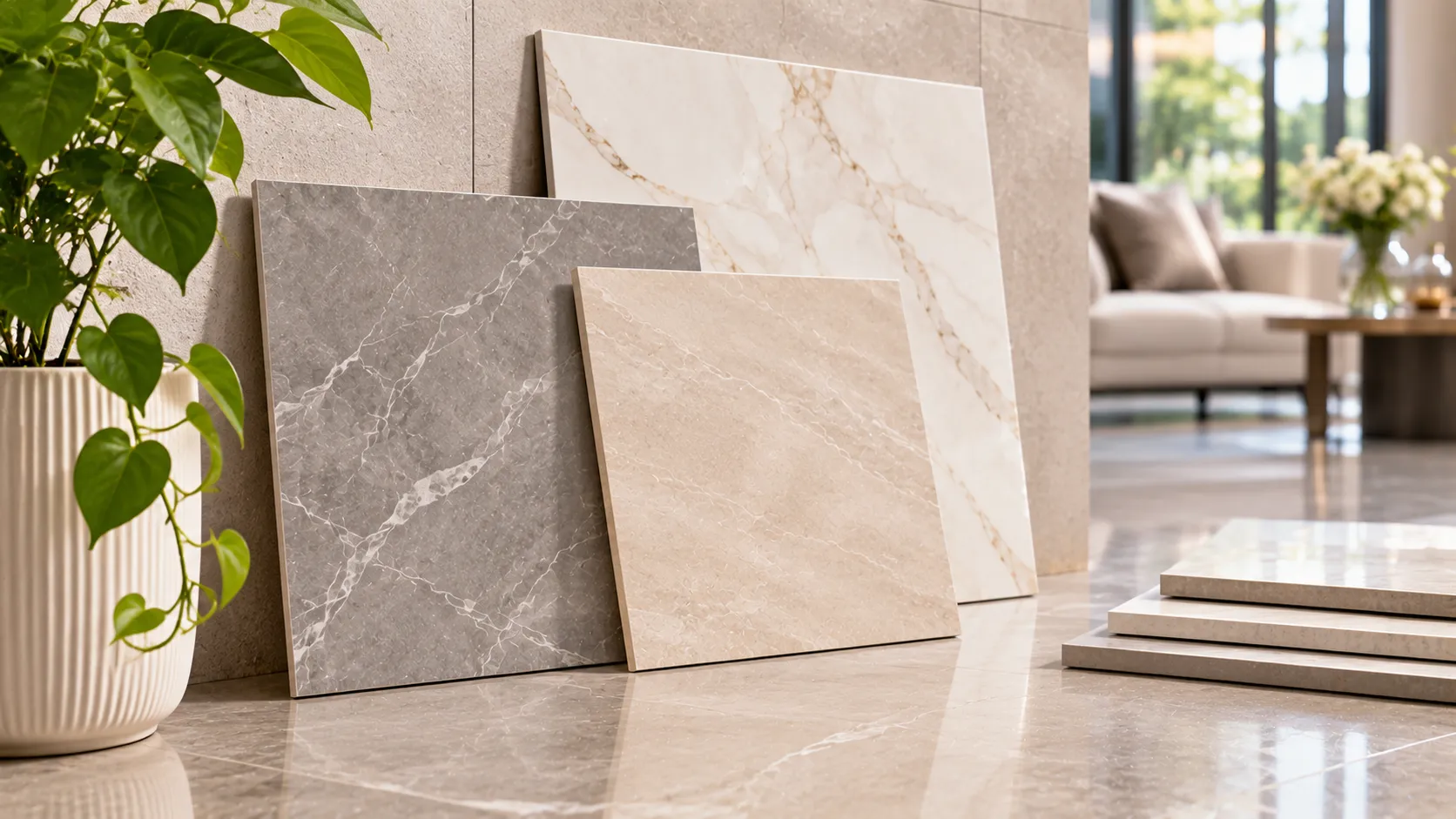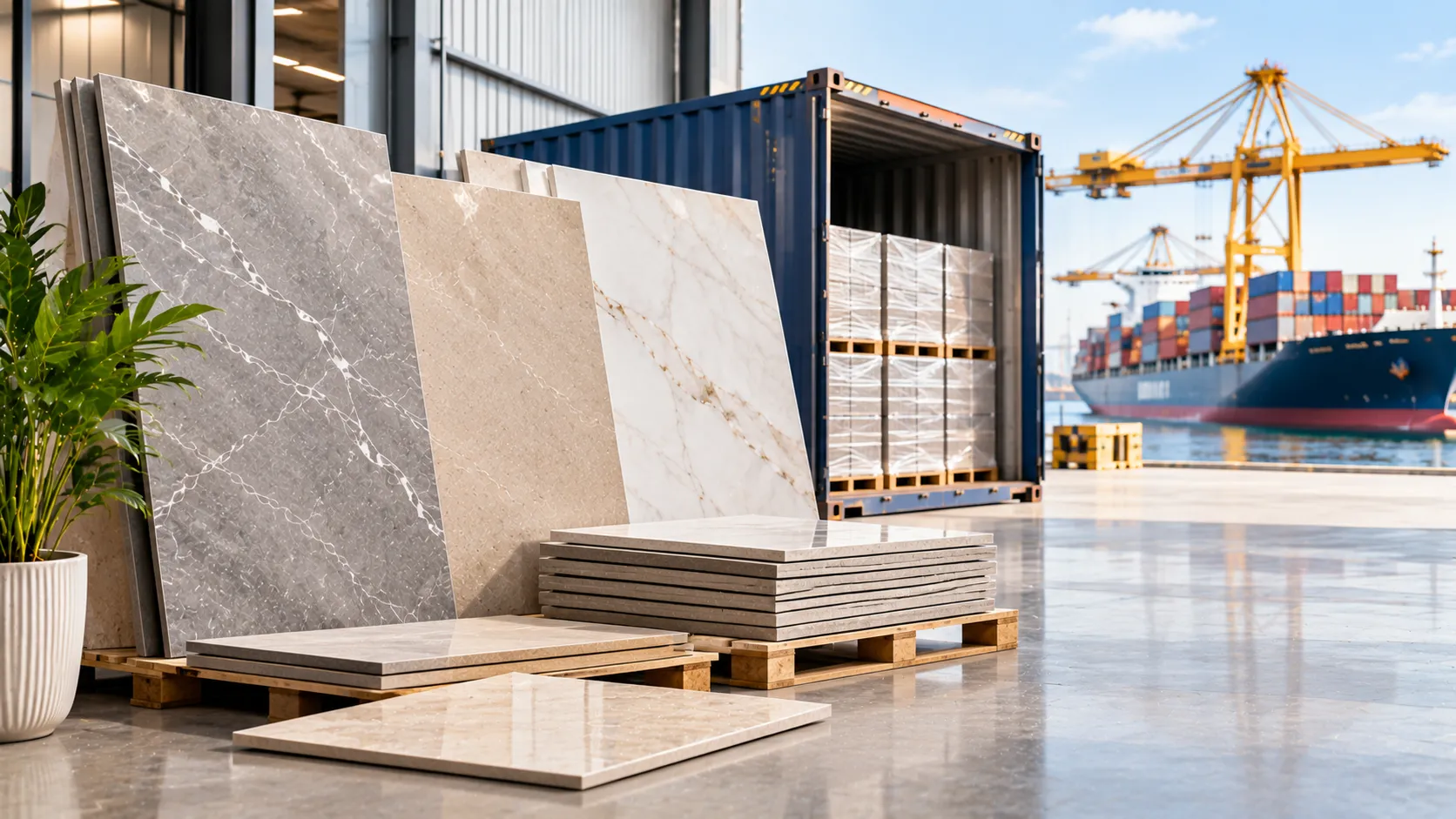
Choosing the right Indian tiles for international markets depends on factors such as intended application, technical specifications, surface requirements, design preferences, and destination market standards. This guide explores the main types of tiles manufactured in India, explains where they may be suitable, and highlights the considerations international buyers should keep in mind when evaluating tile products.
Major Types of Tiles Manufactured in India
India manufactures several categories of ceramic and vitrified tiles for different interior and exterior applications. These include vitrified tiles, glazed vitrified tiles, polished glazed vitrified tiles, porcelain tiles, and ceramic floor and wall tiles.
Each category serves different requirements. Some products are designed for flooring, while others are primarily intended for wall applications or decorative surfaces. Understanding these distinctions helps importers, distributors, wholesalers, and project developers identify suitable products for their customers and projects.
Which Types of Indian Tiles Are Suitable for International Markets?
The suitability of a tile depends on its composition, manufacturing specifications, surface characteristics, and intended application. The following categories represent important options available from Indian tile manufacturers.
1. Vitrified Tiles
Vitrified tiles are manufactured using a process that creates a dense, low-porosity tile body. They are commonly selected for flooring because of their surface characteristics, appearance, and suitability for various residential and commercial applications.
International buyers may consider vitrified tiles for:
- Living rooms and bedrooms
- Residential hallways and interior flooring
- Retail and office interiors
- Selected commercial spaces, depending on product specifications
These tiles are available in different sizes, colours, patterns, and finishes. Their suitability for a particular project should be evaluated through relevant technical data, including water absorption, breaking strength, abrasion resistance, and slip resistance where applicable.
For distributors and wholesalers, vitrified tiles can serve a range of customer requirements, from everyday residential flooring to selected commercial interior projects.
2. Glazed Vitrified Tiles (GVT)
Glazed vitrified tiles combine a vitrified body with a decorative glazed surface. The glaze allows manufacturers to produce different colours, patterns, textures, and visual effects, giving buyers a wide range of design options.
GVT tiles are commonly considered for spaces where both appearance and practical flooring or wall requirements matter. Depending on the product specifications, applications may include:
- Living room and bedroom flooring
- Kitchen and bathroom walls
- Residential interior spaces
- Selected commercial interiors
One of the key advantages of GVT products is their design variety. International buyers can evaluate different surface appearances to match regional design preferences and project requirements.
However, the glaze and decorative appearance alone do not determine a tile’s technical suitability. Buyers should check the product’s intended use, surface performance, and relevant test results before selecting it for a specific application.
3. Polished Glazed Vitrified Tiles (PGVT)
Polished glazed vitrified tiles are GVT products that undergo a polishing process to create a smooth, reflective surface. They are often considered for interiors where a glossy appearance and refined visual effect are preferred.
PGVT tiles may be suitable for applications such as:
- Living room flooring
- Bedroom interiors
- Residential entrance areas
- Selected hospitality and commercial interiors
Their polished appearance can complement contemporary and premium interior designs. They are also available in different patterns and designs, allowing buyers to consider options for various market preferences.
Before specifying PGVT tiles for flooring, buyers should evaluate the product’s slip resistance and suitability for the intended environment. A polished surface should not automatically be considered appropriate for wet areas or every type of commercial space. Product-specific technical information is essential when making a selection.
4. Porcelain Tiles
Porcelain tiles are a category of ceramic tiles manufactured to meet specific requirements for density and water absorption. According to ISO 13006, Group BIa classification, porcelain tiles have a water absorption level of 0.5% or less, based on the applicable testing requirements. This classification helps international buyers identify porcelain tiles and evaluate their technical properties when sourcing products.
Porcelain tiles are available in a variety of sizes, colours, patterns, and finishes. Depending on their specifications, they may be considered for:
- Residential floor and wall applications
- Bathrooms and kitchens
- Commercial interior spaces
- Selected outdoor applications where the product is specifically rated for exterior use
For international projects, porcelain tiles offer buyers options across different design and application requirements. However, not every porcelain tile is suitable for every environment. Factors such as slip resistance, thickness, strength, surface finish, and intended-use classification should be reviewed before purchasing.
5. Ceramic Floor and Wall Tiles
Ceramic tiles are manufactured using clay-based materials and other natural components, followed by shaping, drying, and firing. They are available in many colours, patterns, sizes, and decorative designs.
Ceramic tiles are commonly used for residential and commercial wall applications, while specific products are also manufactured for flooring. Their applications may include:
- Kitchen backsplashes and walls
- Bathroom walls
- Residential decorative surfaces
- Floors where the product is specifically rated for floor use
For international buyers, ceramic tiles provide a broad selection of design options for different interior styles and customer preferences. It is important to distinguish between wall tiles and floor tiles because they are manufactured and tested for different performance requirements. A wall tile should not be assumed suitable for flooring.
Suitable Indian Tile Types for Different International Applications
The right tile category depends on the space, expected usage, environmental conditions, and product specifications. International buyers should evaluate the intended application before finalising their product selection.
| Application | Tile categories to consider |
| Living room flooring | Vitrified, GVT, porcelain |
| Bedroom flooring | Vitrified, GVT, porcelain |
| Kitchen walls and backsplashes | Ceramic wall tiles, GVT |
| Bathroom walls | Ceramic wall tiles, GVT, porcelain |
| Commercial interiors | Vitrified, GVT, porcelain |
| Outdoor areas | Porcelain or other products specifically rated for outdoor use |
These are general selection guidelines rather than fixed rules. For example, a tile selected for a bathroom floor needs appropriate slip resistance, while a product used in a busy commercial environment may require specific abrasion and strength performance. Outdoor applications also require consideration of weather exposure, surface texture, and other relevant product specifications.
Key Factors to Consider When Selecting Indian Tiles
Selecting tiles for international markets involves more than comparing colours, patterns, and prices. Buyers should assess product suitability against the technical and design requirements of their target customers.
Important considerations include:
- Intended application: Confirm whether the tile is designed for floors, walls, indoor spaces, or outdoor use.
- Technical specifications: Review water absorption, breaking strength, abrasion resistance, and slip resistance according to the application.
- Size and thickness: Check whether available dimensions and thicknesses match project requirements and local preferences.
- Design and finish: Consider colours, patterns, textures, and finishes that suit the destination market.
- Market standards: Check the relevant regulations, testing requirements, and product standards applicable in the importing country.
- Product consistency: Evaluate shade variation, calibre, batch consistency, and inspection requirements before placing orders.
These checks help importers, distributors, and project buyers assess whether a particular product meets the expectations of their market. Technical documentation and product samples can support a more informed sourcing decision.
India’s Role in the Global Tile Market
India has developed a significant tile manufacturing base, offering a broad range of ceramic, vitrified, and porcelain products. Morbi in Gujarat is an important centre within the country’s ceramic tile industry, with manufacturers producing tiles for domestic and international customers.
The availability of different product categories, designs, sizes, and finishes gives international buyers options for various market segments. Importers and distributors can evaluate Indian tile manufacturers based on product range, manufacturing capabilities, quality systems, technical documentation, and consistency with their sourcing requirements.
Creanza’s Tile Range for International Buyers
Creanza operates in the Indian tile industry as a manufacturer and exporter of vitrified and porcelain tiles, serving the diverse requirements of international buyers. As one of the glazed vitrified tile exporters in India, Creanza offers a product range that includes premium porcelain tiles, floor tiles, wall tiles, and glazed vitrified tiles (GVT). These products provide buyers with multiple options for residential and commercial applications. International importers, distributors, and project developers can explore Creanza’s tile collections based on their design preferences, project requirements, and relevant technical specifications.
Conclusion
Indian tiles offer international buyers a wide selection of product categories for residential, commercial, and selected specialised applications. Vitrified, GVT, PGVT, porcelain, and ceramic tiles each serve different requirements. Understanding their characteristics and checking product-specific technical information helps importers and project developers make suitable sourcing decisions.
Creanza contributes to India’s tile manufacturing and export sector through its range of vitrified and porcelain tile products, including floor tiles, wall tiles, and glazed vitrified tiles. Its product categories provide international buyers with options to evaluate for different interior requirements, with final selection based on project needs and verified product specifications.
Frequently Asked Questions
What types of tiles are manufactured in India?
India manufactures several types of tiles, including vitrified tiles, GVT, PGVT, porcelain tiles, and ceramic floor and wall tiles. Each category offers different design options and application characteristics.
Which Indian tiles are suitable for international markets?
Vitrified, porcelain, GVT, PGVT, and ceramic tiles may all be suitable, depending on the destination market, intended application, and product specifications.
What is the difference between GVT and PGVT tiles?
GVT tiles have a decorative glazed surface, while PGVT tiles undergo an additional polishing process to create a smooth, reflective appearance. Their suitability depends on the product’s technical specifications and intended use.
Are porcelain tiles suitable for commercial projects?
Certain porcelain tiles are suitable for commercial applications. Buyers should check strength, abrasion resistance, slip resistance, and other relevant performance data before selecting a product.
What should international buyers check before sourcing Indian tiles?
Buyers should review the tile category, intended application, dimensions, technical specifications, design, product consistency, and destination market requirements before confirming a purchase.