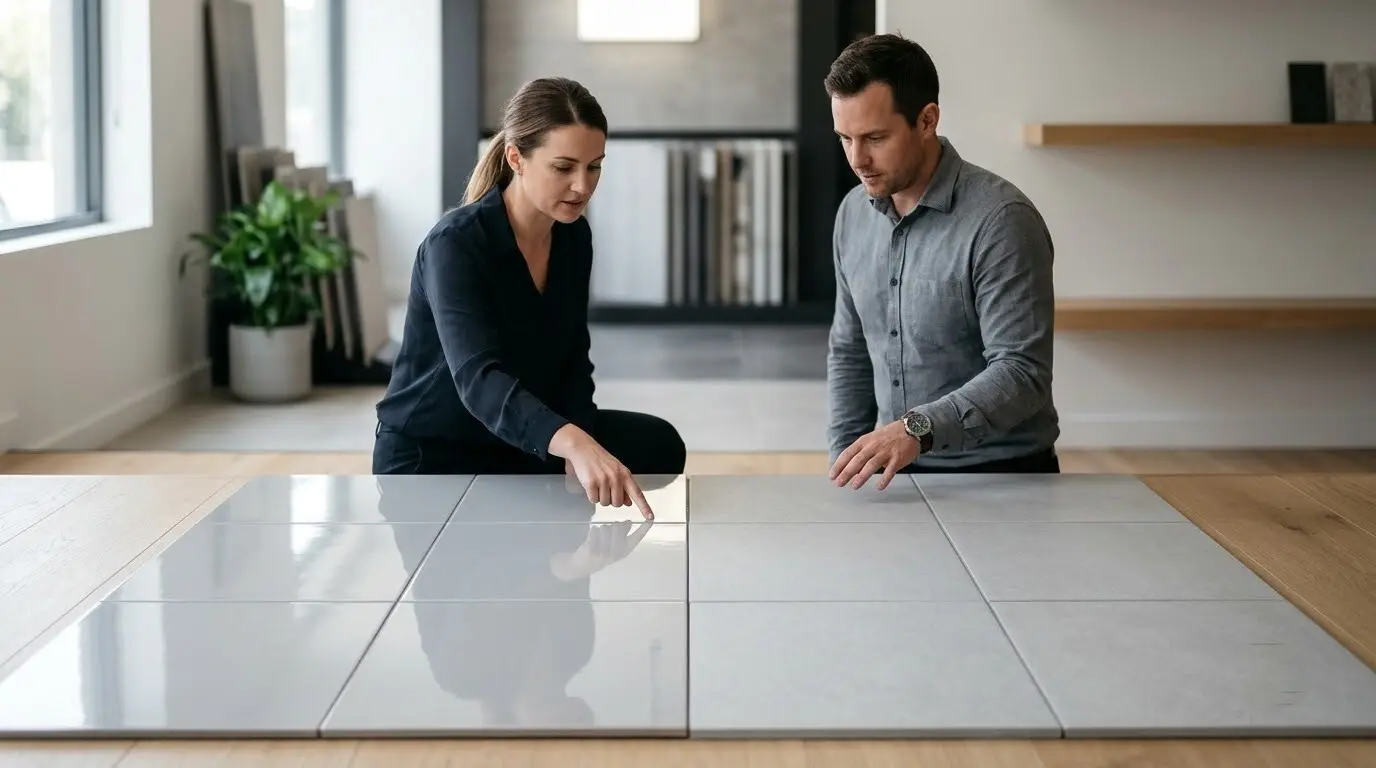

The right commercial tiles should therefore be selected according to how each space will be used rather than choosing one tile for the entire building.
Vitrified, glazed vitrified, porcelain, floor, and wall tiles can serve different purposes when their characteristics are matched to the application. For architects, interior designers, developers, contractors, and commercial buyers, understanding these factors can make tile selection more practical and informed.
What Should You Consider When Choosing Tiles for a Commercial Building?
The main factors to consider are foot traffic, application, durability, water exposure, slip resistance, surface finish, maintenance, and design requirements.
Before selecting a tile, evaluate how the space will be used and what conditions the surface will experience.
Foot Traffic
Foot traffic is an important consideration for commercial flooring. Entrances, corridors, reception areas, retail spaces, and other shared areas can experience frequent movement throughout the day.
The expected traffic should influence the evaluation of:
- Wear resistance
- Surface characteristics
- Strength
- Maintenance requirements
- Slip resistance
Not every commercial space has the same traffic level. A private office, reception area, service room, and public corridor can have significantly different requirements.
Floor or Wall Application
Floor and wall applications have different functional requirements.
Flooring needs to be evaluated for underfoot use, traffic, wear, and safety. Wall tiles are generally selected with greater emphasis on appearance, cleaning, moisture exposure, and installation conditions.
Entrances, bathrooms, kitchens, corridors, decorative walls, and other areas should therefore be assessed separately.
Maintenance Requirements
Commercial spaces are regularly exposed to dust, spills, stains, footwear, and cleaning activities. The tile’s surface and finish should be appropriate for the property’s maintenance routine.
Choosing a practical surface can make regular cleaning easier while helping maintain the intended appearance of the space.
Technical Specifications
Appearance should always be considered alongside product information. Depending on the application, buyers should review characteristics such as:
- Wear resistance
- Water absorption
- Strength
- Slip resistance
- Surface finish
- Recommended application
- Cleaning and maintenance requirements
The appropriate specifications will vary according to the location and intended use.
Which Types of Tiles Are Suitable for Commercial Buildings?
There is no single tile type that is universally best for every commercial building. The right choice depends on the application’s performance requirements and design objectives.
Glazed Vitrified Tiles
Glazed vitrified tiles combine a vitrified tile body with a designed surface, providing extensive options in colours, patterns, textures, and finishes.
Creanza’s GVT collections are positioned for both residential and commercial interiors, combining durability, aesthetics, and design versatility.
They can be considered for offices, showrooms, commercial interiors, and other spaces where design flexibility is important.
Porcelain Tiles
Porcelain tiles provide another option for commercial environments where strength, durability, low water absorption, and application suitability are important considerations.
Creanza’s porcelain range includes digital glazed, polished, and full-body finishes, with the company positioning its porcelain products for commercial and architectural applications, including high-traffic environments.
Floor Tiles
Commercial floor tiles need to be evaluated according to traffic, surface characteristics, maintenance, and safety requirements.
Creanza’s floor tile portfolio includes glazed vitrified and porcelain options with different contemporary finishes and designs for residential and commercial environments.
Wall Tiles
Wall tiles can contribute significantly to the visual identity of a commercial interior. They can be selected according to the desired colour, texture, pattern, finish, moisture exposure, and maintenance requirements.
Creanza’s wall tile portfolio includes vitrified, glazed vitrified, porcelain, and designer options for commercial and interior applications.
How Should You Choose Tiles for Different Areas of a Commercial Building?
The tile should be selected according to the specific function of each area rather than applying the same specification throughout the building.
Reception and Entrance Areas
Reception areas create an important first impression and often combine visual impact with regular movement.
Consider:
- Foot traffic
- Surface finish
- Cleaning requirements
- Lighting
- Overall design concept
- Durability requirements
Large-format tiles can also be considered where the design calls for visual continuity and fewer visible joints. Creanza’s catalogue includes large formats such as 1200 × 1800 mm and 800 × 1600 mm.
Corridors and Common Areas
Corridors and shared spaces typically experience repeated movement and regular cleaning.
The selected flooring should therefore be evaluated for expected wear, maintenance, safety, surface characteristics, and the overall design language of the building.
Offices and Workspaces
Office environments may require a balance between professional aesthetics and everyday practicality.
Neutral surfaces, contemporary patterns, natural textures, and understated finishes can help create a cohesive workplace environment while meeting the functional requirements of the space.
Restaurants and Service Areas
Commercial areas exposed to spills and frequent cleaning require careful consideration of surface characteristics, maintenance, moisture exposure, and safety.
The selected finish should be appropriate for the conditions in which the tile will be installed.
Restrooms and Utility Areas
Restrooms require particular attention to moisture and cleaning.
For floors, buyers should review slip-resistance information and wet-area suitability. Wall tiles can be evaluated based on moisture exposure, cleaning, surface characteristics, and design.
How Does Tile Finish Affect Commercial Interiors?
Tile finish influences both the appearance and practical character of a commercial space, so it should be selected according to lighting, application, maintenance, safety, and design requirements.
Glossy or polished surfaces can reflect more light and create a sophisticated appearance, making them suitable for selected interiors, walls, feature areas, and spaces where visual brightness is desired.
Matt, rustic, structured, and other textured surfaces can create a softer or more natural appearance and may be considered for applications where a lower-reflection surface is preferred.
Creanza’s current portfolio includes multiple surface expressions, including glossy, polished, rustic, structured, carving, and anti-reflective finishes, giving commercial projects flexibility in both visual and functional selection.
The finish should ultimately be matched with the specific conditions of the space rather than selected only for appearance.
How Does Creanza Support Commercial Tile Projects?
Creanza offers a broad tile portfolio for commercial and architectural applications, including GVT, PGVT, porcelain, floor, and wall tiles.
Creanza is an Indian tile manufacturer and tiles exporter from india, operating from Morbi, Gujarat, with a product portfolio developed around contemporary architecture and interior design.
Its Global Export portfolio includes:
- Glazed Vitrified Tiles (GVT)
- Polished Glazed Vitrified Tiles (PGVT)
- Digital Glazed Vitrified Tiles
- Porcelain Tiles
- Floor Tiles
- Wall Tiles
Creanza’s export operations serve importers, distributors, wholesalers, retailers, and project developers across international markets. Its Global Export page specifically positions its products for residential and commercial projects and highlights consistent quality, contemporary designs, reliable supply capabilities, and export support.
This makes product selection more than a design decision. For commercial projects, buyers can evaluate Creanza’s collections according to the project’s application, required format, surface, design direction, and performance requirements.
Conclusion
Choosing tiles for a commercial building requires more than selecting a visually appealing product. Traffic, application, durability, safety, maintenance, surface finish, format, and design should all be considered together.
Rather than choosing one universal tile for an entire building, architects, designers, developers, and buyers should evaluate each space according to its specific functional and visual requirements.
Creanza offers GVT, PGVT, digital glazed vitrified, porcelain, floor, and wall tile collections with contemporary designs, multiple surface options, and formats for different commercial and architectural applications. With its manufacturing base in Morbi, Gujarat, and international export capabilities, Creanza supports importers, distributors, wholesalers, retailers, and project buyers looking for tile solutions from India.
By matching the right tile characteristics to each commercial application, project teams can create spaces that balance performance, practicality, safety, and visual identity.
Frequently Asked Questions
What are the best tiles for commercial buildings?
The best tiles depend on the specific application. Consider traffic, wear resistance, strength, water absorption, slip resistance, surface finish, maintenance, and design before selecting a product.
Are vitrified tiles suitable for commercial buildings?
Yes. Vitrified tiles can be suitable for many commercial applications when the selected product’s characteristics match the requirements of the intended space.
Which tiles are suitable for commercial flooring?
GVT, porcelain, and other suitable floor tile options can be considered for commercial flooring, depending on traffic, wear, safety, maintenance, and application requirements.
Are porcelain tiles suitable for high-traffic commercial areas?
Porcelain tiles can be suitable for high-traffic commercial applications when the specific product is appropriately specified. Creanza positions its porcelain range for architectural and high-traffic applications.
What should I consider when choosing commercial floor tiles?
Consider traffic, wear resistance, strength, water absorption, slip resistance, surface finish, cleaning requirements, installation conditions, and overall design.
Can the same tiles be used for commercial floors and walls?
Some tiles may be suitable for both applications, depending on their specifications. However, floor and wall applications have different functional requirements, so always confirm the manufacturer’s recommended use.
Does Creanza offer tiles for commercial projects?
Yes. Creanza offers GVT, PGVT, digital glazed vitrified, porcelain, floor, and wall tiles for residential and commercial applications. Its porcelain range is also positioned for architectural and high-traffic applications.