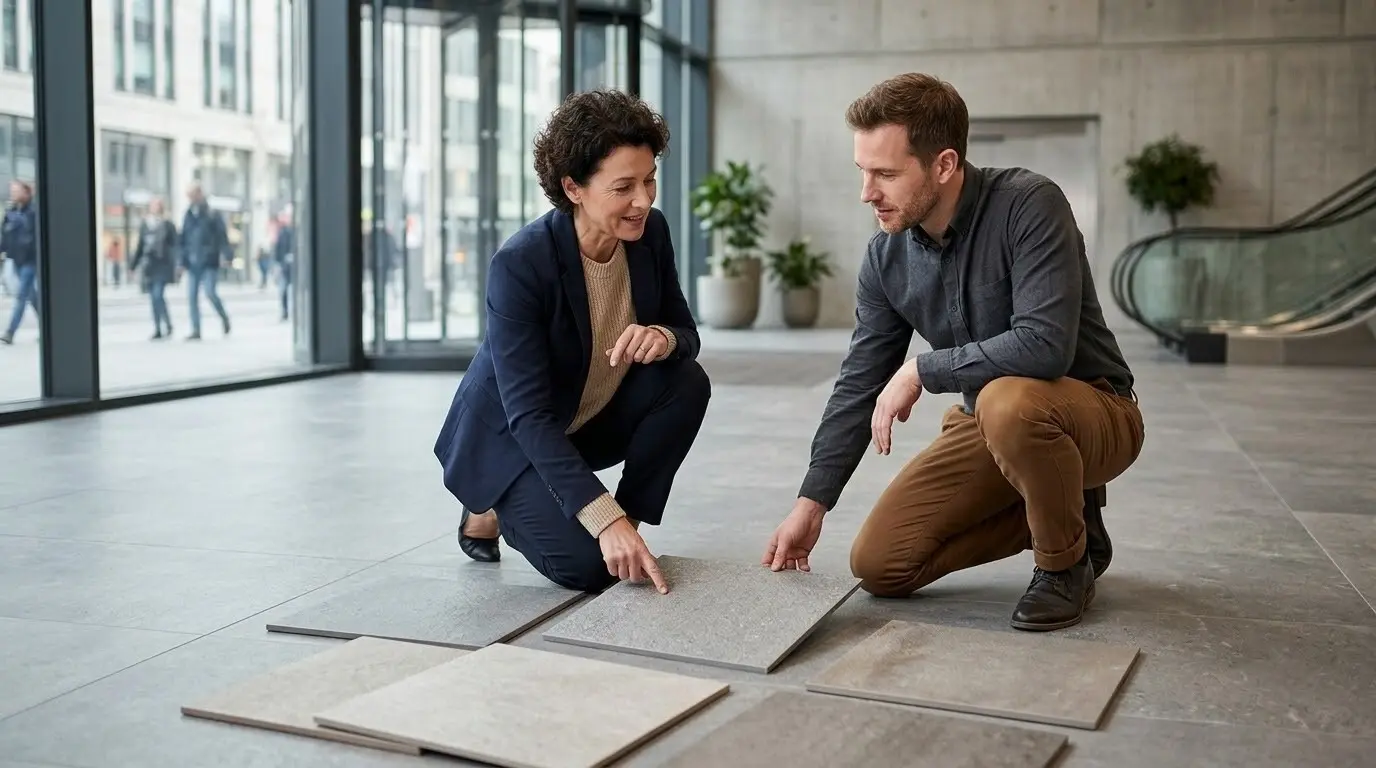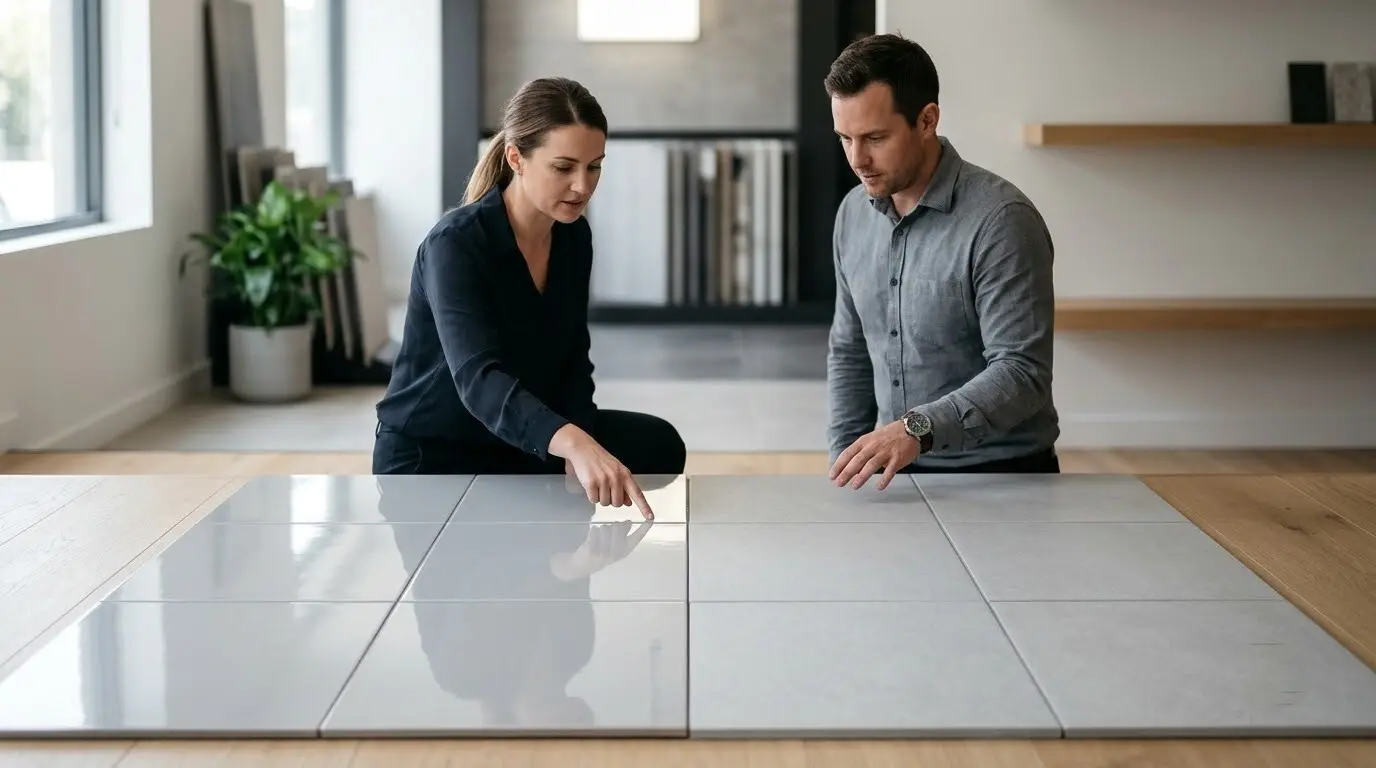

Key Takeaways
- Ceramic and vitrified tiles differ in composition, manufacturing process, density, and water absorption.
- Ceramic tiles can be suitable for walls and selected flooring applications.
- Vitrified tiles are widely considered for flooring and applications requiring a denser tile body.
- Neither ceramic nor vitrified tiles is universally better for every space.
- Application, moisture, maintenance, design, and technical specifications should guide selection.
- Always check product recommendations before installation.
Ceramic tiles are commonly considered for walls and selected flooring applications, while vitrified tiles are widely used for flooring and areas where a denser tile body and lower water absorption may be preferred. Understanding these differences can help homeowners, architects, designers, builders, and buyers make a more informed choice based on application, maintenance, design, and product specifications.
How are Ceramic and Vitrified Tiles Manufactured?
How are Ceramic Tiles Made?
Ceramic tiles are produced using clay-based raw materials that are prepared, shaped, dried, and fired. Depending on the product, a glaze or decorative surface may be applied before or during the firing process.
The manufacturing process influences the final characteristics of the tile, including its appearance, surface, density, and suitability for different applications. Ceramic tiles are available in many colours, patterns, textures, and finishes, making them useful for both decorative and functional interior surfaces.
How are Vitrified Tiles Made?
Vitrified tiles are manufactured using carefully prepared raw materials that are shaped and processed before high-temperature firing. The process creates a dense, vitrified tile body with comparatively low water absorption.
This characteristic makes vitrified tiles widely considered for flooring and other applications where a dense surface and practical performance are important. However, the suitability of an individual vitrified tile should always be determined from its product specifications and recommended application.
What is the Difference Between Ceramic and Vitrified Tiles?
The main difference between ceramic and vitrified tiles is related to their composition, manufacturing process, density, and water absorption. Ceramic tiles are made from clay-based materials and are fired to form the finished tile. Vitrified tiles undergo a manufacturing process that creates a denser, more vitrified body.
| Feature | Ceramic Tiles | Vitrified Tiles |
| Basic composition | Clay-based | Clay and mineral-based vitrified body |
| Manufacturing | Shaped, dried, and fired | Processed, pressed, and fired to create a dense body |
| Density | Comparatively less dense | Generally denser |
| Water absorption | Generally higher | Generally lower |
| Typical applications | Walls and selected floors | Floors and selected interior applications |
| Design options | Wide variety | Wide variety |
| Maintenance | Depends on surface and application | Depends on surface and application |
The difference between ceramic and vitrified tiles becomes particularly important when selecting tiles for flooring, wet areas, walls, commercial spaces, or interiors that require specific technical characteristics.
How Do Ceramic and Vitrified Tiles Differ in Water Absorption?
Water absorption is one of the important differences when comparing ceramic tiles vs vitrified tiles. Ceramic tiles generally have higher water absorption than vitrified tiles, while the denser body of vitrified tiles generally results in lower water absorption.
This difference can influence where a tile is suitable. Areas exposed to moisture, such as bathrooms and kitchens, require careful consideration of the product’s technical characteristics and intended application.
Which is Stronger, Ceramic or Vitrified Tile?
Vitrified tiles are generally denser and are commonly selected for flooring applications where regular use requires suitable technical performance. However, strength and performance can vary between products, so the specific technical specification should always be reviewed.
Density and Structural Characteristics
The manufacturing process gives vitrified tiles a dense body. This is one reason vitrified vs. ceramic tiles matters for flooring and other applications where the tile may see regular use.
Ceramic tiles can also be suitable for flooring when the selected product is designed and specified for that purpose. Therefore, the application and product specification are more important than relying only on the tile category.
Suitability for Regular Floor Use
Vitrified tiles are widely considered for floors in homes, offices, retail interiors, hospitality spaces, and other areas. Their lower water absorption and dense body can make them suitable for a range of flooring applications, including durable vitrified tiles for high-traffic areas.
Ceramic tiles can also be used on selected floors, depending on the product and intended environment. Buyers should always follow manufacturer recommendations when selecting flooring tiles.
Ceramic vs Vitrified Tiles: Which is Easier to Maintain?
Maintenance depends on the tile’s surface, finish, installation quality, grout, and how the space is used. Therefore, neither category should automatically be considered maintenance-free.
Ceramic Tiles
Ceramic tile maintenance depends on the surface and glaze used. Regular cleaning can help maintain appearance, while grout joints may require additional attention depending on the environment.
Vitrified Tiles
The dense body of vitrified tiles can make them practical for many flooring applications. Routine cleaning requirements still depend on the surface finish, installation, grout, and level of use.
The key consideration is to select a tile whose maintenance requirements match the property’s cleaning routine.
Ceramic vs Vitrified Tiles for Different Spaces
The right choice depends on the intended application. A simple comparison can help:
| Space | Generally Consider | Main Consideration |
| Living room | Vitrified | Flooring use, design, maintenance |
| Bedroom | Ceramic or vitrified | Usage and preferred appearance |
| Kitchen wall | Ceramic | Wall application and design |
| Bathroom wall | Ceramic | Moisture, cleaning, design |
| Bathroom floor | Product-specific | Moisture and slip considerations |
| Office floor | Vitrified | Regular floor use |
| Retail floor | Vitrified | Usage and maintenance |
| Decorative wall | Ceramic | Design flexibility |
This is a general selection framework, not a universal rule. The product’s specifications and recommended application should always take priority.
Ceramic or Vitrified Tiles: Which One Should You Choose?
There is no single answer to whether ceramic or vitrified tiles are better. The right option depends on where the tile will be installed and what characteristics are required.
Choose Ceramic Tiles When:
- The primary application is a wall.
- A wide range of decorative options is important.
- The selected product is specified for the intended flooring application.
- The space has requirements that can be met by the product’s technical characteristics.
Choose Vitrified Tiles When:
- Flooring is the primary application.
- A dense tile body is preferred.
- Lower water absorption is an important consideration.
- The product’s technical characteristics suit the intended use.
The key principle is to choose based on application, performance, maintenance, and design, rather than assuming one tile category is universally better.
How Does Creanza Approach Vitrified Tile Solutions?
Creanza is a leading vitrified tiles exporter, offering a wide range of tile options for different interior spaces. Its collection includes vitrified tiles, glazed vitrified tiles, porcelain tiles, floor tiles, and wall tiles, available in a variety of colours, patterns, textures, and finishes. With diverse design choices, Creanza provides versatile tile solutions for both residential and commercial interiors.
For buyers, architects, designers, and project teams, the tile selection can be approached according to the specific application and its requirements. Considering the intended use, design direction, maintenance needs, surface characteristics, and technical specifications can help identify a suitable tile solution.
Conclusion
Understanding the ceramic vs. vitrified tiles difference can make tile selection easier for residential and commercial projects. Ceramic tiles offer design flexibility and can be suitable for walls and selected floors, while vitrified tiles are widely considered for flooring because of their dense body and comparatively low water absorption. The right choice ultimately depends on the specific application and product characteristics.
Creanza provides vitrified, glazed vitrified, porcelain, floor, and wall tile options for different interior requirements. By evaluating each option according to its intended application, design, maintenance needs, and technical characteristics, buyers and design professionals can make more informed decisions instead of choosing a tile category based on general assumptions.
FAQs
1. What is the main difference between ceramic and vitrified tiles?
The main differences are their manufacturing process, density, water absorption, and typical applications. Vitrified tiles generally have a denser body and lower water absorption than ceramic tiles.
2. Which is better, ceramic or vitrified tiles?
Neither is universally better. Ceramic tiles can suit walls and selected floors, while vitrified tiles are widely considered for flooring. The right choice depends on the application and product specifications.
3. Are ceramic tiles suitable for flooring?
Yes, some ceramic tiles are suitable for flooring. Always check the product’s recommended application and technical specifications before using ceramic tiles on a floor.
4. Are vitrified tiles suitable for walls?
Some vitrified tiles may be suitable for wall applications, depending on their specifications and manufacturer recommendations. The intended application should always be confirmed before installation.
5. Which tiles are better for moisture-prone areas?
Vitrified tiles generally have lower water absorption, but the appropriate choice depends on the specific product and application. Moisture exposure, surface properties, slip resistance, and manufacturer recommendations should be considered.