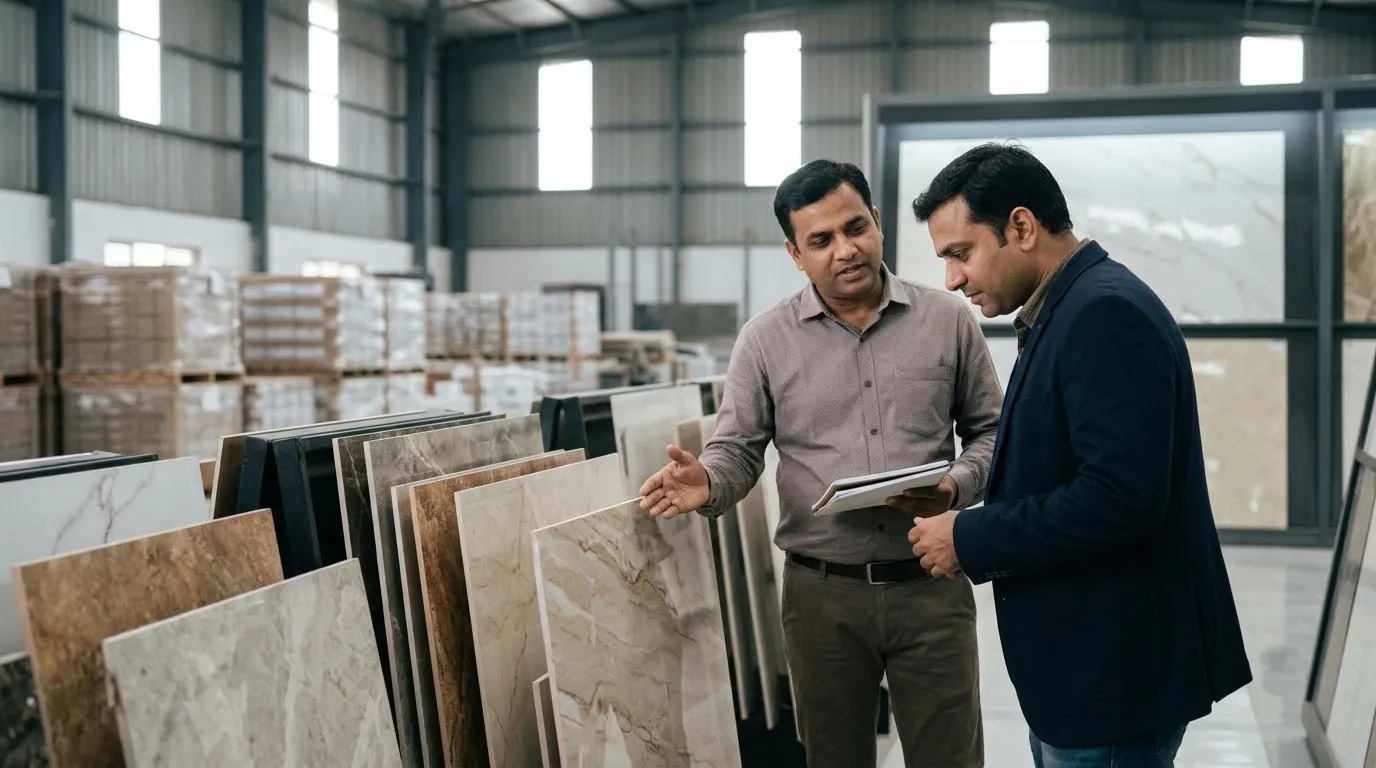
How to Choose the Right Indian Tile Manufacturer for Your Business

Indian Tile Manufacturer

Key Takeaways

  • Evaluate product quality and consistency before placing an order.
  • Confirm product availability, manufacturing schedules, and order commitments.
  • Review payment terms, packaging arrangements, and delivery responsibilities.
  • Verify export documentation and destination-market requirements.
  • Compare manufacturers using consistent criteria rather than price alone.
  • Consider repeat-order needs when assessing long-term suitability.

India offers a wide range of ceramic, porcelain, and vitrified tiles for domestic and international markets. However, selecting a manufacturer involves more than comparing prices and designs. Buyers should verify product specifications, confirm order commitments, understand shipping responsibilities, and assess whether the manufacturer can meet their business requirements.

Why Do Businesses Source Tiles from India?

Indian tile manufacturers offer a variety of product categories, designs, finishes, and sizes for different market segments. These options allow businesses to develop product assortments for retail sales, wholesale distribution, residential projects, and commercial developments.

Morbi, Gujarat, is an important tile manufacturing centre in India, with manufacturers serving different market requirements. According to the Government of India’s Press Information Bureau overview of the Morbi ceramics cluster, the region has a significant presence in India’s ceramic manufacturing industry. However, the location of a manufacturer alone does not establish its product quality, reliability, or export capabilities.

When evaluating Indian tile manufacturers, buyers should focus on the specific products required, the supplier’s ability to fulfil orders, and the commercial arrangements available. A structured evaluation helps businesses identify manufacturers whose capabilities align with their purchasing plans and customer expectations.

What Factors Should You Evaluate Before Choosing a Tile Manufacturer?

Several factors influence whether a manufacturer is suitable for your business. Evaluating these areas before placing an order can help reduce purchasing risks and establish clearer expectations.

1. Product Quality and Consistency

Product quality should be one of the first considerations when comparing manufacturers. Tiles should meet the specifications agreed upon for the intended application and destination market.

Before confirming an order, request samples and review dimensions, surface finish, colour, pattern, and overall appearance. Ask about the manufacturer’s quality-control procedures and the technical documentation available for the selected products.

Consistency is particularly important for businesses placing repeat orders. Variations between batches can affect inventory planning, customer satisfaction, and project coordination. Discuss how product specifications are maintained and how any changes are communicated.

2. Manufacturing Capabilities and Product Range

A suitable manufacturer should offer the product categories required by your business. Depending on your market, these may include ceramic tiles, porcelain tiles, glazed vitrified tiles, floor tiles, and wall tiles.

When evaluating ceramic tile manufacturers in India or vitrified tile manufacturers in India, confirm the availability of the required sizes, finishes, designs, and specifications.

Also, discuss production schedules and expected order volumes. A manufacturer’s stated production capacity does not automatically guarantee availability for a particular order. Confirm the quantities that can be supplied, expected dispatch dates, and arrangements for repeat purchases.

3. Supply Reliability and Lead Times

Reliable supply helps importers, distributors, and retailers manage inventory and fulfil customer commitments. Delays can disrupt sales plans, project schedules, and warehouse operations.

Before placing an order, confirm the estimated production time, dispatch schedule, packaging arrangements, and process for communicating delays. If an order includes multiple products, clarify whether all items will be ready together or dispatched separately.

A dependable business relationship requires realistic timelines and clear communication about changes that may affect delivery.

4. Commercial Terms and Communication

Commercial terms should be clearly agreed upon before an order is confirmed. Discuss minimum order quantities, quotation validity, payment conditions, packaging costs, and delivery responsibilities.

International buyers should also clarify the agreed Incoterms, which define specific responsibilities for delivery, costs, and risk between the seller and buyer.

Evaluate how clearly the manufacturer responds to technical questions, confirms order details, and handles concerns. Transparent communication can make purchasing decisions easier and help prevent misunderstandings during ongoing business transactions.

How Can You Verify an Indian Tile Manufacturer’s Export Readiness?

International buyers should confirm that a manufacturer can support the documentation, packaging, and shipment requirements relevant to their destination market.

Before choosing a tile exporter from India, check the following:

  • Market experience: Ask about experience supplying your destination country or similar markets.
  • Product documentation: Request relevant technical specifications and available quality documents.
  • Packaging arrangements: Confirm how the tiles will be packed and protected for international transportation.
  • Shipment responsibilities: Clarify delivery terms, freight arrangements, documentation responsibilities, and expected timelines.
  • Destination requirements: Verify applicable customs, labeling, product standards, and import regulations.
  • Issue resolution: Establish how damage, shortages, and product discrepancies will be reported and reviewed.

Export requirements vary by product and destination. Buyers should verify applicable rules with the relevant authorities or a qualified customs professional instead of assuming that the same documentation applies to every country.

Why Does the Location of a Tile Manufacturer Matter?

Morbi, Gujarat, is a major tile manufacturing centre in India. Businesses researching tile manufacturers in Morbi may find a range of manufacturers and product categories to consider.

However, choosing a manufacturer should involve more than geographical convenience. Product specifications, quality consistency, manufacturing capabilities, supply commitments, commercial terms, and communication remain important selection criteria.

Whether sourcing from Morbi or another manufacturing location, buyers should evaluate each company individually. The objective is to find a manufacturing partner whose capabilities match the business’s requirements, not simply to select a supplier based on location.

How Should You Compare Two Tile Manufacturers Before Making a Decision?

Comparing manufacturers against the same criteria makes the selection process more objective. Rather than choosing solely on the lowest quotation, assess the factors that affect product suitability, supply reliability, and overall purchasing costs.

Evaluation factorWhat to verify
Product qualitySamples, specifications, and quality-control procedures
Product rangeRequired categories, finishes, sizes, and designs
Manufacturing capabilityOrder quantities and confirmed production schedules
Supply reliabilityLead times, dispatch commitments, and communication
Commercial termsMinimum quantities, payment conditions, and delivery responsibilities
Export readinessRelevant documentation and shipment arrangements
Long-term suitabilityRepeat-order capability and issue resolution

Use the same checklist when comparing tile suppliers in India. Request written quotations and clarify any differences in product specifications, packaging, payment terms, or delivery responsibilities before making a final decision.

What Mistakes Should You Avoid When Selecting a Tile Manufacturer?

Several common mistakes can create unnecessary purchasing and supply challenges.

  1. Choosing only by price: A low quotation may not reflect packaging, transportation, quality consistency, or other commercial costs.
  2. Skipping sample evaluation: Samples help buyers determine whether the product meets the required specifications and expectations.
  3. Assuming capacity guarantees availability: Confirm actual order commitments and production schedules.
  4. Ignoring export requirements: Check documentation and destination-market regulations before confirming an international purchase.
  5. Leaving commercial terms unclear: Record agreed payment conditions, packaging arrangements, delivery responsibilities, and complaint-handling procedures.
  6. Overlooking repeat orders: Consider whether the manufacturer can support future purchasing requirements as the business grows.

A structured evaluation helps buyers make decisions based on verified information rather than assumptions.

How Can Creanza Support Your Tile Sourcing Requirements?

Creanza offers tile categories and design options for different interior applications, including glazed vitrified tiles, floor tiles, porcelain tiles, and wall tiles. Businesses exploring sourcing options can review the available products according to their market requirements, preferred designs, and purchasing needs.

For importers, distributors, retailers, and other business buyers, the next step is to discuss relevant product specifications, order quantities, and commercial requirements directly with Creanza. Confirming these details helps businesses assess whether the available range and proposed arrangements align with their sourcing objectives.

Conclusion

Choosing the right Indian tile manufacturer requires a structured evaluation of product quality, manufacturing capabilities, supply reliability, commercial terms, and export readiness. Importers, distributors, wholesalers, and project buyers should verify specifications, compare suppliers objectively, and establish clear expectations before committing to an order. This approach helps reduce purchasing risks and supports more reliable business relationships.

Creanza offers different tile categories and design options for businesses exploring tile sourcing from India. By reviewing available products, confirming technical and commercial requirements, and discussing specific business needs directly with the company, buyers can assess whether Creanza is a suitable manufacturing partner for their target market and long-term sourcing plans.

Frequently Asked Questions

1. How do I choose the right tile manufacturer in India?

Evaluate product quality, manufacturing capabilities, supply reliability, commercial terms, export readiness, and communication. Request samples, confirm specifications, and compare written quotations before placing an order.

2. Why do businesses source tiles from Morbi, Gujarat?

Morbi is an important tile manufacturing centre in India, offering buyers a range of manufacturers and product categories to evaluate. Individual manufacturers should still be assessed for quality, reliability, and business suitability.

3. What should importers check before ordering tiles from India?

Importers should verify product samples, specifications, packaging, payment terms, shipping responsibilities, relevant documentation, and destination-market requirements before confirming an order.

4. How can I compare two Indian tile manufacturers?

Compare product quality, available ranges, confirmed production schedules, commercial terms, export readiness, and the ability to support repeat orders. Use the same evaluation criteria for both manufacturers.

5. Why is quality consistency important when selecting a tile supplier?

Consistent quality helps businesses manage repeat orders, maintain customer expectations, plan inventory, and reduce product discrepancies. Buyers should confirm specifications and available quality-control procedures before ordering.


Share This Article On :

Complete Guide for International Buyers to Import Tiles from India

Importing Tiles from India

Importing tiles from India involves selecting suitable products, confirming commercial terms, preparing shipping documents, arranging freight, and complying with destination-country customs regulations. A well-planned import process helps international buyers manage costs, coordinate deliveries, and reduce avoidable delays. 

This guide explains the essential steps, documentation, shipping considerations, and costs businesses should understand before importing tiles from India.

Why Do International Buyers Import Tiles from India?

India is an established source of ceramic, porcelain, and vitrified tiles for international markets. Its tile industry serves different market segments, including retailers, wholesalers, distributors, construction businesses, and commercial project buyers.

International buyers can explore different tile categories according to their market requirements, product preferences, and business models. However, successful sourcing depends on more than product availability. Importers should understand order requirements, commercial terms, transportation arrangements, and destination-country regulations before confirming a purchase.

What Steps are Involved in Importing Tiles from India?

The tile import process generally involves five steps, from defining product requirements to arranging international transportation and customs clearance.

1. Define Your Product Requirements

Identify the tile categories, dimensions, finishes, quantities, and packaging requirements needed for your target market. Prepare a product list that clearly describes the items you intend to purchase.

Confirm the required specifications before requesting quotations. Clear requirements help buyers and exporters coordinate orders and reduce misunderstandings during packing and dispatch.

2. Request Quotations and Confirm Commercial Terms

Contact suitable suppliers or a tiles exporter from India to request product information and quotations. Review the quoted prices, minimum order quantities, payment terms, and expected dispatch arrangements.

Clarify the agreed Incoterms, which establish important responsibilities for delivery, costs, and risk between the seller and buyer. Make sure the quotation clearly identifies the products and quantities covered.

3. Confirm the Order and Payment Arrangements

Once the commercial terms are agreed upon, confirm the order in writing. Review the product descriptions, quantities, packaging details, payment schedule, and expected shipment arrangements.

Both parties should also agree on how changes, shortages, or discrepancies will be handled. Written confirmation helps establish clear expectations before the order proceeds.

4. Prepare the Shipment

Coordinate packaging, shipment details, and any agreed pre-shipment inspection. Ensure that the packing arrangement is appropriate for international transportation and that the shipment details match the confirmed order.

5. Arrange Freight and Customs Clearance

Coordinate with the exporter, freight forwarder, and destination-country customs broker as required. Confirm documentation, shipping responsibilities, customs requirements, and final delivery arrangements before dispatch.

Which Documents are Needed to Import Tiles from India?

Tile import documentation varies according to the destination country, product classification, shipping arrangement, and applicable regulations. Common documents include:

  • Commercial invoice: Records the products sold, quantities, prices, and transaction details.
  • Packing list: Describes shipment contents, package details, and quantities.
  • Bill of lading or air waybill: Provides transport documentation for the applicable shipping method.
  • Certificate of origin: Establishes the declared origin of goods when required or requested.
  • Insurance documents: Provide evidence of cargo insurance when insurance is arranged.
  • Customs declarations: Support the import clearance process.
  • Product compliance documents or permits: May be required under destination-country regulations.

Not every document is mandatory for every shipment. Importers should confirm the exact requirements with their customs broker, freight forwarder, or relevant government authority before dispatch.

Buyers should also verify the applicable Harmonized System (HS) classification, duty rates, origin rules, labeling requirements, and product conformity obligations. Inaccurate or inconsistent documents can result in additional checks, clearance delays, or unexpected expenses.

How Much Does It Cost to Import Tiles from India?

The cost of importing tiles includes more than the supplier’s quoted price. Buyers should calculate the landed cost, which represents the total cost of getting the goods to the agreed destination.

Common cost components include:

  • Tile purchase price
  • Export packaging and handling
  • Inland transportation in India
  • Port handling and international freight
  • Cargo insurance, where applicable
  • Customs duties, import taxes, and government fees
  • Customs clearance and destination handling
  • Final transportation and delivery expenses

A basic landed-cost estimate can be calculated as follows:

Landed cost = Product cost + Transportation and freight + Insurance + Customs duties and taxes + Clearance and delivery charges

The actual cost depends on order quantity, destination, shipping route, agreed trade terms, and applicable charges.

Import duty on tiles varies by destination country and product classification. Buyers should verify current tariff rates through official customs resources because duties may also depend on origin rules and applicable trade measures. Comparing the complete landed cost, rather than the product price alone, provides a more realistic basis for purchasing decisions.

What Shipping Options Can International Tile Importers Consider?

Sea freight is commonly considered for commercial tile shipments because it can accommodate substantial cargo volumes. The appropriate shipping arrangement depends on order size, destination, delivery deadlines, freight availability, and overall logistics costs.

When planning international tile shipping, buyers should consider four important factors:

  • Shipment volume: Order quantity and packaging dimensions influence container planning and freight arrangements.
  • Transit time: Vessel schedules, transshipment, and port handling affect delivery timelines.
  • Packaging: Suitable protective packaging and careful loading help reduce the risk of damage during transit.
  • Shipping responsibilities: Agreed Incoterms determine how specific transportation costs, delivery obligations, and risks are allocated.

Importers should request a clear breakdown of freight and related charges. They should also confirm who will coordinate port handling, customs clearance, insurance, and transportation to the final delivery location.

How Can Importers Prepare for Customs Clearance and Delivery?

Customs clearance preparation should begin before the shipment arrives. Importers should confirm destination-country entry requirements and ensure that the commercial invoice, packing list, transport documents, and shipment details are consistent.

A customs broker can help identify applicable tariff classifications, duties, declarations, and supporting documents. Importers should remain aware of their responsibilities under local regulations.

Before the expected arrival date, coordinate port collection, applicable charges, inspections where required, and onward transportation. Confirm that the receiving location has suitable unloading arrangements.

Preparing these details in advance can help reduce avoidable storage costs, delivery disruptions, and delays in making the goods available for sale or project use.

What Should Buyers Confirm Before Their First Tile Shipment?

Before dispatch, international buyers should complete a final review of the order and logistics arrangements.

Use this checklist:

  • Confirm product descriptions, quantities, and specifications.
  • Approve relevant samples or product references, where applicable.
  • Verify packaging and labeling requirements.
  • Confirm payment terms and responsibilities under the agreed Incoterms.
  • Check export and import documentation.
  • Verify destination-country customs and product compliance requirements.
  • Agree on any pre-shipment inspection arrangements.
  • Establish procedures for reporting damage, shortages, or discrepancies.
  • Confirm the expected shipping schedule and delivery arrangements.

This review helps buyers identify missing information before dispatch and establish clear responsibilities if shipment-related issues arise. Understanding tile sourcing mistakes can also help international buyers prepare for potential challenges and make informed procurement decisions.

How Can Creanza Support International Tile Import Requirements?

Creanza serves international tile markets with a range of products for different design preferences and business requirements. Importers, wholesalers, distributors, and businesses serving residential and commercial markets can explore its offerings and discuss their sourcing needs according to preferred designs, product categories, order quantities, and target markets.

International buyers can communicate directly with Creanza to discuss product specifications, pricing, packaging expectations, payment terms, and potential export arrangements before finalizing an order. Confirming these details in advance helps establish clear commercial expectations and supports a more organized approach to international tile procurement.

Key Takeaways

  • Define product specifications and order quantities before requesting quotations.
  • Confirm commercial terms, payment arrangements, and shipping responsibilities in writing.
  • Prepare the required import documents according to destination-country regulations.
  • Calculate landed costs by including freight, duties, taxes, clearance, and delivery expenses.
  • Coordinate customs clearance and final delivery before the shipment arrives.
  • Verify applicable requirements with official authorities or a qualified customs broker.

Conclusion

Importing tiles from India requires careful coordination of product requirements, commercial agreements, documentation, freight, customs clearance, and final delivery. Understanding these stages helps international buyers estimate costs, prepare for regulatory requirements, and manage potential delays. Confirming destination-specific rules and shipment responsibilities before dispatch is essential for a more predictable import process.

For businesses exploring Indian tile sourcing, Creanza provides an opportunity to review tile products and discuss potential export requirements directly with the company. By clarifying product specifications, order quantities, target markets, and commercial arrangements, international buyers can assess whether Creanza’s offerings align with their sourcing objectives.

Frequently Asked Questions

1. How do I import tiles from India?

Identify your product requirements, obtain supplier quotations, confirm commercial terms, prepare the required documents, arrange freight, and coordinate customs clearance in your destination country.

2. Which documents are required to import tiles from India?

Common documents include a commercial invoice, packing list, transport document, and customs declarations. Additional documents may be required depending on the shipment and destination.

3. How is the total cost of importing tiles calculated?

Include the product price, transportation, international freight, insurance where applicable, customs duties, import taxes, clearance fees, and final delivery expenses to estimate the landed cost.

4. How are import duties on Indian tiles determined?

Import duties depend on the destination country’s tariff schedule, the correct HS classification, origin rules, and applicable trade measures. Buyers should verify current rates through official customs resources.

5. How long does it take to ship tiles from India?

Delivery time varies according to the destination, shipping route, vessel schedules, port handling, customs clearance, and inland transportation. Request an estimate based on your specific shipment.

Share This Article On :

Ceramic vs Vitrified Tiles: Understanding the Differences

Ceramic vs Vitrified Tiles

Key Takeaways

  • Ceramic and vitrified tiles differ in composition, manufacturing process, density, and water absorption.
  • Ceramic tiles can be suitable for walls and selected flooring applications.
  • Vitrified tiles are widely considered for flooring and applications requiring a denser tile body.
  • Neither ceramic nor vitrified tiles is universally better for every space.
  • Application, moisture, maintenance, design, and technical specifications should guide selection.
  • Always check product recommendations before installation.

Ceramic tiles are commonly considered for walls and selected flooring applications, while vitrified tiles are widely used for flooring and areas where a denser tile body and lower water absorption may be preferred. Understanding these differences can help homeowners, architects, designers, builders, and buyers make a more informed choice based on application, maintenance, design, and product specifications.

How are Ceramic and Vitrified Tiles Manufactured?

How are Ceramic Tiles Made?

Ceramic tiles are produced using clay-based raw materials that are prepared, shaped, dried, and fired. Depending on the product, a glaze or decorative surface may be applied before or during the firing process.

The manufacturing process influences the final characteristics of the tile, including its appearance, surface, density, and suitability for different applications. Ceramic tiles are available in many colours, patterns, textures, and finishes, making them useful for both decorative and functional interior surfaces.

How are Vitrified Tiles Made?

Vitrified tiles are manufactured using carefully prepared raw materials that are shaped and processed before high-temperature firing. The process creates a dense, vitrified tile body with comparatively low water absorption.

This characteristic makes vitrified tiles widely considered for flooring and other applications where a dense surface and practical performance are important. However, the suitability of an individual vitrified tile should always be determined from its product specifications and recommended application.

What is the Difference Between Ceramic and Vitrified Tiles?

The main difference between ceramic and vitrified tiles is related to their composition, manufacturing process, density, and water absorption. Ceramic tiles are made from clay-based materials and are fired to form the finished tile. Vitrified tiles undergo a manufacturing process that creates a denser, more vitrified body.

FeatureCeramic TilesVitrified Tiles
Basic compositionClay-basedClay and mineral-based vitrified body
ManufacturingShaped, dried, and firedProcessed, pressed, and fired to create a dense body
DensityComparatively less denseGenerally denser
Water absorptionGenerally higherGenerally lower
Typical applicationsWalls and selected floorsFloors and selected interior applications
Design optionsWide varietyWide variety
MaintenanceDepends on surface and applicationDepends on surface and application

The difference between ceramic and vitrified tiles becomes particularly important when selecting tiles for flooring, wet areas, walls, commercial spaces, or interiors that require specific technical characteristics.

How Do Ceramic and Vitrified Tiles Differ in Water Absorption?

Water absorption is one of the important differences when comparing ceramic tiles vs vitrified tiles. Ceramic tiles generally have higher water absorption than vitrified tiles, while the denser body of vitrified tiles generally results in lower water absorption.

This difference can influence where a tile is suitable. Areas exposed to moisture, such as bathrooms and kitchens, require careful consideration of the product’s technical characteristics and intended application.

Which is Stronger, Ceramic or Vitrified Tile?

Vitrified tiles are generally denser and are commonly selected for flooring applications where regular use requires suitable technical performance. However, strength and performance can vary between products, so the specific technical specification should always be reviewed.

Density and Structural Characteristics

The manufacturing process gives vitrified tiles a dense body. This is one reason vitrified vs. ceramic tiles matters for flooring and other applications where the tile may see regular use.

Ceramic tiles can also be suitable for flooring when the selected product is designed and specified for that purpose. Therefore, the application and product specification are more important than relying only on the tile category.

Suitability for Regular Floor Use

Vitrified tiles are widely considered for floors in homes, offices, retail interiors, hospitality spaces, and other areas. Their lower water absorption and dense body can make them suitable for a range of flooring applications, including durable vitrified tiles for high-traffic areas.

Ceramic tiles can also be used on selected floors, depending on the product and intended environment. Buyers should always follow manufacturer recommendations when selecting flooring tiles.

Ceramic vs Vitrified Tiles: Which is Easier to Maintain?

Maintenance depends on the tile’s surface, finish, installation quality, grout, and how the space is used. Therefore, neither category should automatically be considered maintenance-free.

Ceramic Tiles

Ceramic tile maintenance depends on the surface and glaze used. Regular cleaning can help maintain appearance, while grout joints may require additional attention depending on the environment.

Vitrified Tiles

The dense body of vitrified tiles can make them practical for many flooring applications. Routine cleaning requirements still depend on the surface finish, installation, grout, and level of use.

The key consideration is to select a tile whose maintenance requirements match the property’s cleaning routine.

Ceramic vs Vitrified Tiles for Different Spaces

The right choice depends on the intended application. A simple comparison can help:

SpaceGenerally ConsiderMain Consideration
Living roomVitrifiedFlooring use, design, maintenance
BedroomCeramic or vitrifiedUsage and preferred appearance
Kitchen wallCeramicWall application and design
Bathroom wallCeramicMoisture, cleaning, design
Bathroom floorProduct-specificMoisture and slip considerations
Office floorVitrifiedRegular floor use
Retail floorVitrifiedUsage and maintenance
Decorative wallCeramicDesign flexibility

This is a general selection framework, not a universal rule. The product’s specifications and recommended application should always take priority.

Ceramic or Vitrified Tiles: Which One Should You Choose?

There is no single answer to whether ceramic or vitrified tiles are better. The right option depends on where the tile will be installed and what characteristics are required.

Choose Ceramic Tiles When:

  • The primary application is a wall.
  • A wide range of decorative options is important.
  • The selected product is specified for the intended flooring application.
  • The space has requirements that can be met by the product’s technical characteristics.

Choose Vitrified Tiles When:

  • Flooring is the primary application.
  • A dense tile body is preferred.
  • Lower water absorption is an important consideration.
  • The product’s technical characteristics suit the intended use.

The key principle is to choose based on application, performance, maintenance, and design, rather than assuming one tile category is universally better.

How Does Creanza Approach Vitrified Tile Solutions?

Creanza is a leading vitrified tiles exporter, offering a wide range of tile options for different interior spaces. Its collection includes vitrified tiles, glazed vitrified tiles, porcelain tiles, floor tiles, and wall tiles, available in a variety of colours, patterns, textures, and finishes. With diverse design choices, Creanza provides versatile tile solutions for both residential and commercial interiors.

For buyers, architects, designers, and project teams, the tile selection can be approached according to the specific application and its requirements. Considering the intended use, design direction, maintenance needs, surface characteristics, and technical specifications can help identify a suitable tile solution.

Conclusion

Understanding the ceramic vs. vitrified tiles difference can make tile selection easier for residential and commercial projects. Ceramic tiles offer design flexibility and can be suitable for walls and selected floors, while vitrified tiles are widely considered for flooring because of their dense body and comparatively low water absorption. The right choice ultimately depends on the specific application and product characteristics.

Creanza provides vitrified, glazed vitrified, porcelain, floor, and wall tile options for different interior requirements. By evaluating each option according to its intended application, design, maintenance needs, and technical characteristics, buyers and design professionals can make more informed decisions instead of choosing a tile category based on general assumptions.

FAQs

1. What is the main difference between ceramic and vitrified tiles?

The main differences are their manufacturing process, density, water absorption, and typical applications. Vitrified tiles generally have a denser body and lower water absorption than ceramic tiles.

2. Which is better, ceramic or vitrified tiles?

Neither is universally better. Ceramic tiles can suit walls and selected floors, while vitrified tiles are widely considered for flooring. The right choice depends on the application and product specifications.

3. Are ceramic tiles suitable for flooring?

Yes, some ceramic tiles are suitable for flooring. Always check the product’s recommended application and technical specifications before using ceramic tiles on a floor.

4. Are vitrified tiles suitable for walls?

Some vitrified tiles may be suitable for wall applications, depending on their specifications and manufacturer recommendations. The intended application should always be confirmed before installation.

5. Which tiles are better for moisture-prone areas?

Vitrified tiles generally have lower water absorption, but the appropriate choice depends on the specific product and application. Moisture exposure, surface properties, slip resistance, and manufacturer recommendations should be considered.

Share This Article On :