
Key Takeaways
- Plan your project requirements before sourcing tiles from India.
- Evaluate suppliers based on reliability, not just price.
- Review product specifications and request samples before bulk orders.
- Clarify documentation and commercial terms to avoid delays.
- Build long-term supplier relationships for smoother procurement.
- Choose an experienced partner like Creanza for confident and efficient tile sourcing.
Whether you are importing tiles for residential developments, commercial projects, retail distribution, or hospitality spaces, a structured sourcing approach reduces risk and improves procurement efficiency. This guide highlights the most common mistakes international buyers make and provides practical recommendations for avoiding them.
Why Proper Planning Matters Before Sourcing Tiles
Successful tile procurement starts well before contacting a supplier. Many buyers focus on product catalogues immediately, but effective sourcing begins with understanding project objectives, customer expectations, and procurement priorities.
Before starting the supplier selection process, buyers should clearly define:
- Project type and application
- Estimated order quantities
- Budget expectations
- Preferred tile specifications
- Target delivery schedules
Without this preparation, comparing suppliers becomes difficult because purchasing decisions are based on assumptions instead of actual project requirements.
A clear procurement plan also helps buyers communicate their expectations more effectively, allowing suppliers to recommend products that match both commercial and technical requirements.
Mistake 1: Choosing a Supplier Based Only on Price
One of the most common mistakes international buyers make is selecting a supplier based only on the lowest quotation. While pricing is an important consideration, it should never be the only factor influencing a sourcing decision.
A lower purchase price may not always result in better overall value if communication, service, or long-term support do not meet expectations.
Instead of comparing prices alone, buyers should evaluate:
- Industry experience
- Product range
- Responsiveness to enquiries
- Business transparency
- Ability to understand project requirements
- Long-term reliability
Working with an experienced tile supplier in India often creates greater value by supporting smoother procurement and reducing avoidable sourcing challenges. Choosing a trusted tile export partner also helps buyers benefit from consistent communication, reliable business practices, and long-term support throughout the sourcing process.
A balanced evaluation helps buyers make decisions based on overall business value rather than short-term cost savings.
Mistake 2: Overlooking Product Specifications
Every construction project has different performance and design requirements. Selecting tiles based only on appearance without reviewing technical specifications can create challenges during installation or long-term use.
Before placing an order, buyers should review specifications such as:
- Tile dimensions
- Surface finish
- Application suitability
- Thickness
- Slip resistance, where applicable
- Edge finish
For example, tiles selected for commercial walkways may require different characteristics than those intended for residential interiors or hospitality spaces.
Understanding these specifications allows buyers to choose products that align with project requirements while reducing the possibility of selecting unsuitable materials.
Rather than making assumptions, discussing technical requirements with the supplier helps ensure the selected products are appropriate for the intended application.
Mistake 3: Skipping Samples Before Bulk Orders
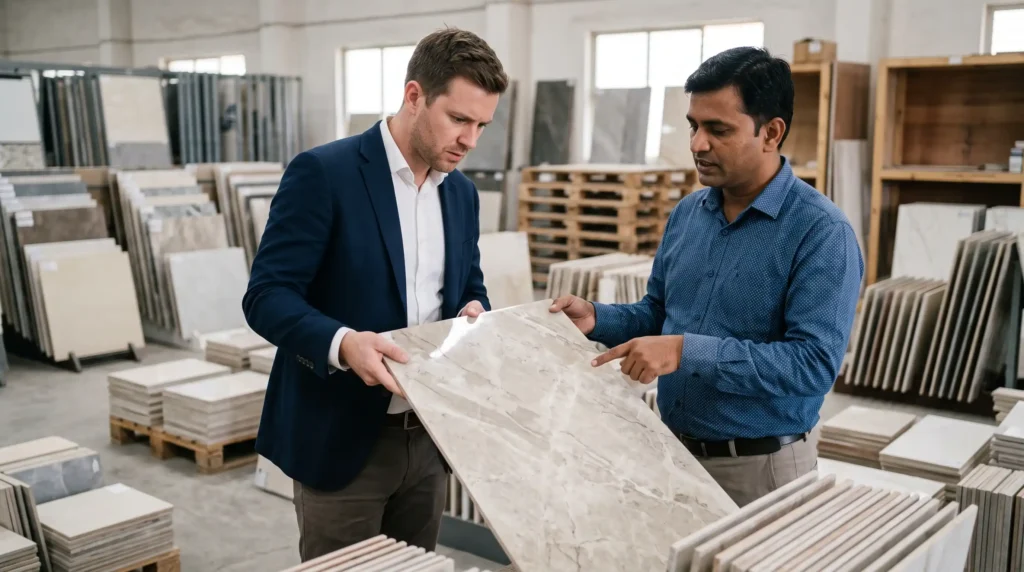
Ordering samples is one of the simplest yet most valuable steps in international tile procurement. Some buyers skip this stage to save time, only to discover later that the selected product differs from their expectations.
Physical samples allow buyers to evaluate important characteristics that may not be fully represented in digital catalogues or product photographs.
Reviewing samples helps buyers assess:
- Colour consistency
- Surface texture
- Finish
- Overall appearance
- Suitability for the project environment
For large developments or retail distribution, sample evaluation also provides an opportunity to gather feedback from architects, designers, procurement teams, or end customers before placing bulk tile orders. It also helps buyers verify that the selected high-quality tiles meet their expectations for appearance, finish, and overall suitability before committing to a larger purchase.
Taking time to evaluate samples helps reduce uncertainty and increases confidence in purchasing decisions.
Mistake 4: Ignoring Long-Term Supply Requirements
Many buyers focus only on immediate project needs without considering future procurement. This short-term approach can create unnecessary challenges when additional quantities are required for future project phases or ongoing customer demand.
Planning beyond the first order provides greater flexibility and supports business continuity.
Important considerations include:
- Future expansion plans
- Repeat order requirements
- Inventory management
- Product continuity
- Long-term supplier relationships
Businesses that think beyond individual transactions are often better positioned to respond to future market opportunities while maintaining a consistent sourcing strategy.
A supplier who understands long-term business objectives can contribute more effectively than one who simply fulfils a single purchase order.
Mistake 5: Not Clarifying Documentation and Commercial Terms
International procurement involves more than selecting the right products. Buyers should also understand the commercial and documentation requirements that support a smooth purchasing experience. Misunderstandings at this stage can lead to delays, additional costs, or unnecessary confusion.
Before confirming an order, it is important to discuss:
- Product specifications and quantities
- Packaging requirements
- Payment terms
- Delivery expectations
- Export documentation
- Incoterms and shipping responsibilities
Clarifying these details early creates transparency for both the buyer and supplier. It also helps procurement teams plan more effectively and avoid unexpected issues during the sourcing process.
For businesses planning to export tiles from India, clear communication about documentation and commercial terms is just as important as selecting the right products.
Mistake 6: Treating Procurement as a One-Time Transaction
Many first-time buyers focus only on completing a single purchase. While this approach may work for a small order, it often limits future opportunities for business growth.
Successful international sourcing is built on long-term relationships rather than individual transactions. A supplier who understands your business objectives can provide more valuable support as your requirements evolve.
Building a long-term sourcing relationship offers several advantages:
- Better understanding of future procurement needs
- Faster communication for repeat orders
- Greater consistency across purchasing decisions
- Improved planning for future projects
- Stronger collaboration between both businesses
A long-term partnership also allows buyers to respond more efficiently to changing customer demand while reducing the time spent searching for new suppliers.
Best Practices for Successful Tile Sourcing from India
Avoiding common mistakes is only one part of successful procurement. Following a structured sourcing strategy helps buyers make confident decisions and improve long-term business outcomes.
Consider these best practices before placing an order:
- Define project requirements before contacting suppliers.
- Compare suppliers based on expertise, responsiveness, and business support, not only price.
- Review technical specifications for every product.
- Request samples before confirming large purchases.
- Clarify documentation and commercial terms early.
- Plan procurement according to project timelines.
- Build relationships with suppliers who understand long-term business goals.
These practices help simplify tile procurement, reduce sourcing risks, and create a more efficient buying experience.
How Creanza Supports International Buyers
Creanza supports international buyers by taking a consultative approach that focuses on understanding project requirements before recommending suitable solutions.
The company works closely with importers, distributors, retailers, architects, and project developers to simplify decision-making throughout the procurement process.
Creanza supports customers through:
- Product consultation based on application requirements
- Guidance during product selection
- Responsive communication
- Support for evaluating suitable collections
- A customer-focused approach built around long-term business relationships
Rather than focusing only on individual transactions, Creanza aims to help buyers make informed sourcing decisions that support sustainable business growth.
Conclusion
Sourcing tiles from India offers significant opportunities for businesses looking to expand their product range and serve growing construction markets. However, successful procurement depends on careful planning, informed decision-making, and choosing the right sourcing partner.
By avoiding common mistakes such as selecting suppliers based only on price, overlooking technical specifications, skipping samples, or neglecting long-term planning, buyers can reduce procurement risks and improve overall project outcomes.
Working with an experienced ceramic tiles exporter from India who understands international business requirements helps simplify the sourcing journey and supports stronger, long-term business relationships. With a customer-focused approach and commitment to supporting international buyers, Creanza helps businesses make confident procurement decisions that contribute to long-term success.
Frequently Asked Questions
What should buyers check before sourcing tiles from India?
Buyers should review project requirements, product specifications, estimated quantities, commercial terms, supplier experience, and documentation before placing an order. Proper planning helps reduce procurement risks and supports more efficient purchasing decisions.
Why are product specifications important when importing tiles?
Product specifications determine whether a tile is suitable for its intended application. Factors such as size, finish, thickness, and surface characteristics should always be reviewed before confirming an order.
Should buyers request tile samples before placing bulk orders?
Yes. Samples allow buyers to evaluate colour, finish, texture, and overall appearance before making a large purchase. This helps ensure the selected products meet project expectations and reduces the risk of unsuitable product selection.
How can international buyers reduce sourcing risks?
Buyers can reduce sourcing risks by planning procurement early, comparing suppliers beyond pricing, reviewing technical specifications, requesting samples, and maintaining clear communication throughout the sourcing process.
What documents are important when importing tiles?
Important documents typically include commercial invoices, packing lists, shipping documents, product specifications, and any documentation required for customs clearance based on the destination country’s import regulations.
How does Creanza support international tile buyers?
Creanza supports buyers through product consultation, collection recommendations, responsive communication, and customer-focused guidance. The company works closely with international customers to simplify procurement and support informed sourcing decisions.