Key Takeaways
- Evaluate product quality and consistency before placing an order.
- Confirm product availability, manufacturing schedules, and order commitments.
- Review payment terms, packaging arrangements, and delivery responsibilities.
- Verify export documentation and destination-market requirements.
- Compare manufacturers using consistent criteria rather than price alone.
- Consider repeat-order needs when assessing long-term suitability.
India offers a wide range of ceramic, porcelain, and vitrified tiles for domestic and international markets. However, selecting a manufacturer involves more than comparing prices and designs. Buyers should verify product specifications, confirm order commitments, understand shipping responsibilities, and assess whether the manufacturer can meet their business requirements.
Why Do Businesses Source Tiles from India?
Indian tile manufacturers offer a variety of product categories, designs, finishes, and sizes for different market segments. These options allow businesses to develop product assortments for retail sales, wholesale distribution, residential projects, and commercial developments.
Morbi, Gujarat, is an important tile manufacturing centre in India, with manufacturers serving different market requirements. According to the Government of India’s Press Information Bureau overview of the Morbi ceramics cluster, the region has a significant presence in India’s ceramic manufacturing industry. However, the location of a manufacturer alone does not establish its product quality, reliability, or export capabilities.
When evaluating Indian tile manufacturers, buyers should focus on the specific products required, the supplier’s ability to fulfil orders, and the commercial arrangements available. A structured evaluation helps businesses identify manufacturers whose capabilities align with their purchasing plans and customer expectations.
What Factors Should You Evaluate Before Choosing a Tile Manufacturer?
Several factors influence whether a manufacturer is suitable for your business. Evaluating these areas before placing an order can help reduce purchasing risks and establish clearer expectations.
1. Product Quality and Consistency
Product quality should be one of the first considerations when comparing manufacturers. Tiles should meet the specifications agreed upon for the intended application and destination market.
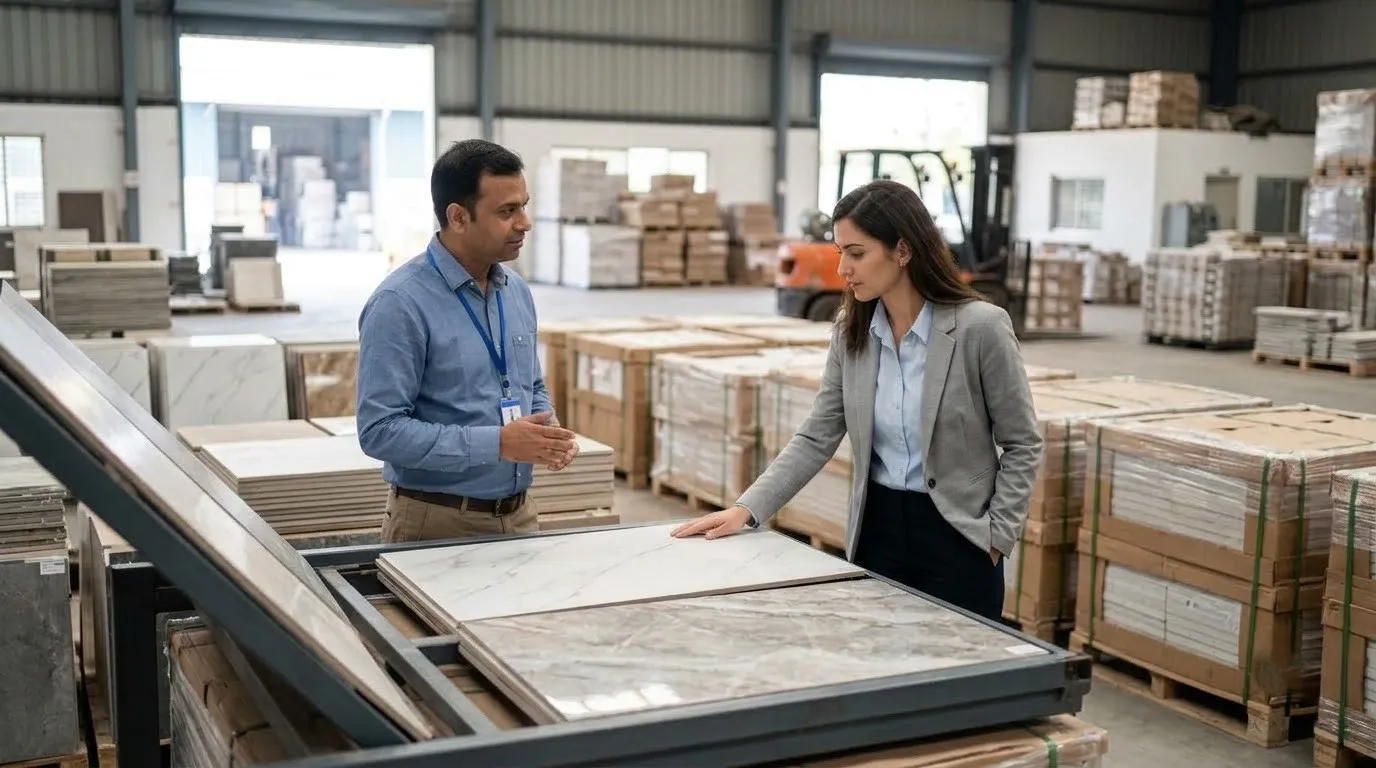
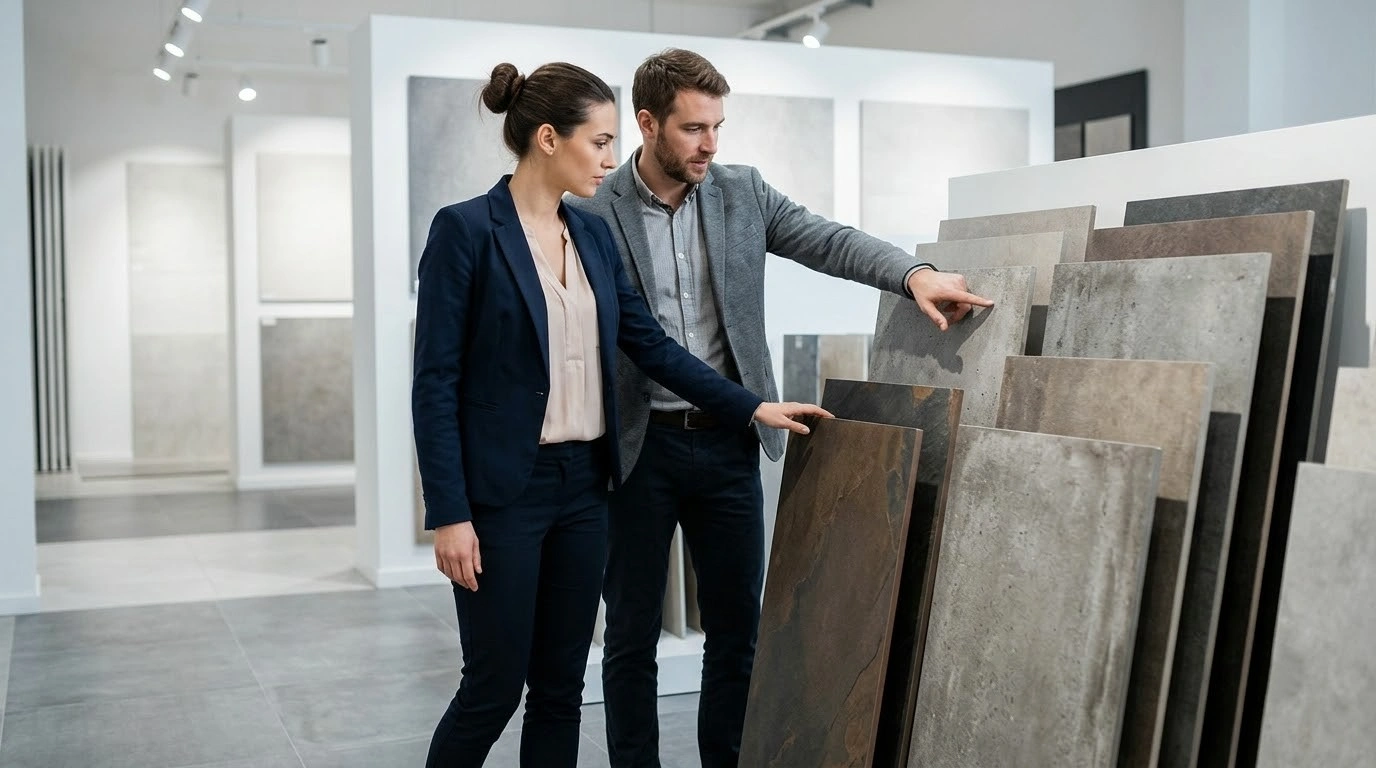
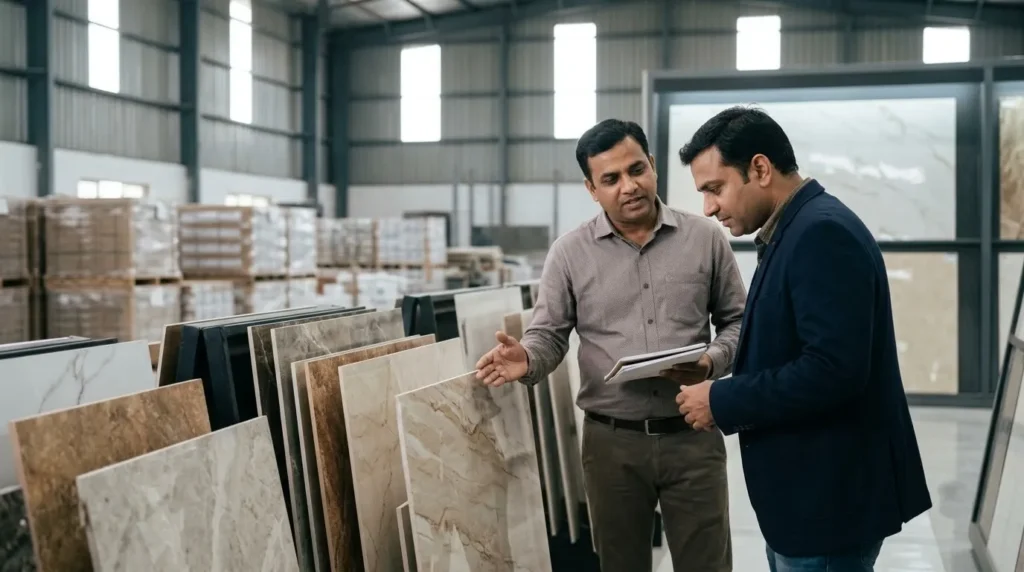
Before confirming an order, request samples and review dimensions, surface finish, colour, pattern, and overall appearance. Ask about the manufacturer’s quality-control procedures and the technical documentation available for the selected products.
Consistency is particularly important for businesses placing repeat orders. Variations between batches can affect inventory planning, customer satisfaction, and project coordination. Discuss how product specifications are maintained and how any changes are communicated.
2. Manufacturing Capabilities and Product Range
A suitable manufacturer should offer the product categories required by your business. Depending on your market, these may include ceramic tiles, porcelain tiles, glazed vitrified tiles, floor tiles, and wall tiles.
When evaluating ceramic tile manufacturers in India or vitrified tile manufacturers in India, confirm the availability of the required sizes, finishes, designs, and specifications.
Also, discuss production schedules and expected order volumes. A manufacturer’s stated production capacity does not automatically guarantee availability for a particular order. Confirm the quantities that can be supplied, expected dispatch dates, and arrangements for repeat purchases.
3. Supply Reliability and Lead Times
Reliable supply helps importers, distributors, and retailers manage inventory and fulfil customer commitments. Delays can disrupt sales plans, project schedules, and warehouse operations.
Before placing an order, confirm the estimated production time, dispatch schedule, packaging arrangements, and process for communicating delays. If an order includes multiple products, clarify whether all items will be ready together or dispatched separately.
A dependable business relationship requires realistic timelines and clear communication about changes that may affect delivery.
4. Commercial Terms and Communication
Commercial terms should be clearly agreed upon before an order is confirmed. Discuss minimum order quantities, quotation validity, payment conditions, packaging costs, and delivery responsibilities.
International buyers should also clarify the agreed Incoterms, which define specific responsibilities for delivery, costs, and risk between the seller and buyer.
Evaluate how clearly the manufacturer responds to technical questions, confirms order details, and handles concerns. Transparent communication can make purchasing decisions easier and help prevent misunderstandings during ongoing business transactions.
How Can You Verify an Indian Tile Manufacturer’s Export Readiness?
International buyers should confirm that a manufacturer can support the documentation, packaging, and shipment requirements relevant to their destination market.
Before choosing a tile exporter from India, check the following:
- Market experience: Ask about experience supplying your destination country or similar markets.
- Product documentation: Request relevant technical specifications and available quality documents.
- Packaging arrangements: Confirm how the tiles will be packed and protected for international transportation.
- Shipment responsibilities: Clarify delivery terms, freight arrangements, documentation responsibilities, and expected timelines.
- Destination requirements: Verify applicable customs, labeling, product standards, and import regulations.
- Issue resolution: Establish how damage, shortages, and product discrepancies will be reported and reviewed.
Export requirements vary by product and destination. Buyers should verify applicable rules with the relevant authorities or a qualified customs professional instead of assuming that the same documentation applies to every country.
Why Does the Location of a Tile Manufacturer Matter?
Morbi, Gujarat, is a major tile manufacturing centre in India. Businesses researching tile manufacturers in Morbi may find a range of manufacturers and product categories to consider.
However, choosing a manufacturer should involve more than geographical convenience. Product specifications, quality consistency, manufacturing capabilities, supply commitments, commercial terms, and communication remain important selection criteria.
Whether sourcing from Morbi or another manufacturing location, buyers should evaluate each company individually. The objective is to find a manufacturing partner whose capabilities match the business’s requirements, not simply to select a supplier based on location.
How Should You Compare Two Tile Manufacturers Before Making a Decision?
Comparing manufacturers against the same criteria makes the selection process more objective. Rather than choosing solely on the lowest quotation, assess the factors that affect product suitability, supply reliability, and overall purchasing costs.
| Evaluation factor | What to verify |
| Product quality | Samples, specifications, and quality-control procedures |
| Product range | Required categories, finishes, sizes, and designs |
| Manufacturing capability | Order quantities and confirmed production schedules |
| Supply reliability | Lead times, dispatch commitments, and communication |
| Commercial terms | Minimum quantities, payment conditions, and delivery responsibilities |
| Export readiness | Relevant documentation and shipment arrangements |
| Long-term suitability | Repeat-order capability and issue resolution |
Use the same checklist when comparing tile suppliers in India. Request written quotations and clarify any differences in product specifications, packaging, payment terms, or delivery responsibilities before making a final decision.
What Mistakes Should You Avoid When Selecting a Tile Manufacturer?
Several common mistakes can create unnecessary purchasing and supply challenges.
- Choosing only by price: A low quotation may not reflect packaging, transportation, quality consistency, or other commercial costs.
- Skipping sample evaluation: Samples help buyers determine whether the product meets the required specifications and expectations.
- Assuming capacity guarantees availability: Confirm actual order commitments and production schedules.
- Ignoring export requirements: Check documentation and destination-market regulations before confirming an international purchase.
- Leaving commercial terms unclear: Record agreed payment conditions, packaging arrangements, delivery responsibilities, and complaint-handling procedures.
- Overlooking repeat orders: Consider whether the manufacturer can support future purchasing requirements as the business grows.
A structured evaluation helps buyers make decisions based on verified information rather than assumptions.
How Can Creanza Support Your Tile Sourcing Requirements?
Creanza offers tile categories and design options for different interior applications, including glazed vitrified tiles, floor tiles, porcelain tiles, and wall tiles. Businesses exploring sourcing options can review the available products according to their market requirements, preferred designs, and purchasing needs.
For importers, distributors, retailers, and other business buyers, the next step is to discuss relevant product specifications, order quantities, and commercial requirements directly with Creanza. Confirming these details helps businesses assess whether the available range and proposed arrangements align with their sourcing objectives.
Conclusion
Choosing the right Indian tile manufacturer requires a structured evaluation of product quality, manufacturing capabilities, supply reliability, commercial terms, and export readiness. Importers, distributors, wholesalers, and project buyers should verify specifications, compare suppliers objectively, and establish clear expectations before committing to an order. This approach helps reduce purchasing risks and supports more reliable business relationships.
Creanza offers different tile categories and design options for businesses exploring tile sourcing from India. By reviewing available products, confirming technical and commercial requirements, and discussing specific business needs directly with the company, buyers can assess whether Creanza is a suitable manufacturing partner for their target market and long-term sourcing plans.
Frequently Asked Questions
1. How do I choose the right tile manufacturer in India?
Evaluate product quality, manufacturing capabilities, supply reliability, commercial terms, export readiness, and communication. Request samples, confirm specifications, and compare written quotations before placing an order.
2. Why do businesses source tiles from Morbi, Gujarat?
Morbi is an important tile manufacturing centre in India, offering buyers a range of manufacturers and product categories to evaluate. Individual manufacturers should still be assessed for quality, reliability, and business suitability.
3. What should importers check before ordering tiles from India?
Importers should verify product samples, specifications, packaging, payment terms, shipping responsibilities, relevant documentation, and destination-market requirements before confirming an order.
4. How can I compare two Indian tile manufacturers?
Compare product quality, available ranges, confirmed production schedules, commercial terms, export readiness, and the ability to support repeat orders. Use the same evaluation criteria for both manufacturers.
5. Why is quality consistency important when selecting a tile supplier?
Consistent quality helps businesses manage repeat orders, maintain customer expectations, plan inventory, and reduce product discrepancies. Buyers should confirm specifications and available quality-control procedures before ordering.