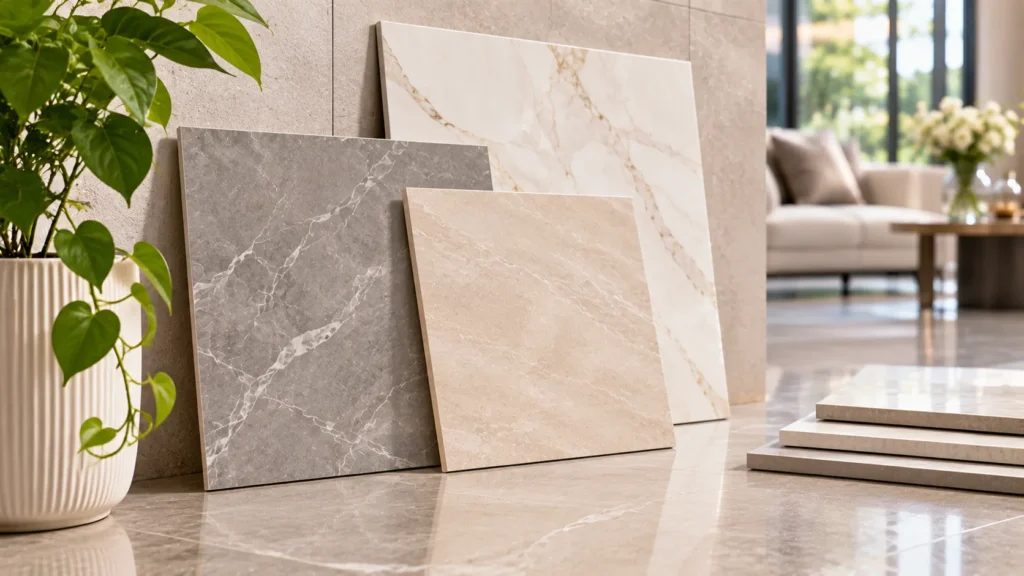
When comparing porcelain vs ceramic tiles, factors such as durability, maintenance, installation, design options, and cost should be considered. This guide explains the key differences between both materials and compares their suitability for different areas of your home, helping you make an informed tile selection.
What are Porcelain Tiles?
Porcelain tiles are a type of ceramic tile manufactured using refined clay and other mineral materials. They are generally produced under controlled conditions and fired at high temperatures, resulting in a dense body with low water absorption.
Under the relevant classification standard, porcelain tiles have water absorption of 0.5% or less. This characteristic makes them a suitable option for various residential applications, including living room flooring, kitchens, bathrooms, and selected outdoor areas where product specifications permit.
Porcelain tiles are available in different sizes, colours, patterns, and surface finishes. Marble-inspired designs, stone effects, and contemporary patterns provide options for different interior styles. Their suitability for a particular space should always be assessed using the manufacturer’s technical information.
What are Ceramic Tiles?
Ceramic tiles are manufactured using clay and other natural mineral materials, which are shaped, dried, and fired to create a hard surface. Their properties vary according to the raw materials, manufacturing process, and product classification.
Ceramic tiles are available in a wide range of colours, patterns, sizes, and finishes. They are commonly used for residential wall applications and can also be suitable for flooring when the product is designed for that purpose.
One of their practical advantages is that they are generally easier to cut and handle than denser porcelain tiles. They can also offer a cost-conscious option for homeowners planning renovations or selecting tiles for different interior spaces.
Porcelain vs Ceramic Tiles: What Are the Key Differences?
Although both materials are suitable for many residential applications, their technical properties can influence product selection.
| Comparison factor | Porcelain tiles | Ceramic tiles |
| Composition | Generally refined clay and mineral materials | Clay and other mineral materials |
| Water absorption | Typically 0.5% or less under the relevant classification standard | Generally higher, depending on the product |
| Density | Typically denser | Varies by product |
| Durability | Often suitable for demanding applications | Suitable for many residential applications |
| Weight | Often heavier | Often lighter |
| Cutting and installation | May require specialised cutting equipment | Generally easier to cut |
| Cost | Often higher | Often more budget-friendly |
| Applications | Floors, walls, and selected outdoor applications | Walls, floors, and suitable interior applications |
Water Absorption
Water absorption is one of the main differences between porcelain and tiles. Porcelain tiles classified under the relevant standard generally have water absorption of 0.5% or less. This makes them a useful option for areas where moisture exposure is an important consideration.
Ceramic tiles can have higher water absorption, although the exact level varies between products. Their suitability depends on the intended application and manufacturer’s specifications. To understand more about the differences in tile properties and performance, explore our guide on ceramic tiles vs vitrified tiles and their key differences.
Strength and Durability
Porcelain tiles are generally denser and are often selected for areas that experience regular foot traffic. Their durability makes them a suitable option for spaces that require reliable flooring performance. Homeowners planning tiles for busy spaces can also explore our guide on durable vitrified tiles for high-traffic areas to understand important factors when selecting tiles.
Ceramic tiles can also provide suitable performance in residential spaces when selected according to the manufacturer’s recommendations. Homeowners should compare product specifications rather than assuming that every porcelain tile is stronger than every ceramic tile.
Installation and Maintenance
Porcelain tiles can be harder to cut because of their dense structure, so installation may require suitable tools and experienced professionals. Ceramic tiles are generally easier to cut and handle.
Both types require appropriate installation, grout selection, and regular cleaning. Maintenance needs depend on the surface finish, product recommendations, and conditions of use.
What are the Advantages of Porcelain and Ceramic Tiles?
Each material offers benefits that make it suitable for different residential requirements.
Advantages of Porcelain Tiles
- Low water absorption: Porcelain tiles classified under the relevant standard have low water absorption, making them useful for applications where moisture exposure matters.
- Versatile applications: They can be considered for floors, walls, and selected outdoor spaces when product specifications support the application.
- Design options: Available designs include stone-inspired patterns, marble effects, and contemporary styles.
- Dense construction: Their dense body makes them a suitable choice for many areas requiring regular use.
Advantages of Ceramic Tiles
- Design variety: Ceramic tiles are available in different colours, patterns, sizes, and finishes.
- Installation flexibility: They are generally easier to cut and handle than porcelain tiles.
- Budget considerations: They can provide a cost-conscious option for suitable residential applications.
- Residential versatility: Depending on product specifications, they can be used for walls and floors in different areas of a home.
The best option depends on the intended use and the technical properties of the specific tile, not simply its category.
Which is Better for Different Areas of Your Home?
The right tile depends on the room’s requirements, moisture exposure, expected foot traffic, and preferred interior design.
Living Room
Both porcelain and ceramic tiles can work in living rooms. Porcelain may be considered where the flooring is expected to experience regular use, while ceramic tiles can suit areas with appropriate traffic requirements.
Consider the room’s size, lighting, furniture, and overall design when selecting a tile.
Kitchen
Kitchen floors and walls are exposed to spills, food stains, and frequent cleaning. Porcelain tiles can be a practical option for kitchen flooring because of their low water absorption. Suitable ceramic tiles can also be used, depending on their specifications and intended application.
Check cleaning recommendations and surface suitability before making a selection.
Bathroom
Bathrooms require careful tile selection because floors and walls experience different levels of moisture exposure. Porcelain tiles are often considered for bathroom flooring because of their low water absorption.
Ceramic tiles can also be suitable for bathroom walls and other approved applications. For bathroom floors, check the product’s slip-resistance information and manufacturer’s recommendations. Neither a matte nor a textured appearance automatically guarantees safer footing.
Bedroom
Bedrooms generally have fewer demanding conditions than kitchens or bathrooms. Both porcelain and ceramic tiles can work depending on the desired appearance, budget, and maintenance preferences.
Consider how the tile colour, size, and design complement the bedroom’s furniture and interior style.
Are Porcelain Tiles More Expensive Than Ceramic Tiles?
Porcelain tiles often have a higher purchase price than ceramic tiles, although actual costs vary according to the product, design, size, and market.
Their denser construction and manufacturing requirements can influence pricing. Installation costs may also differ because porcelain tiles can require specialised cutting equipment and experienced installers.
Ceramic tiles can be a more budget-friendly choice for suitable applications. However, homeowners should compare the total project cost rather than looking only at the price per tile. Material quantity, installation, grout, and other requirements all contribute to the final budget.
How Should You Choose Between Porcelain and Ceramic Tiles?
Before selecting tiles for your home, consider the following points:
- Identify the application: Decide whether the tiles are intended for walls, floors, bathrooms, kitchens, or outdoor areas.
- Consider moisture exposure: Review water absorption specifications for areas exposed to water.
- Evaluate expected use: Consider foot traffic and the performance requirements of the space.
- Check safety information: Review slip-resistance data for flooring, especially in wet areas.
- Compare installation requirements: Consider cutting, handling, and professional installation needs.
- Set your budget: Compare tile prices alongside installation and other project expenses.
- Review physical samples: Check the actual colour, pattern, and finish under your home’s lighting.
Rather than choosing one material for every room, select tiles according to the requirements of each space and the manufacturer’s application guidance.
How Does Creanza Support Homeowners Looking for Porcelain Tiles?
Creanza offers porcelain tile collections for homeowners and buyers exploring options for residential interiors. When evaluating products, consider the available designs, sizes, finishes, and technical specifications to identify options that align with your home’s requirements. Comparing these details helps make tile selection more practical and informed.
Conclusion
Porcelain and ceramic tiles both offer useful options for residential spaces, but their properties differ. Porcelain tiles generally have lower water absorption and a denser body, while ceramic tiles offer design variety and can be a more budget-friendly choice for suitable applications. The right selection depends on the room, expected use, installation requirements, and product specifications.
Creanza offers porcelain tile collections for homeowners exploring different options for their interiors. By considering design preferences, product specifications, and the requirements of each room, homeowners can identify suitable tiles for their residential projects.
Frequently Asked Questions
Which is better for home flooring, porcelain or ceramic tiles?
Porcelain tiles are often considered for flooring where low water absorption and regular use are important. Ceramic tiles can also be suitable when their specifications meet the requirements of the space.
Are porcelain tiles more durable than ceramic tiles?
Porcelain tiles are generally denser, but actual durability depends on product quality, construction, installation, and intended use.
Can ceramic tiles be used in bathrooms?
Yes. Suitable ceramic tiles can be used for bathroom walls and other applications approved by the manufacturer. Bathroom flooring requires careful consideration of water exposure and slip resistance.
Are porcelain tiles waterproof?
Porcelain tiles have very low water absorption when they meet the relevant classification standard. However, the complete installed surface is not automatically waterproof. Grout joints, installation, and underlying waterproofing also matter.
Are porcelain tiles worth the extra cost?
They may be worth the additional investment when their technical properties meet the project’s requirements. The decision should consider application, product specifications, installation costs, and budget.