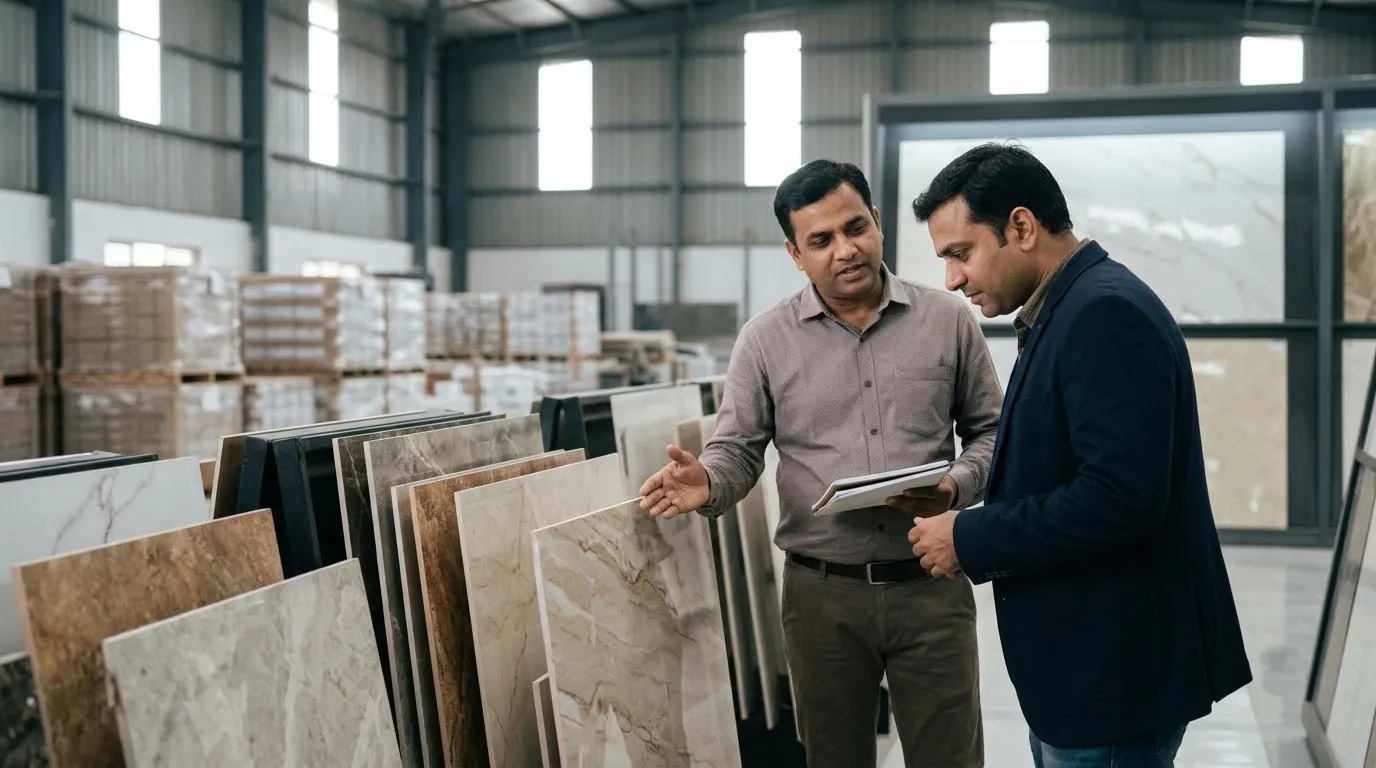
For importers, architects, distributors, and procurement teams, finish selection involves more than aesthetics. Maintenance needs, expected foot traffic, installation conditions, and slip-resistance requirements should also be considered. Surface appearance alone cannot establish whether a tile is suitable for a particular application.
What are the Main Types of Tile Surface Finishes?
The main types of tile finishes include polished, matte, satin, textured, honed, and lappato. Each offers different visual characteristics and should be evaluated against the requirements of the intended project.
1. Polished Tile Finish
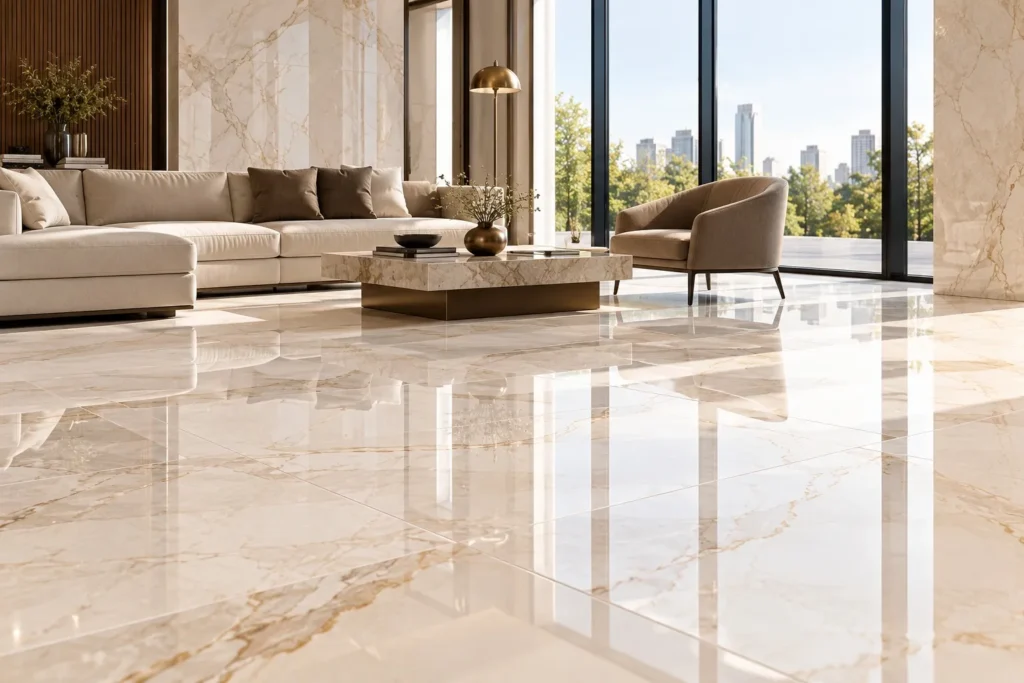
A polished finish has a smooth, reflective surface that can make interiors appear brighter. It is often selected for living rooms, hotel lobbies, reception areas, and decorative spaces where a glossy appearance is desired.
Polished porcelain tiles can emphasise marble-inspired patterns, colours, and surface details. However, reflections may make dust, water spots, and smudges more noticeable under certain lighting conditions.
Before selecting polished tiles for flooring, buyers should review the product’s maintenance guidance and slip-resistance data, particularly for wet or high-traffic areas.
2. Matte Tile Finish
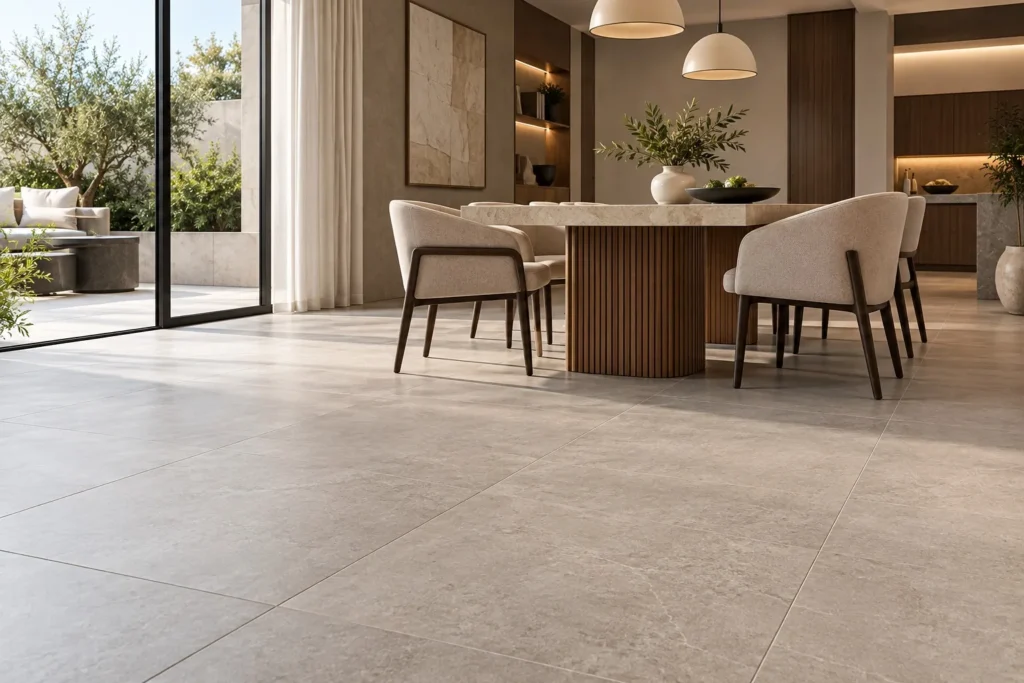
A matte finish has limited reflectivity, creating a subtle and understated appearance. It is commonly considered for bedrooms, living areas, offices, kitchens, and contemporary interiors.
Matte ceramic tile finishes complement natural materials, neutral colour palettes, and minimalist designs. Depending on the product, they may also make minor smudges less noticeable than highly reflective surfaces.
However, matte tiles are not automatically easier to clean or more slip-resistant. Their suitability depends on the surface structure, product specifications, and intended application.
3. Satin Tile Finish
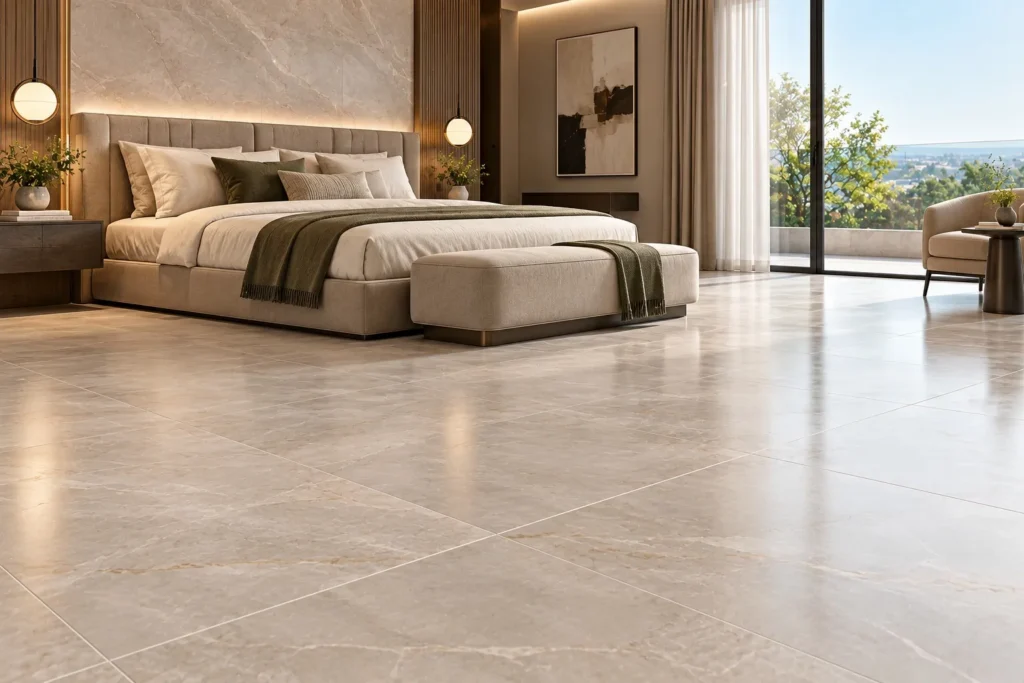
Satin finish tiles offer a gentle sheen between highly polished and matte surfaces. They provide some light reflection without the pronounced gloss of a polished tile.
This finish can work well in living rooms, bedrooms, hospitality interiors, and selected wall applications. It also complements a range of modern and traditional design styles.
Because finish descriptions can vary between manufacturers, buyers should compare physical samples and examine them under lighting similar to the intended installation environment.
4. Textured or Structured Tile Finish
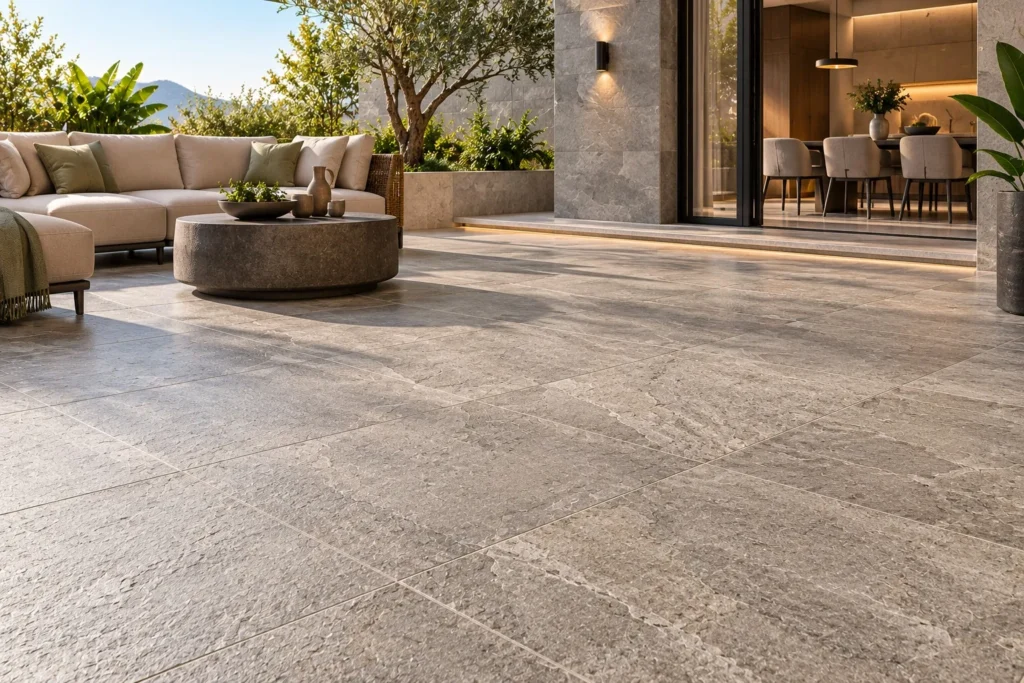
Textured tile finishes feature a varied surface that adds depth and tactile interest. Some designs replicate the appearance of natural stone, while others use more pronounced patterns for decorative impact.
These finishes may be suitable for feature walls, entrance areas, and selected outdoor or commercial applications. However, deeper textures can collect dirt and require more attention during cleaning.
For flooring, particularly in areas exposed to water, verify the product’s slip-resistance results and suitability for the intended conditions. A textured appearance alone does not guarantee slip resistance.
5. Honed Tile Finish
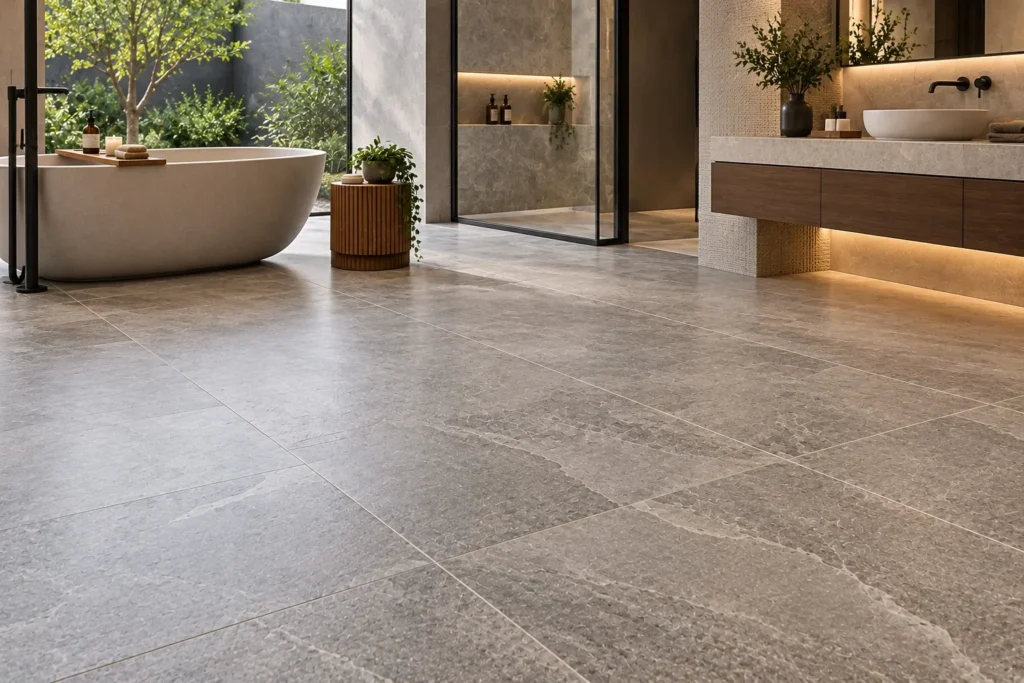
A honed tile finish generally has a smooth, low-sheen appearance without the strong reflection associated with polished surfaces. It can suit contemporary interiors and projects seeking a restrained, natural look.
Honed surfaces may be considered for residential spaces, hospitality interiors, and decorative applications. Their maintenance requirements and suitability for wet areas depend on the specific product.
Buyers should confirm the manufacturer’s finish description, cleaning recommendations, and application guidance before specifying honed tiles.
6. Lappato or Semi-Polished Finish
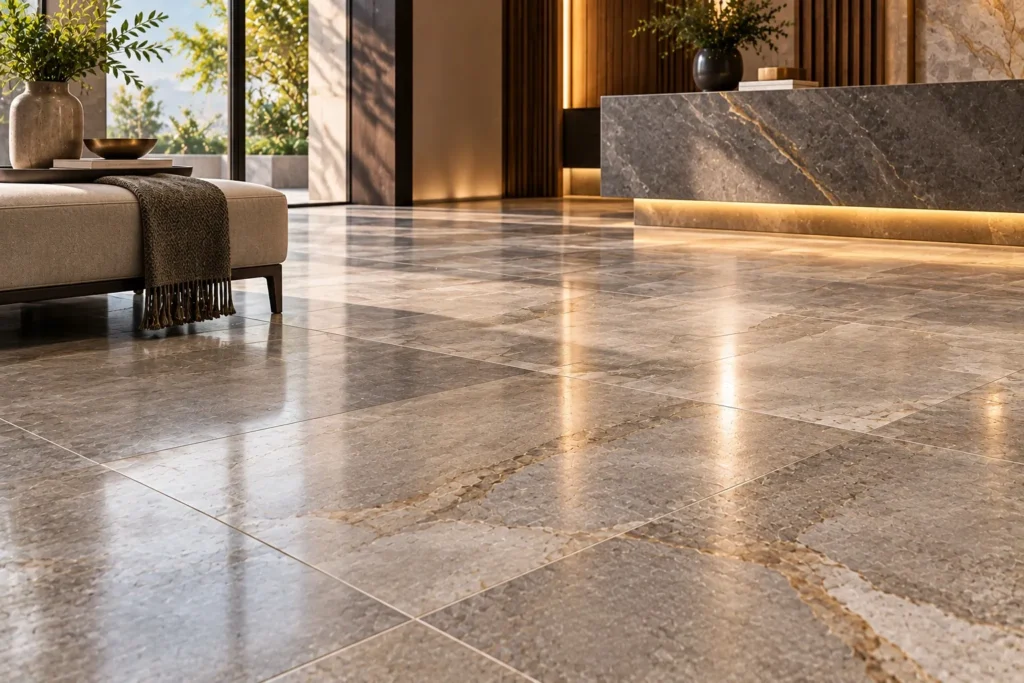
Lappato tiles typically combine polished and less-reflective surface areas to create a semi-polished appearance. This finish offers visual depth without the uniform gloss of a fully polished surface.
It may suit living areas, retail interiors, hotel spaces, and other applications where a decorative finish is important. The final appearance depends on the product design and lighting conditions.
As with other finishes, buyers should request samples and review technical information rather than assuming that a semi-polished surface provides a particular level of slip resistance.
Comparing Different Tile Finishes
The following comparison summarises the appearance, potential applications, and main considerations for common tile surface finishes.
| Finish | Appearance | Potential applications | Key consideration |
| Polished | Glossy and reflective | Living rooms, lobbies, feature areas | Reflections, visible marks, and floor suitability |
| Matte | Soft and low-reflective | Bedrooms, offices, selected kitchens | Cleaning needs and tested slip resistance |
| Satin | Gentle sheen | Residential and hospitality interiors | Appearance under project lighting |
| Textured | Tactile and dimensional | Feature walls, entrances, selected outdoor areas | Dirt retention and surface performance |
| Honed | Smooth and low-sheen | Contemporary interiors and feature areas | Maintenance and application suitability |
| Lappato | Semi-polished with varied reflection | Living areas, retail, hospitality | Technical performance and surface consistency |
This comparison is a starting point for product selection. The tile material, surface structure, installation conditions, and manufacturer’s recommendations should guide the final decision. For a more detailed comparison of reflective and low-sheen surfaces, explore our guide on glossy vs matte tiles and which finish is right for your space.
How to Choose Tile Finishes for Different Project Types?
The most suitable finish depends on the intended use, desired interior style, cleaning routine, and technical requirements of the project.
Hotels and Hospitality Projects
Polished finishes may suit selected lobbies and reception areas where a reflective appearance supports the design. Matte and satin options can provide a softer look in guest rooms and other interior spaces.
For corridors and shared facilities, buyers should consider foot traffic, maintenance requirements, and applicable slip-resistance specifications before finalising the product.
Retail Stores and Offices
Retail spaces may use polished finishes to create a bright, contemporary appearance, while matte and satin surfaces can complement understated office interiors.
For commercial flooring, compare product specifications with expected traffic and cleaning needs. Visual appeal should be considered alongside durability and suitability for the intended installation.
Residential Interiors
Residential projects offer flexibility across living rooms, bedrooms, kitchens, and feature areas. Polished surfaces can create a reflective effect, while matte and satin finishes provide alternatives for softer interior schemes.
Room lighting, furniture, colour palettes, and cleaning preferences can help determine the most appropriate finish.
Bathrooms and Outdoor Areas
Bathrooms and other wet areas require careful evaluation because moisture can affect slip risk. Some matte or textured products may be suitable, but their performance must be verified using product-specific data.
Outdoor applications also require products recommended for the relevant exposure and installation conditions. Buyers should confirm suitability for weather, moisture, temperature changes, and local project requirements rather than selecting tiles by appearance alone.
What Should International Buyers Check Before Specifying a Tile Finish?
International buyers can reduce specification misunderstandings by confirming product details and commercial requirements before placing an order.
Use this checklist:
- Confirm the exact finish: Record the product name, finish, size, colour, and surface treatment in the specification.
- Review physical samples: Compare colour, sheen, and texture under lighting similar to the project environment.
- Check technical data: Request relevant slip-resistance results, maintenance instructions, and application recommendations.
- Evaluate cleaning needs: Ensure the surface is compatible with the project’s maintenance routine.
- Confirm order details: Discuss product availability, quantities, packaging, and consistency requirements.
- Review destination-market rules: Check applicable import regulations, documentation, and project specifications.
- Agree on commercial terms: Confirm pricing, payment conditions, shipping arrangements, and required transaction documents.
These checks help importers, distributors, and project teams compare options consistently and communicate their expectations clearly to suppliers.
How Creanza Supports Tile Selection for International Projects
Creanza offers tile collections for residential and commercial applications, helping international importers, wholesalers, distributors, and project teams explore options that match their design preferences and product requirements. As a leading tile exporter from India, Creanza supports buyers in evaluating available tile options for different project needs and target markets.
Buyers can discuss finish preferences, product specifications, order quantities, packaging expectations, and shipping arrangements directly with Creanza. Confirming these details before placing an order helps international buyers assess whether the available options align with their project requirements and sourcing objectives.
Conclusion
Choosing the right tile surface finish involves balancing appearance, maintenance, application requirements, and technical performance. Polished, matte, satin, textured, honed, and lappato finishes offer different design possibilities, but the most suitable option depends on the project and verified product specifications. Reviewing samples and confirming technical details helps buyers make informed decisions.
Creanza offers tile options for international buyers exploring products for residential and commercial projects. By discussing finish preferences, specifications, quantities, packaging, and shipping requirements with the supplier, importers and project teams can evaluate available options against their sourcing objectives and make more informed purchasing decisions.
Frequently Asked Questions
What are the most common types of tile finishes?
Common options include polished, matte, satin, textured, honed, and lappato finishes. Each offers a different appearance and may suit different applications depending on its technical properties.
What is the difference between polished and honed tiles?
Polished tiles generally have a more reflective surface, while honed tiles have a smoother, lower-sheen appearance. Maintenance and suitability depend on the specific product.
Are textured tiles suitable for wet areas?
Some textured tiles may be suitable for wet areas. Buyers should verify slip-resistance test results and the manufacturer’s recommendations before selecting a product.
Which tile finish is best for commercial projects?
There is no single finish suitable for every commercial project. The choice depends on foot traffic, cleaning requirements, design preferences, installation conditions, and technical performance.
How should international buyers compare tile finishes?
Buyers should compare samples, finish descriptions, technical specifications, maintenance guidance, order requirements, and destination-market regulations before confirming a purchase.