Key Takeaways
- Glossy tiles reflect more light and create a polished appearance.
- Matte tiles offer a softer, natural, and understated look.
- Glossy finishes can work well for walls, backsplashes, and feature areas.
- Matte finishes are often considered for floors and natural-style interiors.
- Neither finish is suitable for every application.
- Lighting, maintenance, safety, and technical specifications should guide the final choice.
The right choice depends on the room, lighting, application, maintenance needs, safety requirements, and overall design style.
What is the Difference Between Glossy and Matte Tiles?
The main difference is the surface finish and how it reflects light.
What are Glossy Tiles?
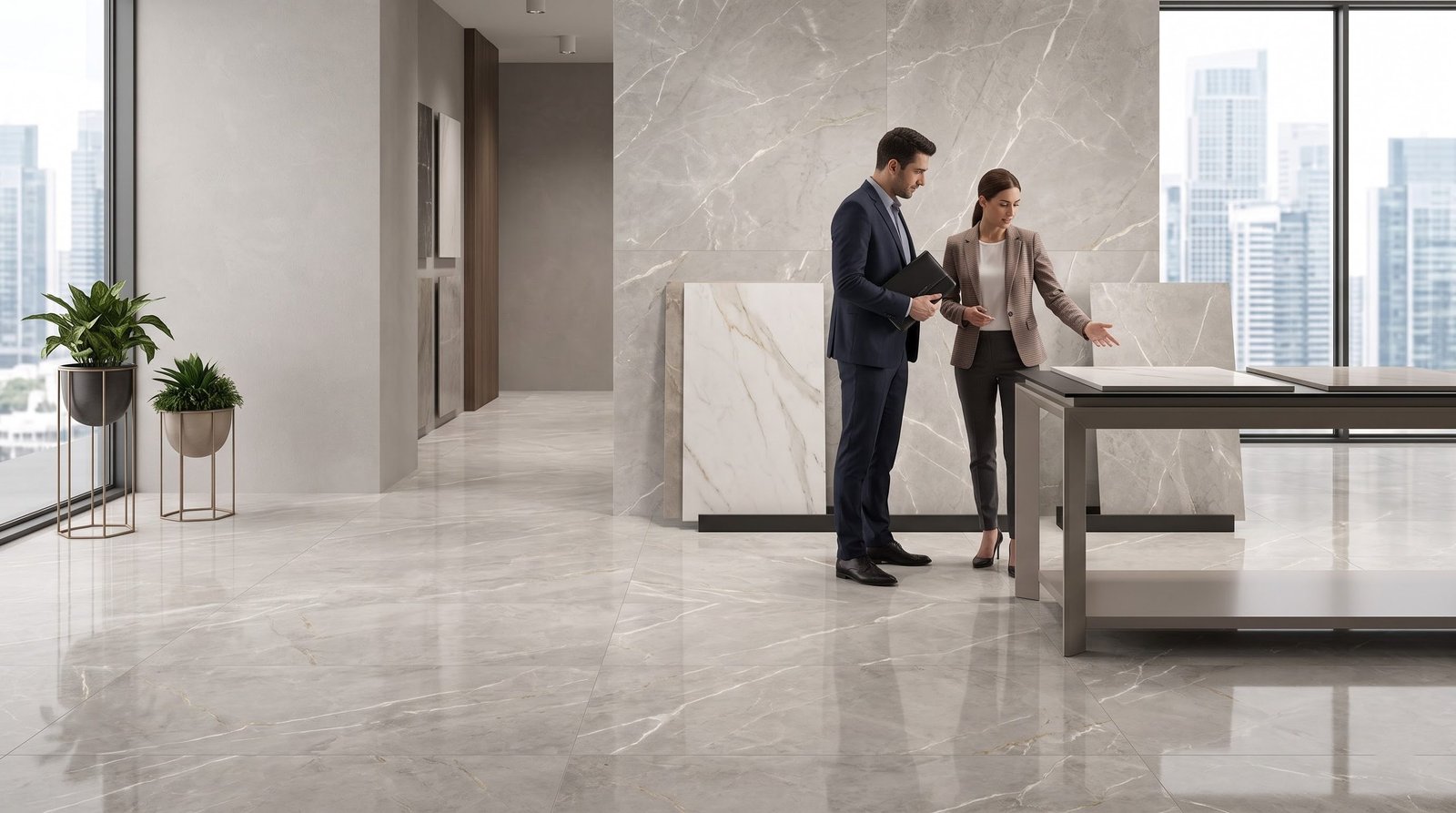
Glossy tiles have a smooth, reflective surface. They reflect natural and artificial light, creating a bright and polished appearance. They are often used in contemporary interiors, feature walls, backsplashes, and selected bathroom applications.
Glossy surfaces can also enhance colours and patterns, making them suitable for decorative areas where visual impact is important.
What are Matte Tiles?
Matte tiles have a low-reflective surface that creates a softer appearance. They are commonly used in natural, minimalist, and contemporary interiors.
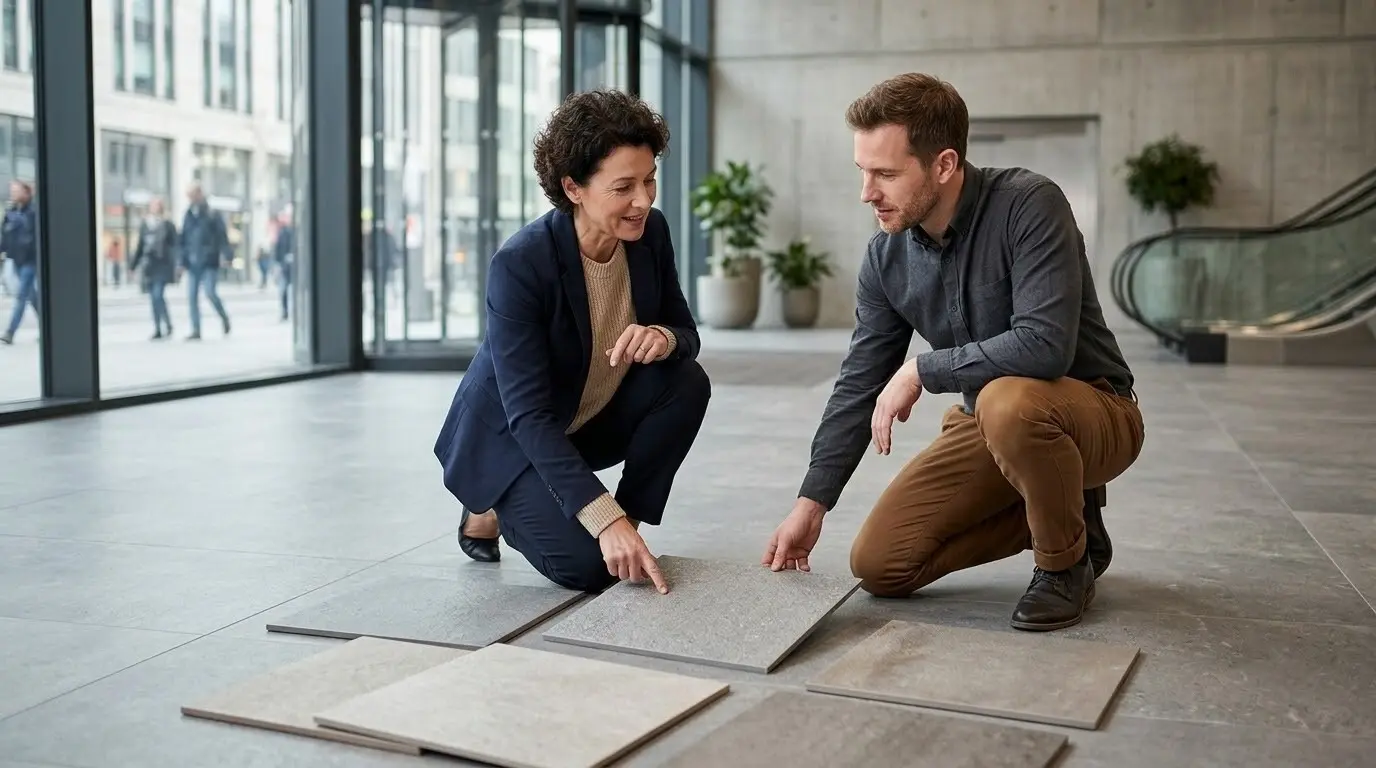
Matte finishes work well with stone, concrete, wood, and other subtle designs. They are also frequently considered for flooring because of their understated visual character.
Glossy vs Matte Tiles: Key Differences
| Factor | Glossy Tiles | Matte Tiles |
| Appearance | Bright and reflective | Soft and understated |
| Light reflection | High | Low |
| Visual style | Polished and elegant | Natural and contemporary |
| Design effect | Emphasises brightness | Creates a calmer look |
| Marks | Smudges may be more visible | Marks may appear less reflective |
| Common uses | Walls, backsplashes, feature areas | Floors, natural interiors, practical spaces |
Neither finish is always better. The best option depends on how the space will be used, the performance required from the tile, and selecting the right tile size to complement the overall space and design.
Advantages of Glossy Tiles
Creates a Brighter Appearance
Glossy tiles reflect light, which can make a room appear brighter and more open. This can be useful in spaces with limited natural light or interiors designed around a luminous appearance.
Adds a Polished Look
A glossy finish can give a room a refined and sophisticated character. It works well with modern furniture, clean lines, and contemporary colour schemes.
Highlights Colours and Patterns
The reflective surface of glossy tiles can make colours and patterns appear more vibrant. This makes them suitable for feature walls, kitchen backsplashes, and decorative bathroom areas.
Adds Visual Depth
Reflections can make a surface appear more dynamic. When combined with suitable lighting, glossy tiles can add depth and interest to an interior.
Advantages of Matte Tiles
Provides a Softer Appearance
Matte tiles create less reflection, making them suitable for calm and relaxed interiors. They work well with neutral colours, simple furniture, and minimalist designs.
Complements Natural Styles
Matte finishes pair well with stone-inspired, concrete-inspired, wood-look, and textured designs. They can help create a warm and natural atmosphere.
Reduces Glare
Rooms with strong daylight or bright artificial lighting may benefit from a matte surface. Since matte tiles reflect less light, they can create a more balanced visual effect.
Works Well for Flooring
Matte tiles are often selected for living rooms, bedrooms, hallways, and other floor applications. However, finish alone should not determine whether a tile is suitable for wet or high-traffic areas. Always check the product’s slip resistance and technical specifications.
Glossy vs Matte Tiles for Different Rooms
Living Room
Both finishes can work well in living rooms. Glossy tiles suit bright, polished interiors and can reflect light across the space. Matte tiles create a softer and more natural atmosphere, especially when paired with stone or concrete designs.
Consider the room’s lighting, furniture, and desired mood before choosing. For those exploring luxury tile ideas, glossy finishes can add a refined, elegant touch to the living room.
Kitchen
Glossy tiles are popular for backsplashes and walls because they create a clean and reflective appearance. They can also make colours and patterns stand out.
Matte tiles offer a more subtle look and can complement modern kitchen designs. For kitchen floors, consider cleaning requirements, surface properties, durability, and slip resistance.
Bathroom
Glossy tiles can work well on bathroom walls, where their reflective surface supports a bright and clean appearance. Matte tiles can create a calm and contemporary bathroom design.
For bathroom floors, safety is especially important. Do not choose a tile based only on whether it looks glossy or matte. Check its slip-resistance rating and suitability for wet areas.
Bedroom
Bedrooms usually benefit from a comfortable and visually calm design. Matte tiles can support a soft and understated atmosphere, while glossy tiles may suit a more polished and modern bedroom.
Lighting, wall colours, furniture, and the overall interior style should guide the decision.
Commercial Spaces
Offices, hotels, retail stores, and reception areas may use either finish. The choice depends on the design concept and practical requirements.
For busy commercial floors, evaluate durability, wear resistance, maintenance, safety, and application suitability in addition to appearance.
How Lighting Affects Tile Finishes
Lighting can significantly change how glossy and matte tiles look.
In a dark room, glossy tiles can reflect available light and create a better visual effect. In a strongly lit room, however, reflections may become more noticeable and create glare.
Matte tiles reflect less light, producing a quieter and more balanced appearance. They can be useful in rooms with large windows, strong daylight, or intense artificial lighting.
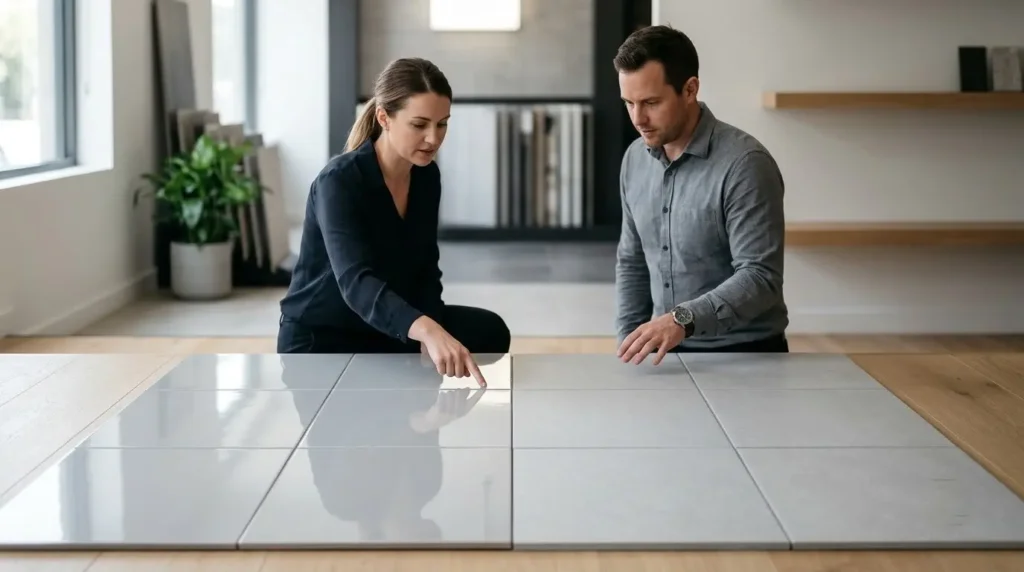
Before choosing between matte vs glossy tiles, view samples under different lighting conditions and at different times of the day.
Are Glossy or Matte Tiles Easier to Maintain?
There is no universal answer. Maintenance depends on the tile’s colour, texture, finish, location, and level of use.
Glossy tiles may show fingerprints, water marks, and smudges more clearly because of their reflective surface. Matte tiles may make some marks less noticeable, but textured matte surfaces can require more careful cleaning.
For either finish:
- Clean spills promptly.
- Use suitable cleaning products.
- Avoid harsh chemicals unless recommended.
- Follow the manufacturer’s care instructions.
- Clean textured surfaces regularly to prevent dirt buildup.
Choosing Tiles for Global Projects
For residential, commercial, hospitality, and other international projects, choosing the right tile finish is only one part of the selection process. Buyers and project professionals should also consider product specifications, application suitability, consistency, quality standards, and supply requirements when sourcing tiles for different markets.
Creanza offers a range of tile solutions for international buyers, including glazed vitrified, polished glazed vitrified, porcelain, floor, and wall tiles. As a tile exporter from India, Creanza supports international buyers with tile solutions designed for different applications, design preferences, and project requirements.
Conclusion
Choosing between glossy and matte tiles is ultimately about matching the finish with the character and requirements of the space. Glossy surfaces can enhance brightness and create a polished appearance, while matte surfaces can provide a softer and more natural aesthetic. Room lighting, floor or wall application, moisture exposure, maintenance expectations, and technical characteristics should all be considered before making the final decision.
Creanza offers a variety of tile collections with different surface characteristics and design expressions, giving homeowners, architects, and designers options for creating distinct interiors. By considering both visual preferences and practical requirements, the right Creanza tile finish can become an integral part of a balanced and well-planned space.
FAQs
Which is better, glossy or matte tiles?
Glossy tiles offer a brighter, polished look, while matte tiles provide a subtle, natural finish. The best choice depends on the application and design.
Are matte tiles better for floors?
They can be, but always check slip resistance, durability, and suitability for the intended area.
Are glossy tiles suitable for bathrooms?
Yes, especially for walls. For bathroom floors, choose tiles specifically rated for wet areas and slip resistance.
Which tiles make a room look brighter?
Glossy tiles reflect more light and can make a space feel brighter and more open.
Are matte tiles easier to maintain?
Not necessarily. Both finishes have different cleaning needs depending on their texture and application.
How do I choose between glossy and matte tiles?
Consider lighting, location, moisture, foot traffic, maintenance, safety, and your preferred style.